Category
page 1Taxa named by Thomas Cavalier-Smith

Radiolaria
The Radiolaria, also called Radiozoa and informally called radiolarians, are unicellular eukaryotes of diameter 0.1–0.2 mm that produce intricate mineral skeletons, typically with a central capsule dividing the cell into the inner and outer portions of endoplasm and ectoplasm. The elaborate mineral skeleton is usually made of silica. They are found as zooplankton throughout the global ocean. As zooplankton, radiolarians are primarily heterotrophic, but many have photosynthetic endosymbionts and are, therefore, considered mixotrophs. The skeletal remains of some types of radiolarians make

Chromista
Chromista is a proposed but controversial biological kingdom, refined from the Chromalveolata, consisting of single-celled and multicellular eukaryotic species that share similar features in their photosynthetic organelles (plastids). It includes all eukaryotes whose plastids contain chlorophyll c and are surrounded by four membranes. If the ancestor already possessed chloroplasts derived by endosymbiosis from red algae, all non-photosynthetic Chromista have secondarily lost the ability to photosynthesise. Its members might have arisen independently as separate evolutionary groups from the las
Rhizaria
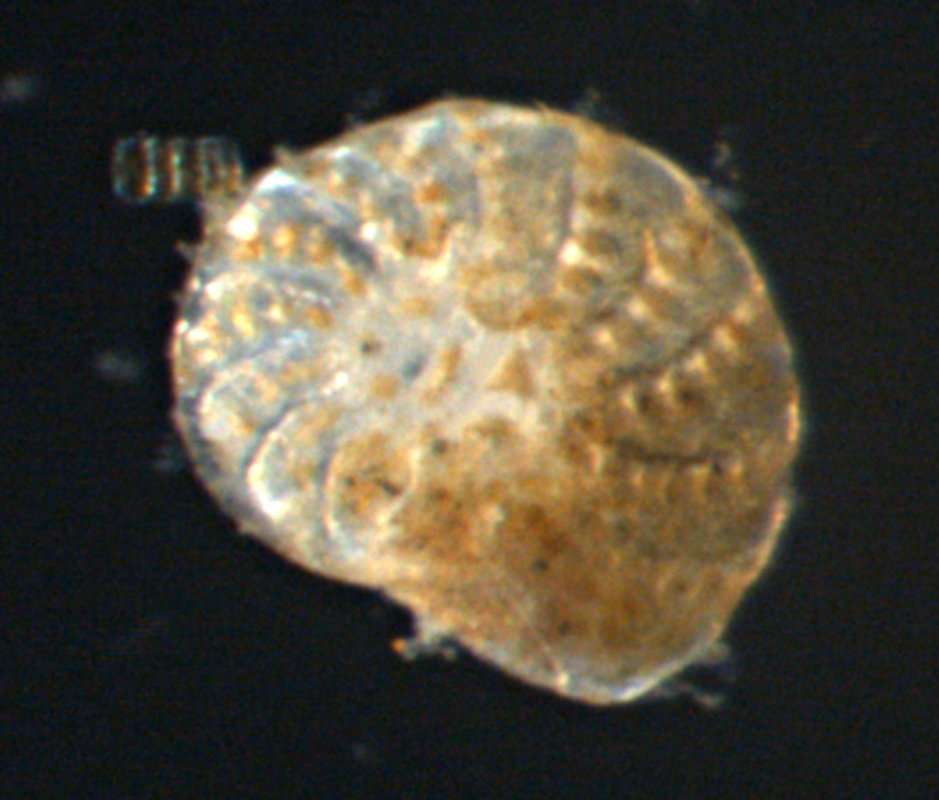
The Rhizaria are a diverse and species-rich clade of mostly unicellular eukaryotes. Except for the chlorarachniophytes and three species in the genus Paulinella in the phylum Cercozoa, they are all non-photosynthetic, but many Foraminifera and Radiolaria have a symbiotic relationship with unicellular algae. A multicellular form, Guttulinopsis vulgaris, a cellular slime mold, has been described. This group was used by Cavalier-Smith in 2002, although the term "Rhizaria" had been long used for clades within the currently recognized taxon.

Excavata
thumb|Three types of excavate cells. Top: Jakobida, 1-nucleus, 2-anterior flagellum, 3-ventral/posterior flagellum, 4-ventral feeding groove. Middle: [[Euglenozoa, 1-nucleus, 2-flagellar pocket/reservoir, 3-dorsal/anterior flagellum, 4-ventral/posterior flagellum, 5-cytostome/feeding apparatus. Bottom: Metamonada, 1-anterior flagella, 2-parabasal body, 3-undulating membrane, 4-posterior flagellum, 5-nucleus, 6-axostyle.]]
.jpg)
Viridiplantae
Viridiplantae (kingdom Plantae sensu stricto), the green plants, is a natural group or clade of around half a million eukaryotes. They are green because they contain chloroplasts, cell organelles able to produce food by photosynthesis. They are major primary producers of food both in the sea and on land. The group includes both green algae and the land plants (embryophytes) that arose from them.

Cryptophyta
The cryptomonads (sometimes called cryptophytes) are a superclass of algae and colorless flagellates, most of which have plastids. They are traditionally considered a division of algae among phycologists, under the name of Cryptophyta. They are common in freshwater, and also occur in marine and brackish habitats. Each cell is around 10–50 μm in size and flattened in shape, with an anterior groove or pocket. At the edge of the pocket there are typically two slightly unequal flagella. Some may exhibit mixotrophy. They are classified as superclass Cryptomonada, which is divided into two classes:
Euglenozoa
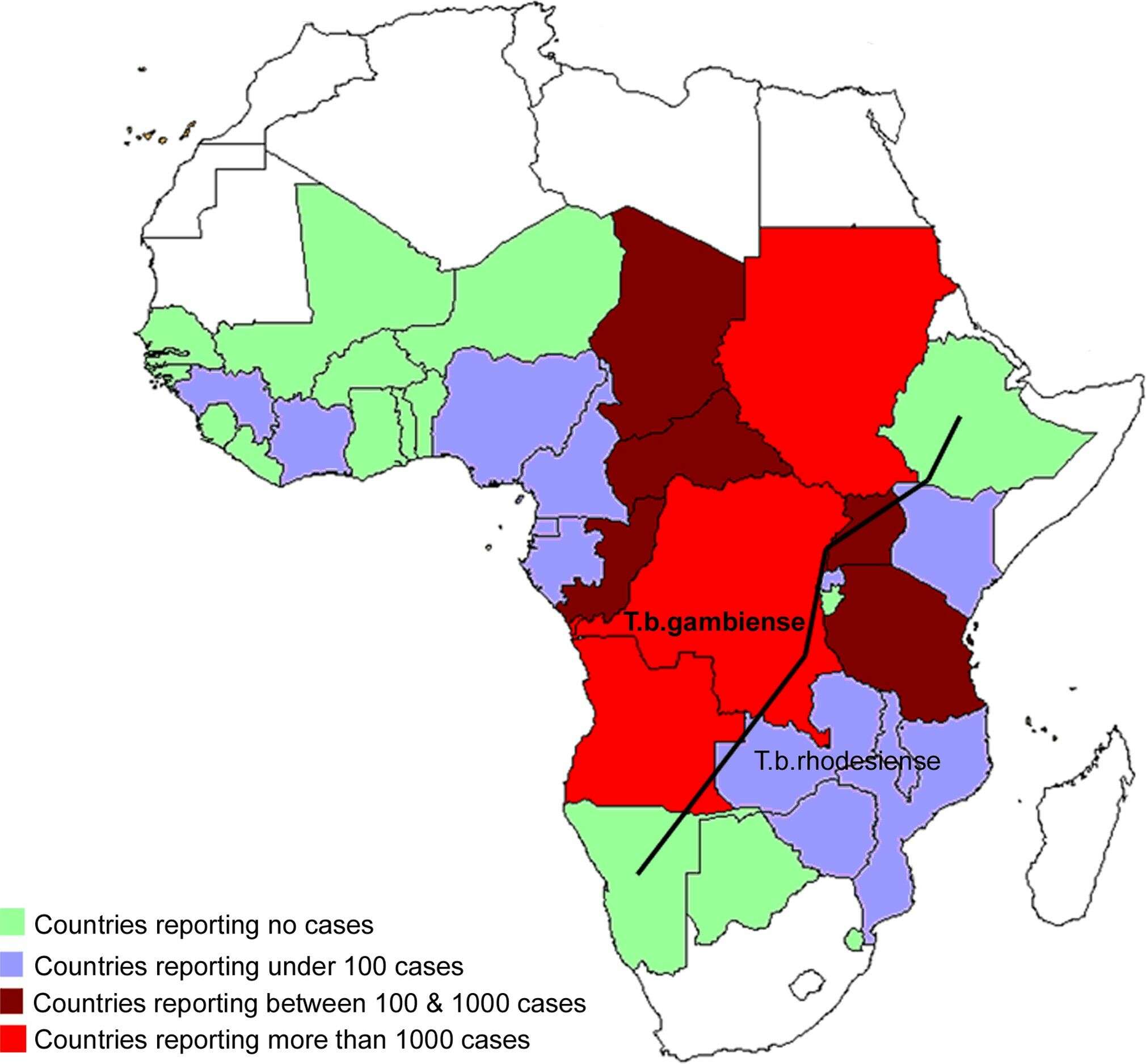
Euglenozoa are a large group of flagellate Discoba. They include a variety of common free-living species, as well as a few important parasites, some of which infect humans. Euglenozoa are represented by four major groups, i.e., Kinetoplastea, Diplonemea, Euglenida, and Symbiontida. Euglenozoa are unicellular, mostly around in size, although some euglenids get up to long.
bikont
A bikont ("two flagella") is any of the eukaryotic organisms classified in the group Bikonta. Many single-celled and multi-celled organisms are members of the group, and these, as well as the presumed ancestor, have two flagella.
Cercozoa
Cercozoa (now synonymised with Filosa) is a phylum of diverse single-celled eukaryotes. They lack shared morphological characteristics at the microscopic level, and are instead united by molecular phylogenies of rRNA and actin or polyubiquitin. They were the first major eukaryotic group to be recognized mainly through molecular phylogenies. They are the natural predators of many species of bacteria. They are closely related to the phylum Retaria, comprising amoeboids that usually have complex shells, and together form a supergroup called Rhizaria.
Neomura
Neomura (from Ancient Greek neo- "new", and Latin -murus "wall") is a proposed clade of life composed of the two domains Archaea and Eukaryota, coined by Thomas Cavalier-Smith in 2002. Its name reflects the hypothesis that both archaea and eukaryotes evolved out of the domain Bacteria, and one of the major changes was the replacement of the bacterial peptidoglycan cell walls with other glycoproteins.
Percolozoa
REDIRECT Heterolobosea

Apusozoa
The Apusozoa are a paraphyletic phylum of flagellate eukaryotes. They are usually around 5–20 μm in size, and occur in soils and aquatic habitats, where they feed on bacteria. They are grouped together based on the presence of an organic shell or theca under the dorsal surface of the cell.
Conosa
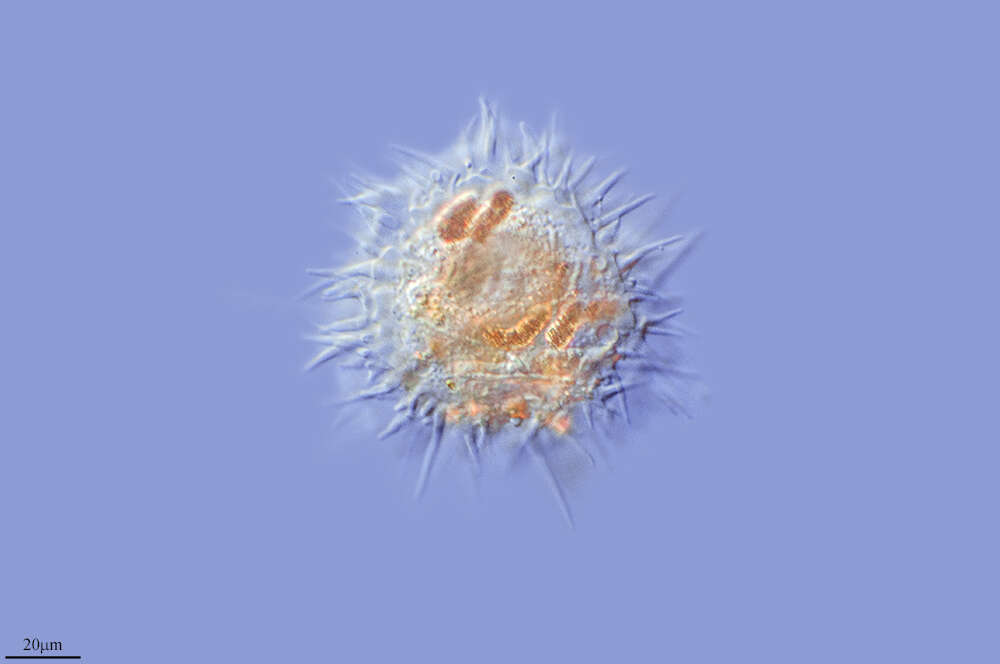
Conosa is a grouping of Amoebozoa. It is subdivided into three groups: Archamoeba, Variosea and Mycetozoa.
Archamoebae
The Archamoebae are a group of protists originally thought to have evolved before the acquisition of mitochondria by eukaryotes. They include genera that are internal parasites or commensals of animals (Entamoeba and Endolimax). A few species are human pathogens, causing diseases such as amoebic dysentery. The other genera of archamoebae live in freshwater habitats and are unusual among amoebae in possessing flagella. Most have a single nucleus and flagellum, but the giant amoeba Pelomyxa has many of each.

Retaria
Retaria is a clade within the supergroup Rhizaria containing the Foraminifera and the Radiolaria. In 2019, the Retaria were recognized as a basal Rhizaria group, as sister of the Cercozoa.
Haptista
Haptista is a group of protists made up of centrohelids and haptophytes. Phylogenomic studies indicate that Haptista is likely closely related to the TSAR supergroup. It is thus one of the earliest diverging Diaphoretickes.
Cryptista
Cryptista is a phylum of alga-like eukaryotes. It is most likely related to Archaeplastida which includes plants and many algae, within the larger group Diaphoretickes.
Loukozoa
Loukozoa (From Greek loukos: groove) is a proposed taxon used in some classifications of eukaryotes, consisting of the Metamonada and Malawimonadea. Ancyromonads are closely related to this group, as sister of the entire group, or as sister of the Metamonada. Amorphea may have emerged in this grouping, specifically as sister of the malawimonads.

Cryptophyceae
The Cryptophyceae are a class of algae, most of which have plastids. About 230 species are known, and they are common in freshwater, and also occur in marine and brackish habitats. Each cell is around 10–50 μm in size and flattened in shape, with an anterior groove or pocket. At the edge of the pocket there are typically two slightly unequal flagella.
Discosea
Discosea is a class of Amoebozoa, consisting of naked amoebae with a flattened, discoid body shape. Members of the group do not produce tubular or subcylindrical pseudopodia, like amoebae of the class Tubulinea. When a discosean is in motion, a transparent layer called hyaloplasm forms at the leading edge of the cell (see lamellipodium). In some discoseans, short "subpseudopodia" may be extended from this hyaloplasm, but the granular contents of the cell do not flow into these, as in true pseudopodia. Discosean amoebae lack hard shells, but some, like Cochliopodium and Korotnevella secrete int
Granofilosea
Granofilosea is a class of cercozoan protists in the subphylum Reticulofilosa. Out of the three groups that were traditionally considered heliozoans: the heliomonads, gymnosphaerids and desmothoracids, the latter were recently grouped into this new class.
==Phylogeny and taxonomy==
===Phylogeny===
The following cladogram shows the results of a 2011 phylogenetic analysis:
Synchromophyceae
Synchromophyceae is a class of photosynthetic stramenopiles. The chloroplast of the Synchromophyceae are surrounded by two membranes and arranged in a way where they share the outer pair of membranes. The entire chloroplast complex is surrounded by an additional two outer membranes.
==Evolution==
Synchromophyceae is a class within the Ochrophyta that contains a few genera of amoeboid organisms, such as the mixotrophic Synchromonas and the heterotrophic Chlamydomyxa and Leucomyxa. It is phylogenetically close to the classes Chrysophyceae and Picophagea, within the SII clade.
Cutosea
Cutosea () is a small group of marine amoeboid protists proposed in 2016. It is a monotypic class of Amoebozoa containing the order Squamocutida (). Cutosean organisms are characterized by a cell coat of microscales separated from the cell membrane. Four genera, Armaparvus, Idionectes, Sapocribrum and Squamamoeba, belong to this group, distributed in three families.
Heliomonadida
The Heliomonadida (formerly Dimorphida) are a small group of heliozoan amoeboids that are unusual in possessing flagella throughout their life cycle.
Cryptomonada
REDIRECT Cryptomonad