Category
page 10Taxonbars without primary Wikidata taxon IDs
Megalomys curazensis
species of mammal
Bicellum brasieri
Bicellum is a genus of fossil holozoans containing the single species Bicellum brasieri. It is one billion years old and could be the oldest example of complex multicellularity in the evolutionary lineage leading to the animals, and has been described as bridging "the gap between the very first living creatures — single-celled organisms — and more complex multicellular life." It was discovered in 2021, and is posthumously named after the late Martin Brasier, a paleontologist who was a co-author of the paper that first described it.
Eremiaphila moretii
species of insect
Balhuticaris
Balhuticaris is a genus of extinct bivalved (referring to the carapace) hymenocarine arthropod that lived in the Cambrian aged Burgess Shale in what is now British Columbia around 506 million years ago. This extremely multisegmented (with over 100 segments) arthropod is the largest member of the group, and it was even one of the largest animals of the Cambrian, with individuals reaching lengths of 245 mm (9 in). Fossils of this animal suggests that gigantism occurred in more groups of Arthropoda than had been previously thought. It also presents the possibility that bivalved arthropo
Eurrhyparodes voralis
species of insect
Turatia foeldvarii
species of insect
Acer ashwilli
species of plant
Tanyka
Tanyka () is an extinct genus of amphibious early stem-tetrapod known from the Early Permian (Kungurian age) Pedra de Fogo Formation of Brazil. The genus contains a single species, Tanyka amnicola, known from several mandibular remains. It is one of the few Gondwanan stem-tetrapods known to have survived into the Permian. The lower jaw is strongly twisted, with extensive fields of teeth, likely allowing it to process aquatic plants or small invertebrates.
Q133825216
Ravjaa ishiii is an extinct species of zhelestid mammal from the Late Cretaceous of Mongolia. It is the type and only known species of the genus Ravjaa, which was described in 2025 based on a partial mandible recovered from the Bayanshiree Formation in the Gobi Desert.
Isasicursor
Isasicursor (meaning "Isasi's runner" after Marcelo Pablo Isasi) is an extinct genus of elasmarian ornithopod dinosaurs known from the Late Cretaceous Chorrillo Formation of Santa Cruz Province, Argentina. The genus contains a single species, Isasicursor santacrucensis. It was a contemporary of the titanosaur sauropod Nullotitan, which was described in the same paper.
Ipomoea aequatoriensis
species of plant
Felis wenzensis
Extinct species of felid
Ankylopoda
Ankylopoda was a proposed clade that hypothetically contains turtles and lepidosaurs (tuatara, lizards and snakes) and their fossil relatives. This clade was historically supported based on microRNA analysis as well as some morphological cladistic analyses. However, it was strongly contradicted by molecular evidence which supports Archelosauria (the grouping of turtles and archosaurs), as well as some morphological analyses.
Pleuroptya violacealis
species of insect
Homogyna pythes
species of insect
Sumpalla
Sumpalla is an extinct genus of ophthalmosaurid ichthyosaurs from the Late Jurassic Vaca Muerta Formation of Argentina. It contains a single species, Sumpalla argentina. The holotype was initially believed to have belonged to Aegirosaurus before being placed in a new genus in 2021.
Choripetalae
thumb|Ruta graveolens, an example of a choripetalous flower.
Choripetalae Eichler (1876), is a descriptive botanical name used in the Eichler and Wettstein systems to categorize a group of flowering plants. It represents one of two subdivisions within the Dicotyledones, with the other being the Sympetalae. The latter have fused petals (sympetaly) which distinguishes them from the free, unfused petals of the Choripetalae.
Neokaryotes
The neokaryotes (Cavalier-Smith 1993) are a proposed eukaryote clade consisting of the unikonts and the bikonts as sister of for instance the Jakobea. It arises because the Euglenozoa, Percolozoa, Tsukubea, and Jakobea are seen in this view as more basal eukaryotes. These four groups, are traditionally grouped together in the Discoba. However, the Discoba may well be paraphyletic as the neokaryotes may have emerged in them.
South Moluccan cicadabird
species of bird
Timor cicadabird
species of bird
Etjosuchus
Etjosuchus is an extinct genus of carnivorous "rauisuchian" (loricatan) archosaur from the Triassic of Namibia. It is known from a single species, Etjosuchus recurvidens, which is based on a partial skeleton from the Ladinian to Carnian-aged Omingonde Formation.
Gymnogyps varonai
species of bird
Juliomys anoblepas
species of mammal
Phosphatotitan
extinct genus of titanosaurian dinosaurs
Cymoriza taiwanalis
species of insect
Tongoenas
Tongoenas, also known as the Tongan giant pigeon, is an extinct genus of giant pigeon that grew up to long that was once native to the islands of Tonga. It had existed as a genus for at least 60,000 years, and went extinct around 850–600 BCE. The type species and only known species, T. burleyi, was named in 2020 based on subfossil remains.
Chromosphaera perkinsii
species of Ichthyosporea
Loxurini
The Loxurini are a small tribe of butterflies in the family Lycaenidae.
Megalichthyiformes
Megalichthyiformes is an extinct clade of basal tetrapodomorphs which first appeared during the Devonian period. It was named in 2010 by Michael I. Coates and Matt Friedman, who defined it as a stem-based taxon containing all tetrapodomorphs closer to Megalichthys than to Eusthenopteron.
Bullace
The bullace is a variety of plum. It bears edible fruit similar to those of the damson, and like the damson is considered to be a strain of Prunus domestica subsp. insititia. Although the term has regionally been applied to several different kinds of "wild plum" found in the United Kingdom, it is usually taken to refer to varieties with a spherical shape, as opposed to the oval damsons.
Honghesaurus
Honghesaurus is an extinct genus of pachypleurosaur from the Anisian-age Guanling Formation of China. The type specimen measures about in total body length.
Baletemys
The Kampalili shrew-mouse or the Kampalili baletemys (Baletemys kampalili) is a species of rodent in the family Muridae. It is the only species in the genus Baletemys. It is found only on Mount Kampalili, in the highlands of eastern Mindanao, in the Philippines.
Eupithecia tabestana
species of insect
Taotienimravus
Taotienimravus is an extinct genus of false saber tooth cats (Nimravinae) that lived in Eastern Asia during the middle Oligocene epoch. Currently only species in this genus is Taotienimravus songi making it a monotypic genus. Its lack of saber teeth and bone-cracking adaptations make Taotienimravus unique among Nimravidae.
Auroroborealia
Auroroborealia is a small bodied euichthyosaurian ichthyosaur discovered on the New Siberian Islands in the Russian Arctic. The animal was likely similar in size to Hudsonelpidia, around 1 to 1.5 meters in length. Although the fragmentary nature doesn't allow to determine its exact ontogenetic state, other remains from the area suggest that it was simply a small-bodied taxon. It contains a single species, Auroroborealia incognita.
Alcides leucospilus
species of beetle
Arctic rabies virus
strain of Rabies lyssavirus that circulates throughout the arctic regions
Sparrmannia vicina
species of beetle
Kryptohadros
Kryptohadros () is an extinct genus of hadrosauroid ornithopod dinosaur known from the Late Cretaceous (Maastrichtian age) Densuș-Ciula Formation of Romania. The genus contains a single species, Kryptohadros kallaiae, known from a partial skull and skeleton. Phylogenetic analyses revealed Kryptohadros is closely related to the coeval Transylvanian Telmatosaurus and the Italian Tethyshadros, together forming a group of southeastearn European-endemic taxa, called the Telmatosauridae. Kryptohadros is the second named non-hadrosaurid hadrosauroid from the Hațeg Basin, following Telmatosaurus, whic
Pongo weidenreichi
extinct species of orangutan (Pongo)
Ramskoeldia
Ramskoeldia is a genus of amplectobeluid radiodont described in 2018. It was the second genus of radiodont found to possess gnathobase-like structures (abbreviated as GLS) and an atypical oral cone after Amplectobelua. The type species, Ramskoeldia platyacantha, was discovered in the Chengjiang biota of China, the home of numerous radiodonts such as Amplectobelua and Lyrarapax.
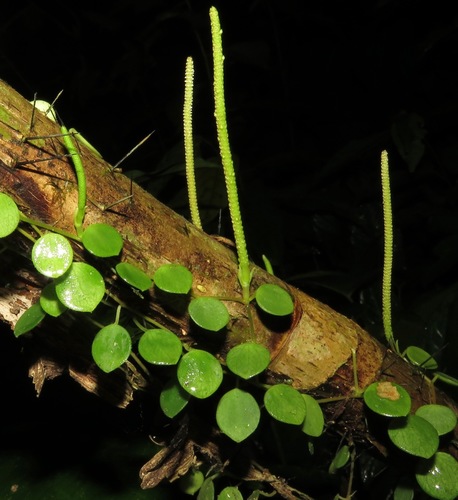
Peperomia tenuicaulis
species of plant
Amastigomycota
Amastigomycota or Eufungi is a clade of fungi. It includes all fungi without flagella or centrioles, and with unstacked Golgi apparatus cisternae. Members of this clade are Dikarya and the traditional paraphyletic assemblage "Zygomycota", now divided into several monophyletic phyla.
Eupithecia exicterata
species of insect
Metasequoia foxii
species of plant
Pluriformea
Pluriformea is a sibling clade of the Filozoa, and consists of Syssomonas multiformis and the Corallochytrea. Together with the Ichthyosporea and the Filozoa, they form the Holozoa.
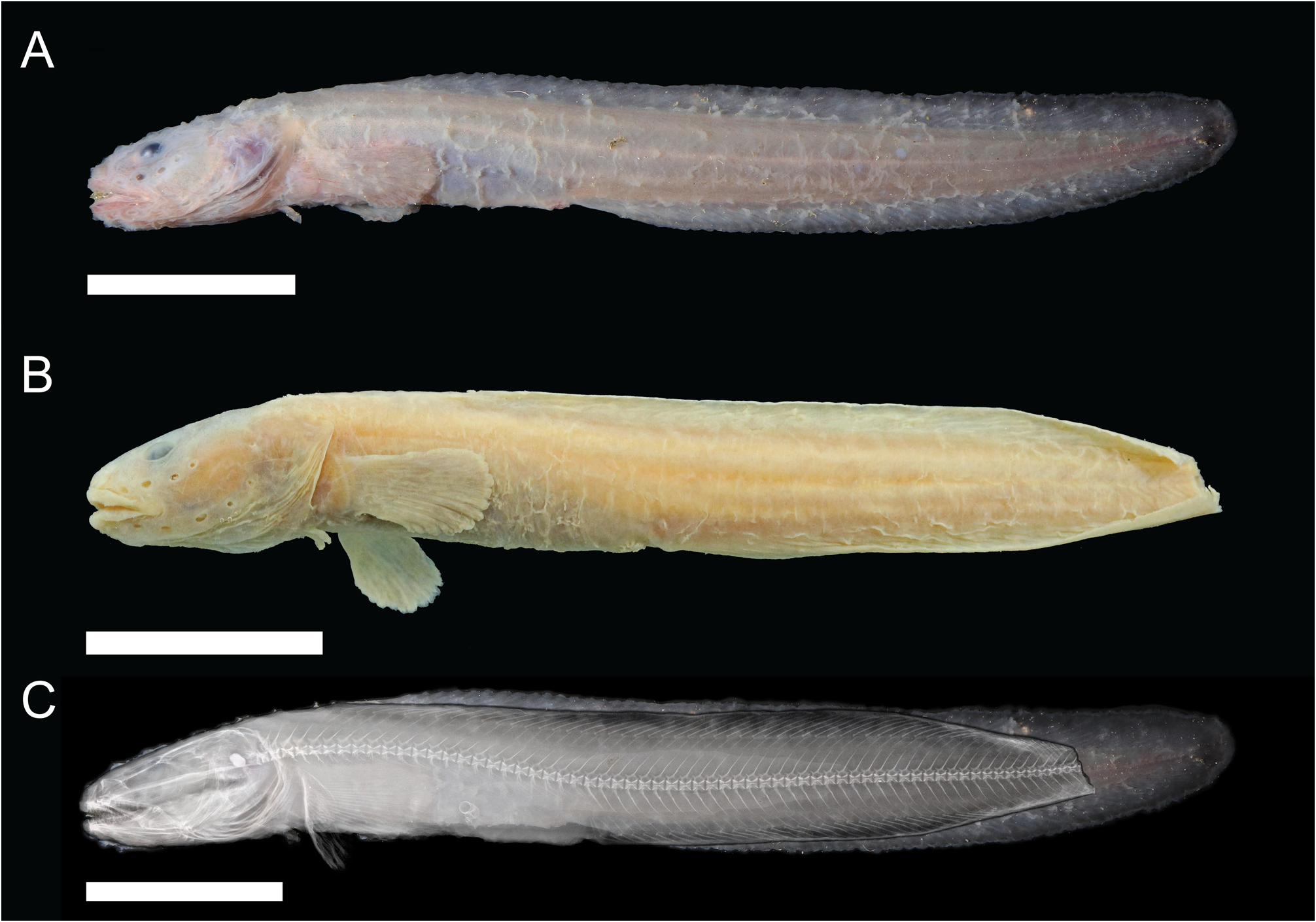
Pyrolycus jaco
species of fish
Proutia norvegica
species of insect
Pachypanthera
Pachypanthera is an extinct genus of pantherine felid (big cat) that was recovered from the Late Miocene-aged Khorat sand pits in northeastern Thailand. It contains a single species, Pachypanthera piriyai, named and described in 2023.
Ampelognathus
Ampelognathus (meaning "grapevine jaw") is an extinct genus of possibly rhabdodontomorph ornithopod dinosaurs from the Late Cretaceous (Cenomanian) Lewisville Formation of Texas. The type species is Ampelognathus coheni.
Rolfosteus canningensis
species of fish (fossil)
Utetitan
Utetitan (meaning "Ute giant") is an extinct genus of titanosaurian sauropod dinosaur from the Late Cretaceous of North America. The genus contains a single species, Utetitan zellaguymondeweyae, known from partial skeletons previously assigned to Alamosaurus. Fossils assigned to this species have been found in the North Horn Formation of Utah, and the Black Peaks and Javelina formations of Texas, United States.
Schistonota
Schistonota is a suborder of mayflies. One of the differences between this suborder and its sister group, Pannota, concerns the degree of fusion of the wing pads in the final-stage nymph; in Schistonota, the degree of fusion along the mesothorax is more than half the fore-wing length while in Pannota the degree of fusion is less than half that length. Other differences between the two groups include the morphology of the gills and also behavioural differences. Schistonota nymphs are mostly active swimmers, burrowers or sprawlers, while Pannota nymphs are more passive, slow-moving crawlers.
Alcides porosus
species of beetle
Chasmatopterini
Chasmatopterini is a tribe of scarab beetles in the family Scarabaeidae.
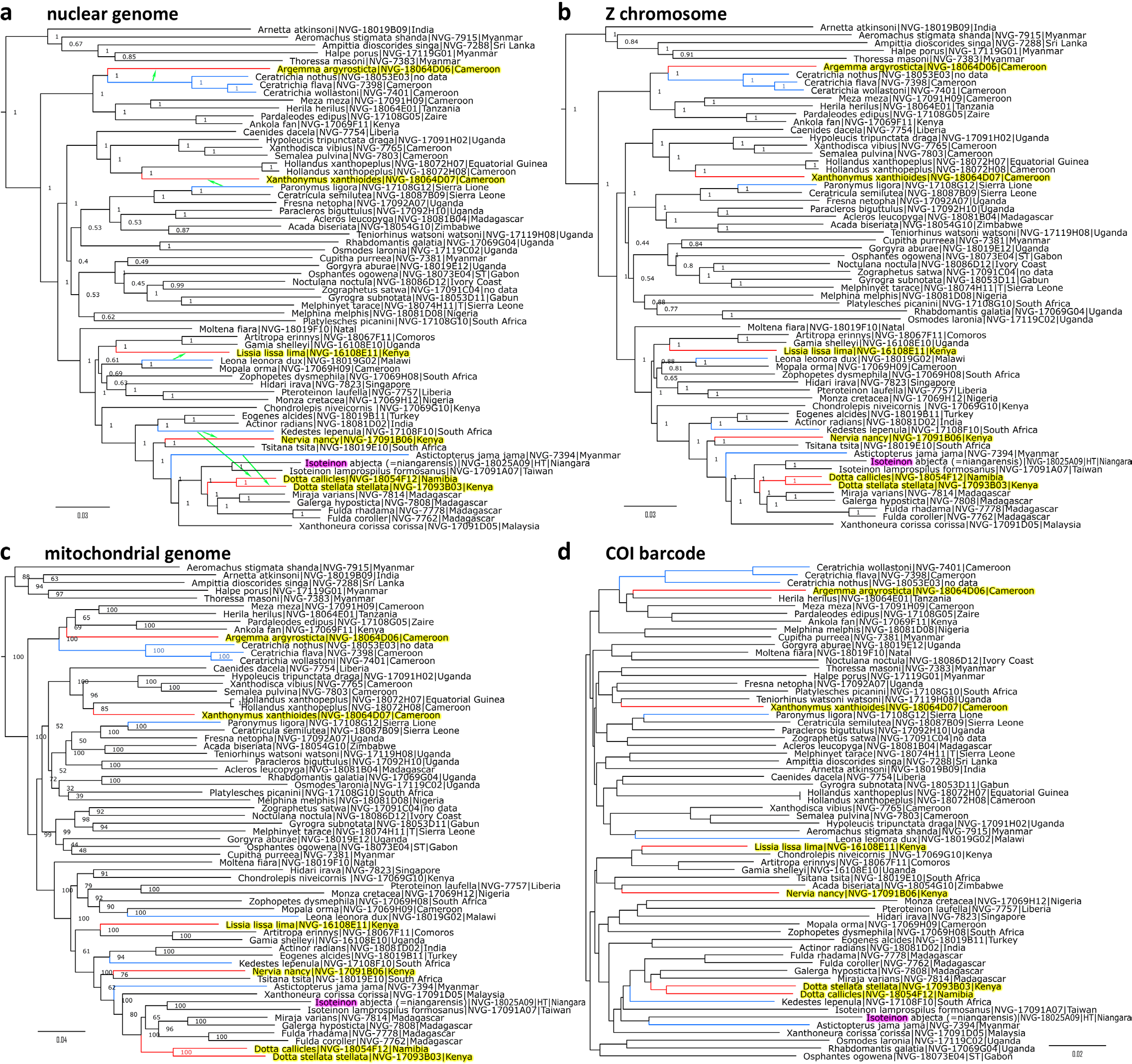
Argemma aurea
species of insect
Myobradypterygius
Myobradypterygius is an extinct genus of ophthalmosaurid ichthyosaur from the Early Cretaceous (Barremian-Hauterivian) of Argentina and possibly also Chile. One species is known, M. hauthali, which was once believed to have been a species of Platypterygius. Myobradypterygius is thought to have been a small ichthyosaur, with an estimated total body length of .
Zhongxiniscus
Zhongxiniscus is a genus of primitive chordate from eastern Yunnan that lived during the Early Cambrian. Known from a single specimen, it had a small, broad and short, fish-like body that was roughly ten millimeters in length. It possessed S-shaped myomeres, numbering roughly seven per one millimeter of length. Two triangular fins are evident on the dorsal margin.
Carabus przewalskii
species of insect
Masripithecus
Masripithecus () (mean: Egyptian ape) is an extinct genus of hominoid primate known from the Early Miocene Moghra Formation of Wadi Moghra in northern Egypt. It contains a single species, Masripithecus moghraensis, described in 2026 from mandibular remains dating to about 17–18 million years ago. The genus was described as the first definitive fossil ape known from North Africa, and the original study recovered it as closer to crown hominoids than coeval fossil apes from East Africa.