Category
page 9Taxonbars without primary Wikidata taxon IDs
Phoenicoprocta parthenii
species of insect
Pandoraviridae
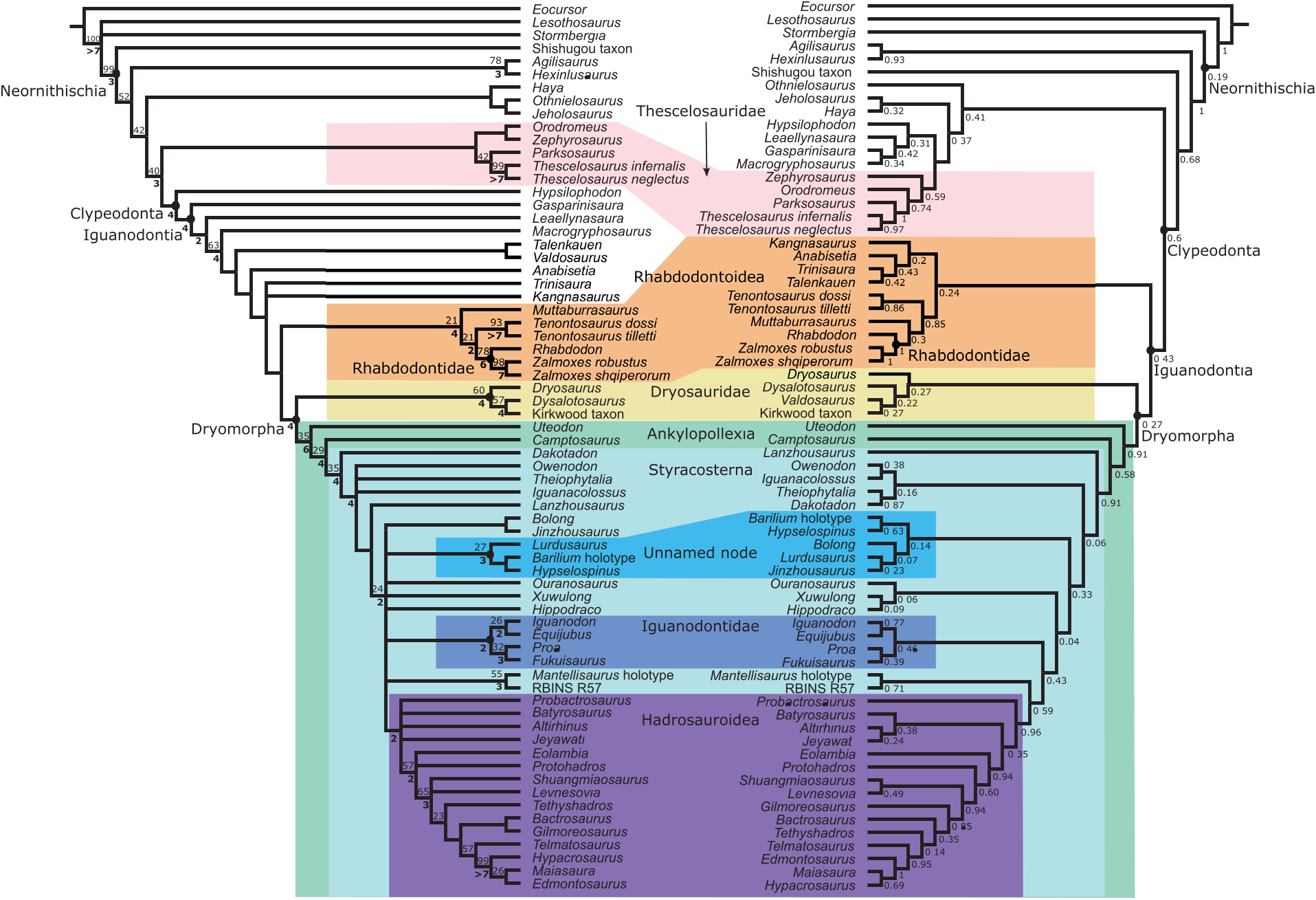
Pandoraviridae is a proposed family of double-stranded DNA viruses that infect amoebae. There is only one genus in this family: Pandoravirus. Several species in this genus have been described, including Pandoravirus dulcis, Pandoravirus salinus and Pandoravirus yedoma.
Mimovelleda
Mimovelleda umeridens is a species of beetle in the family Cerambycidae, and the only species in the genus Mimovelleda. It was described by Stephan von Breuning in 1940.
Rhamphorrhina bertolonii
species of insect
Asterolepis
extinct genus of fishes
Eupithecia naumanni
species of insect
Q138599032
Species of marsupial
Thrinacodus
Thrinacodus is an extinct genus of basal elasmobranch, found worldwide from the Late Devonian-Lower Carboniferous. The type species is Thrinacodus nanus. Most species are only known from their tricuspid teeth. T. gracia, originally placed in the separate genus Thrinacoselache from the Serpukhovian-aged Bear Gulch Limestone, of what is now Montana, is known from full body impressions, showing a long, slender eel-like body up to a metre in length, with an elongate rostrum. Stomach contents of T. gracia include remains of crustaceans and small chondrichthyan fish (Harpagofututor and Falcatus). It
Sinocephale
Sinocephale (meaning ) is a genus of pachycephalosaurid dinosaur that lived in what is now Inner Mongolia, China, during the Cretaceous period. The genus contains a single species, Sinocephale bexelli, which was originally named as a species of the genus Troodon in 1953, and later transferred to the genus Stegoceras in 1964. After decades of being considered dubious, it was re-evaluated in 2021 and recognised as a valid taxon, being given its own genus, Sinocephale. The original holotype was lost, with modern research conducted using rediscovered plaster casts.
Kladirostratus
Kladirostratus is a genus of snakes of the family Lamprophiidae. Members of this genus are known as '''Branch's beaked snakes.'''
Yantaloong
Yantaloong is an extinct genus of eusauropod dinosaur known from the Middle Jurassic Zhanghe Formation of China. The genus contains a single species, Yantaloong lini, known from six presacral vertebrae. Phylogenetic analyses place Yantaloong as a close relative of Jobaria and Lapparentosaurus. In one analysis version, these taxa were placed as the sister taxon to a clade of , forming a broader Turiasauria than recognized previously. If it is a turiasaur, it would be the first one known from East Asia.
Triboniophorus aff. graeffei
species of Gastropoda
Ischnocolinae
thumb|right
The Ischnocolinae are a problematic subfamily of tarantulas (family Theraphosidae). In 1892, Eugène Simon based the group, which he noted was only weakly homogeneous, on the presence of divided tarsal scopulae. This feature was later considered to be plesiomorphic (i.e. potentially inherited from an ancestor by multiple descendant groups), and both morphological and molecular phylogenetic studies have shown that, as traditionally circumscribed, the subfamily is not monophyletic. A much more narrowly defined Ischnocolinae sensu stricto was proposed in 2014. One of the authors of tha
Placidozoa
Placidozoa is a recently defined non-photosynthetic lineage of Stramenopiles.
Beesiiwo
Beesiiwo (meaning "big lizard") is a genus of hyperodapedontine rhynchosaur from the Late Triassic Popo Agie Formation in Western Wyoming. The type and only species is B. cooowuse, known from four specimens consisting of left and right maxilla fragments, and a left dentary fragment.
Confractosuchus
Confractosuchus is a genus of extinct eusuchian crocodyliform from the Cretaceous Winton Formation of Australia. Described as a macro-generalist, Confractosuchus was found with the bones of a juvenile ornithopod dinosaur in its abdomen. It currently contains a single species, Confractosuchus sauroktonos, which literally means "broken dinosaur killer."
Pareisactus
Pareisactus (from the Greek "pareisaktos", meaning "intruder", referring to being represented as a single element among hundreds of hadrosaurid bones) is a genus of rhabdodontid ornithopod dinosaur from the Late Cretaceous (lower Maastrichtian) Conquès Member of the Tremp Formation in the Southern Pyrenees of Spain. The type and only species is P. evrostos, known only from a single scapula.
Macrocoma daccordii
species of leaf beetle
Mosura
genus of radiodonts
Astigmasaura
Astigmasaura is an extinct genus of rebbachisaurid sauropod dinosaurs from the Late Cretaceous Huincul Formation of Argentina. The genus contains a single species, Astigmasaura genuflexa, known from an incomplete articulated skeleton.
Miniopterus zapfei
species of mammal
Bashunosaurus
Bashunosaurus is a genus of potentially macronarian sauropod dinosaur from the Middle Jurassic Shaximiao Formation of Kaijiang, China. The type and only species is Bashunosaurus kaijiangensis.
Qunkasaura
Qunkasaura is a genus of saltasauroid titanosaur dinosaur from the Late Cretaceous (Campanian–Maastrichtian) Lo Hueco site of the Villalba de la Sierra Formation of Spain. The type species is Qunkasaura pintiquiniestra.
Megachile lucifer
species of leafcutter bee (Megachile)
Beiguornis
Beiguornis is a genus of bohaiornithid dinosaurs from the Early Cretaceous Longjiang Formation of Inner Mongolia, China. The genus contains a single species, Beiguornis khinganensis. Beiguornis is the first and only enantiornithine known from the Longjiang Formation. In the phylogenetic analysis conducted by the describing authors, Beiguornis formed a monophyletic group with the bohaiornithids Sulcavis and Zhouornis.
left|thumb|222x222px|Holotype specimen of the related Zhouornis
Avifilopluma
Avifilopluma ("bird filoplumes") is a clade containing all animals with feathers. Unlike most clades, which are defined based on relative relationships, Avifilopluma is defined based on an apomorphy, that is, a unique physical characteristic shared by one group and not found outside that group (in this case, feathers). Its content is unclear, and has been speculated to range from Coelurosauria to all of Ornithodira.

Castianeira swiftay
species of spider

Eupithecia fredi
species of insect
Macrocoma djurdjurensis
species of leaf beetle
Xingxiulong
Xingxiulong (meaning "Xingxiu Bridge dragon") is a genus of bipedal massopodan sauropodomorph from the Early Jurassic of China. It contains two species; the type species is X. chengi, described by Wang et al. in 2017 from three specimens, two adults and an immature individual, that collectively constitute a mostly complete skeleton. Adults of this species measured long and tall. A second species, X. yueorum, was described by Chen et al. in 2025 based on a partial articulated postcranial skeleton of an adult individual larger than X. chengi.
Smitanosaurus
Smitanosaurus (meaning "smith lizard") is a genus of dicraeosaurid sauropod dinosaur from the Late Jurassic of Colorado. The genus contains one species, S. agilis, originally assigned to the defunct genus Morosaurus.
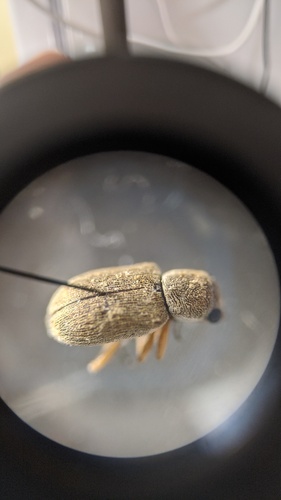
Malegia arabica
species of leaf beetle
Teleocephala
Teleocephala is a supercohort of vertebrates, it is the grouping which contains the "crown group" of the Teleostei, the bony fishes. The name was coined by Mario de Pinna in his 1996 book Interrelationships of Fishes and the clade was given the rank of supercohort by Edward O. Wiley and G. David Johnson in 2010. Some authorities treat Teleocephala and Teleosteomorpha as synonymous, however, this is only applicable when treating extant taxa and that the treatment of these taxa in the 5th edition of Fishes of the World is somewhat confusing as de Pinna's original Teleocephala is actually a combi
Dracopristis
Dracopristis (meaning 'dragon shark') is an extinct genus of ctenacanth (a group of shark-like cartilaginous fish) that lived during the Carboniferous period in North America, around 307 million years ago. The species was discovered in the Kinney Brick Quarry in New Mexico, USA. Like many fossils from the site, the fossils of Dracopristis are very well-preserved. A single species is known, Dracopristis hoffmanorum, which is named in honor of Ralph and Jeanette Hoffman, the owners of the quarry. Prior to being scientific named, D. hoffmanorum was informally referred to as the "Godzilla shark".
Actaeus armatus
species of Cambrian arthropods
Cambroernida
The Cambroernida are a clade of Paleozoic animals with coiled bodies and filamentous tentacles. They include a number of early to middle Paleozoic (Cambrian to Devonian) genera noted as "bizarre" or "orphan" taxa, meaning that their affinities with other animals, living or extinct, have long been uncertain. While initially defined as an "informal stem group," later work with better-preserved fossils has strengthened the argument for Cambroernida as a monophyletic clade.
Otidae
Otidae is a taxon that includes the superorders Otidimorphae (bustards, turacos, and cuckoos) and Strisores (nightbirds, swifts, and hummingbirds). It was identified in 2014 by genome analysis. Earlier it was thought that Strisores was closely related to birds such as pigeons, flamingos, tropicbirds, and the sunbittern and kagu in the taxon Metaves, but subsequent work has provided evidence that Metaves is polyphyletic. Although analyses of genome data provided relatively high support for monophyly of Otidae, indicating that it is sister to all other Passerea clades, other analyses of large da
Dinokaryota
Dinokaryota is a main grouping of dinoflagellates. They include all species where the nucleus remains a dinokaryon throughout the entire cell cycle, which is typically dominated by the haploid stage. All the "typical" dinoflagellates, such as Peridinium and Gymnodinium, belong here. Others are more unusual, including some that are colonial, amoeboid, or parasitic. Symbiodinium contains the symbiotic zooxanthellae.
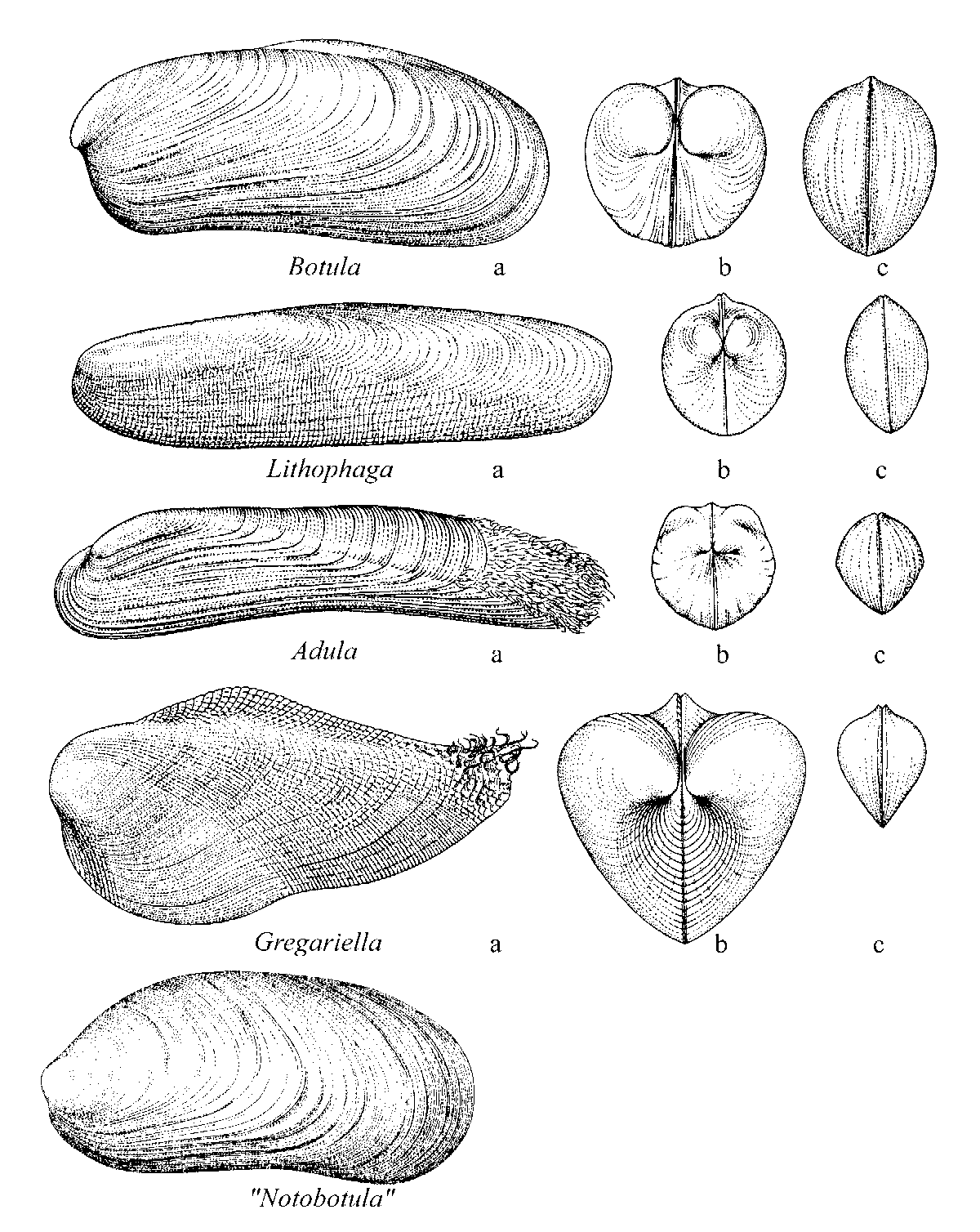
Lithophaga truncata
species of mollusc
Daito Winter Wren
subspecies of bird
Nepenthes × mirabilata
species of plant
Neosteneosaurus
Neosteneosaurus is a genus of machimosaurid, known from the Middle Jurassic Oxford Clay of the UK, and Marnes de Dives, France.
Calvarius
Calvarius (meaning "suffering") is an extinct genus of styracosternan ornithopod from the Late Cretaceous (Maastrichtian age) Talarn Formation of Spain. The genus contains a single species, Calvarius rapidus, known from a single . The slender morphology of this bone may indicate Calvarius had a cursorial (adapted to run) ecology, in contrast to its slower-moving relatives.
Calyptocephala antennata
species of insect
Owadowia
Owadowia is a genus of extinct thalassochelydian turtle from the Late Jurassic of Poland. The type and only species is Owadowia borsukbialynickae, named by Szczygielski and colleagues in 2017 for a partial lower jaw, coracoid, ilium and femur from the early Tithonian Kcynia Formation. The limited material means that it is difficult to compare Owadowia to its relatives, and it may not be a unique taxon. The genus lacks the features diagnostic to its parent clade Thalassochelydia, has similarities to Solnhofia and Portlandemys as well as being a Late Jurassic marine turtle like the remainder of
Sparrmannia dekindti
species of beetle
Eupithecia egregiata
species of insect
Iteravis
Iteravis () is an extinct genus of ornithuromorph bird known from the Early Cretaceous Jiufotang Formation of what is today the Liaoning Province of China. The genus contains a single species, Iteravis huchzermeyeri, named in honor of the archosaur palaeontologist Dr. Fritz Huchzermeyer, who died shortly before Iteravis was described. The relationships between Iteravis and species of Gansus have been debated, with some researchers arguing for a synonymy between the former and G. zheni, and others recovering a closer relationship between the two genera within the family Gansuidae.
Sahonachelys
Sahonachelys is an extinct genus of pelomedusoid turtle from the Late Cretaceous (Maastrichtian) Maevarano Formation of Madagascar. The genus contains a single species, Sahonachelys mailakavava.
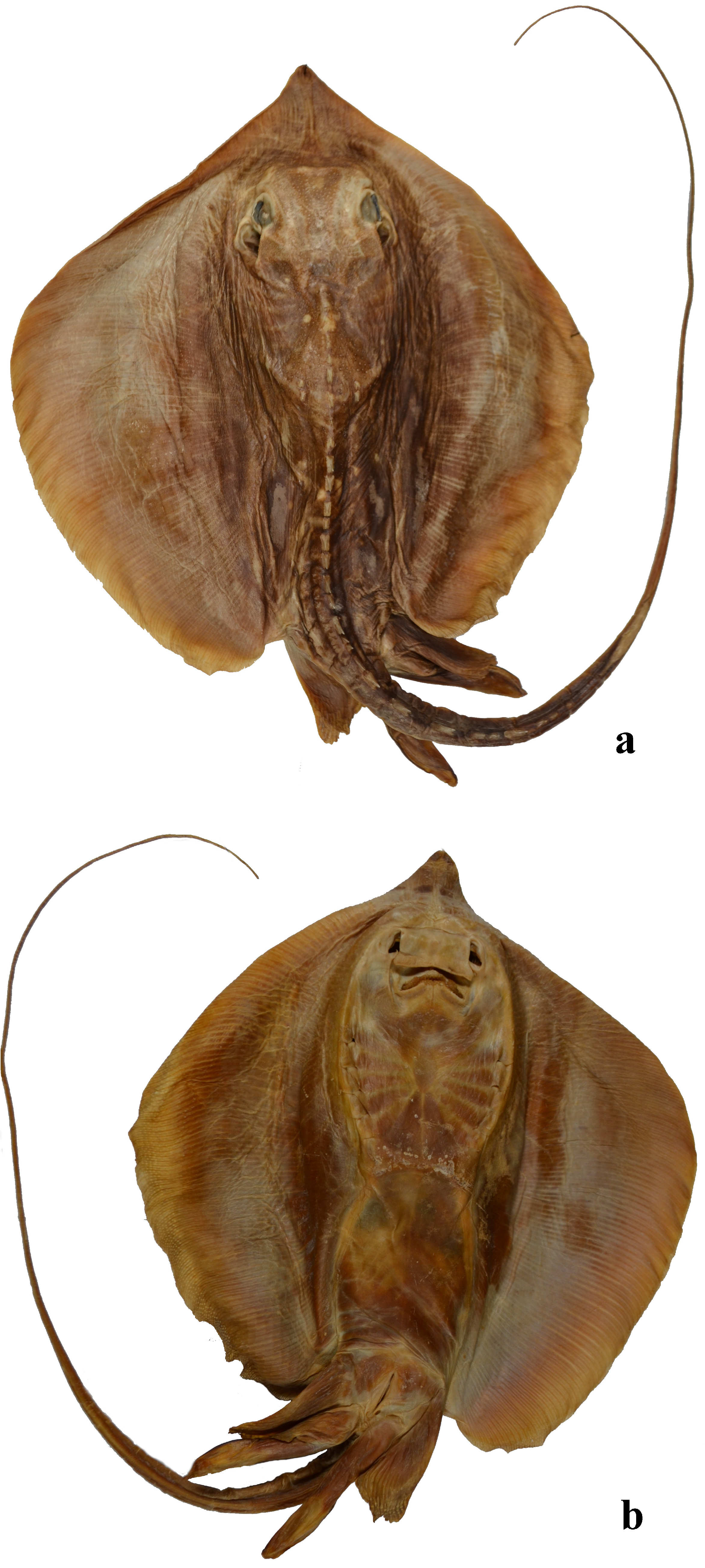
Hemitrygon yemenensis
species of stingray
Cascocauda
Cascocauda (meaning "ancient tail") is an extinct genus of anurognathid pterosaurs from the Late–Middle Jurassic Tiaojishan Formation of Hebei Province, China. The genus contains a single species, C. rong, known from a complete skeleton belonging to a juvenile individual preserved with extensive soft-tissues, including wing membranes and a dense covering of pycnofibres. Some of these pycnofibres appear to be branched, resembling the feathers of maniraptora theropod dinosaurs, suggesting that pterosaur pycnofibres may be closely related to feathers in dinosaurs.
Horshamosaurus
Horshamosaurus is a genus of herbivorous ankylosaurian dinosaur from the Barremian stage of the Early Cretaceous of what is now England. The type species is Horshamosaurus rudgwickensis.
Jiangxititan
Jiangxititan is an extinct genus of somphospondylan titanosauriform dinosaur from the Late Cretaceous Nanxiong Formation of China. The genus contains a single species, J. ganzhouensis, known from several articulated vertebrae with ribs. Originally described as a titanosaur, Jiangxititan was later suggested to be a non-titanosaurian somphospondylan.
Thlaspida biramosa
species of insect
Casandria frigida
species of insect
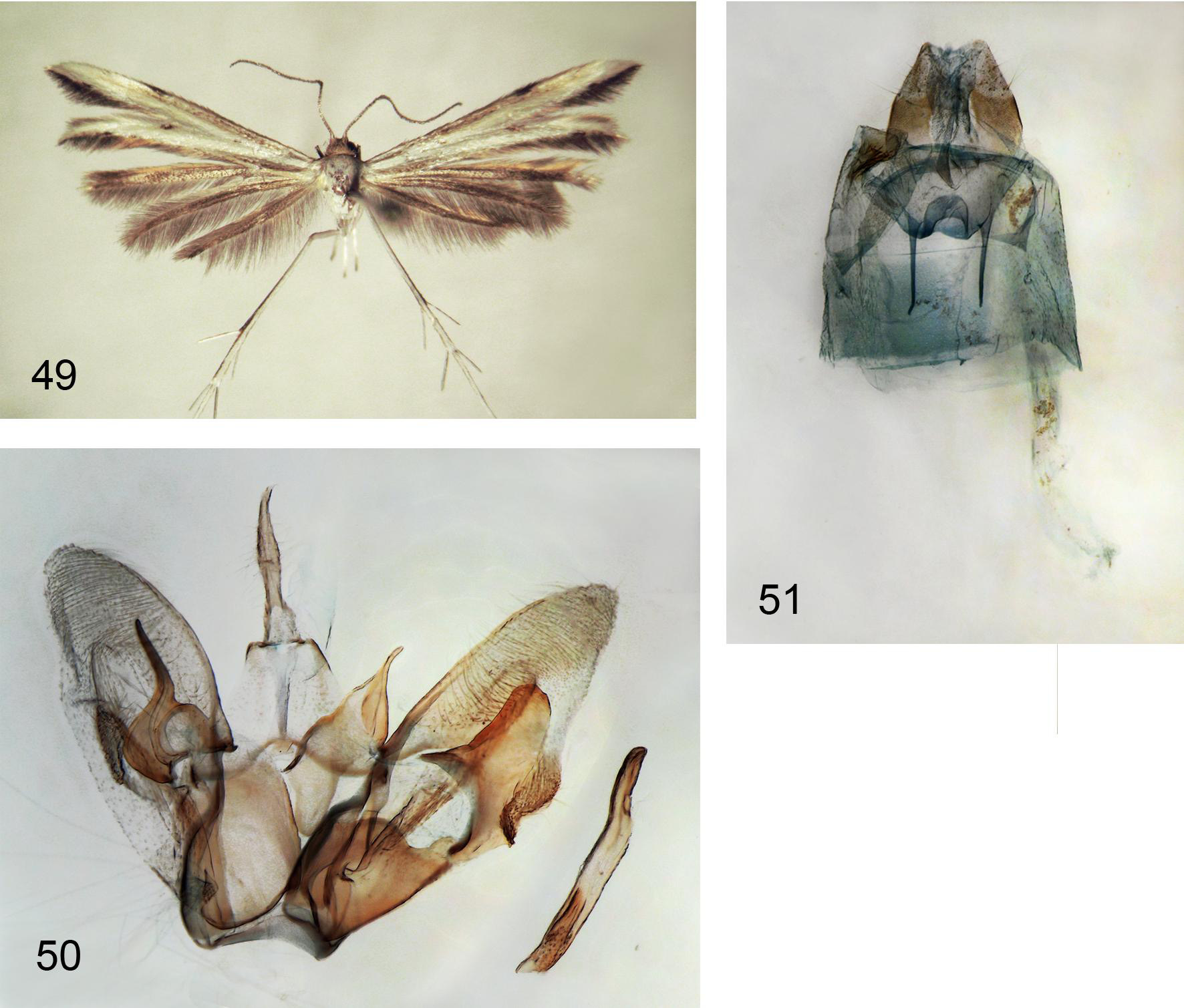
Hellinsia purus
species of insect
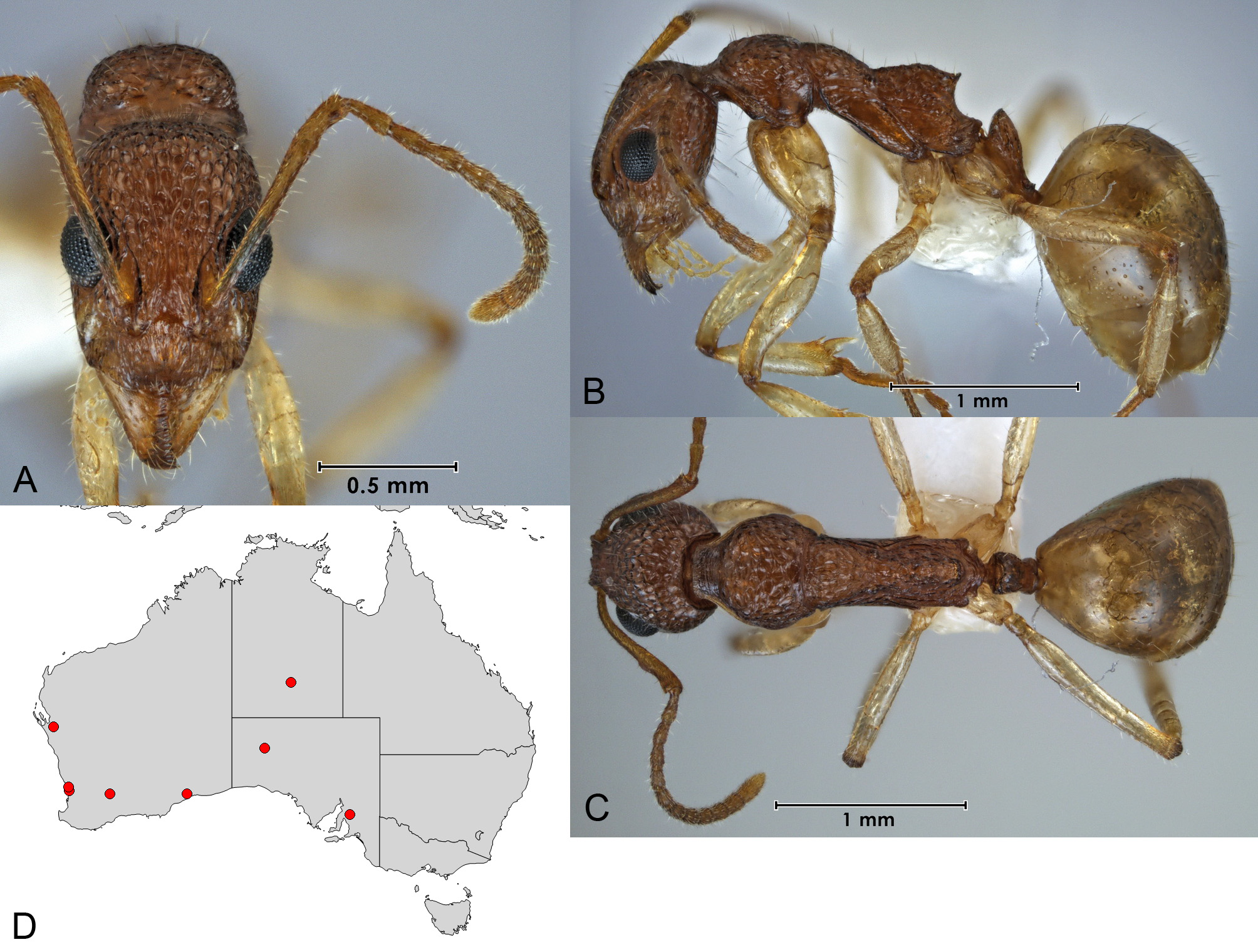
Dolichoderus pastorulus
species of insect
Gornogomphodon caffii
Gornogomphodon is an extinct genus of cynodonts from the Gorno Formation of Bergamo, Italy. It existed during the Middle Carnian age of the Late Triassic (around 216.5 to 228.0 million years ago). It contains only one species: Gornogomphodon caffi.
Xenocynus
Xenocynus is an extinct genus of metatherian mammal that lived in Brazil during the Eocene. It is a monotypic genus that contains a single species, Xenocynus crypticus.
Larger Pacific Striped Octopus
species of octopus known for its intelligence and gregarious nature