Category
page 6Taxonbars without primary Wikidata taxon IDs
influenza A virus subtype H7N3
virus subtype
Guerlinguetus brasiliensis ingrami
species of mammal
Hypsirhophus
Hypsirhophus (meaning "high roof"; often misspelled "Hypsirophus") is a genus of stegosaurian dinosaurs. It contains a single species, Hypsirhophus discurus, which is known only from a fragmentary specimen. The fossil consists of partial vertebrae from the back, three from the tail, and a piece of rib.
Burkholderia cepacia complex
group of phenotypically similar but genotypically distinct species (genomovars) in the genus Burkholderia
Attulus penicillatus
species of arachnid
Chanaresuchus
Chanaresuchus is an extinct genus of proterochampsid archosauriform. It was of modest size for a proterochampsian, being on average just over a meter in length. The type species is Chanaresuchus bonapartei was named in 1971. Its fossils were found in from the early Carnian-age Chañares Formation in La Rioja Province, Argentina . Chanaresuchus appears to be one of the most common archosauriforms from the Chañares Formation due to the abundance of specimens referred to the genus. Much of the material has been found by the La Plata-Harvard expedition of 1964–65. Chanaresuchus is the most well-des
Triaenops goodmani
species of mammal
Furcatoceratops
Furcatoceratops (meaning "forked horned face") is a genus of centrosaurine ceratopsid dinosaur from the Late Cretaceous Judith River Formation of Montana. The type species is Furcatoceratops elucidans.
Vectidromeus
Vectidromeus (meaning "Isle of Wight runner") is an extinct genus of hypsilophodontid ornithopod dinosaur from the Early Cretaceous Wessex Formation of England. The genus contains a single species, V. insularis, known from a partial skeleton belonging to a juvenile individual.
Carletonomys cailoi
Carletonomys cailoi is an extinct rodent from the Pleistocene (Ensenadan) of Buenos Aires Province, Argentina. Although known only from a single maxilla (upper jaw) with the first molar, its features are so distinctive that it is placed in its own genus, Carletonomys. Discovered in 1998 and formally described in 2008, it is part of a well-defined group of oryzomyine rodents that also includes Holochilus, Noronhomys, Lundomys, and Pseudoryzomys. This group is characterized by progressive semiaquatic specializations and a reduction in the complexity of molar morphology.
Notatesseraeraptor
Notatesseraeraptor ("feature mosaic tile thief"; from the Latin "nota", feature; "tesserae", tiles used to make a mosaic, in reference to the mixture of features normally found on dilophosaurids and coelophysoids; and "raptor", thief) is a genus of carnivorous theropod dinosaur that lived during the Late Triassic of what is now Switzerland. It was found in the Gruhalde Member of the Klettgau Formation. It was an early member of Neotheropoda with affinities to Dilophosaurus and Averostra. The new genus and species Notatesseraeraptor frickensis was named by Marion Zahner and colleagues in 2019.
Tongnanlong
Tongnanlong (meaning "Tongnan District dragon") is a genus of mamenchisaurid dinosaur from the Late Jurassic Suining Formation of Chongqing, China. The type species is Tongnanlong zhimingi.
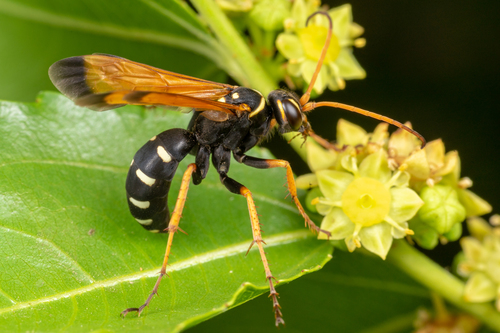
Parabatozonus lacerticida
species of insect
Charitomenosuchus
Charitomenosuchus (meaning "graceful crocodile") is an extinct genus of machimosaurid teleosauroid from the Callovian Oxford Clay Formation of England.
upright|thumb|left|Illustration of the holotype
Douzhanopterus
Douzhanopterus is an extinct genus of monofenestratan pterosaur from the Late Jurassic of Liaoning, China. It contains a single species, D. zhengi, named by Wang et al. in 2017. In many respects, it represents a transitional form between basal pterosaurs and the more specialized pterodactyloids; for instance, its tail is intermediate in length, still being about twice the length of the femur but relatively shorter compared to that of the more basal Wukongopteridae. Other intermediate traits include the relative lengths of the neck vertebrae and the retention of two, albeit reduced, phalanx bon
Haenamichnus
Haenamichnus is an ichnogenus of probable azhdarchid pterosaurs from the Late Cretaceous (Campanian) of South Korea. The type and only ichnospecies is H. uhangriensis, representing the largest known trace fossil made by a pterosaur.
Mirasaura
Mirasaura (meaning "wonderful reptile") is an extinct genus of drepanosauromorph reptiles known from the Middle Triassic (Anisian age) Grès à Voltzia Formation of France. The genus contains a single species, Mirasaura grauvogeli, known from two partial skeletons preserving the skull, most of the body, and the soft tissue crest, in addition to 80 incomplete specimens preserving isolated parts of this crest. Like the closely related Longisquama, Mirasaura bears an unusual crest of elongated appendages over its back, likely serving a display purpose.
Passer predomesticus
prehistoric species of bird
Sri Lankan axis deer
subspecies of mammal
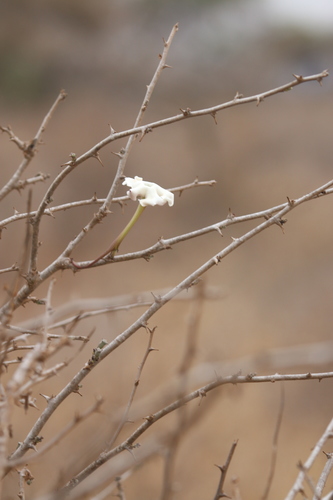
Sesamothamnus rivae
species of plant
Halpemorpha hyrtacus
species of insect
Fukuipteryx
Fukuipteryx is an extinct genus of basal avialan dinosaurs found in Early Cretaceous deposits from Japan's Kitadani Formation. It contains one species, Fukuipteryx prima.
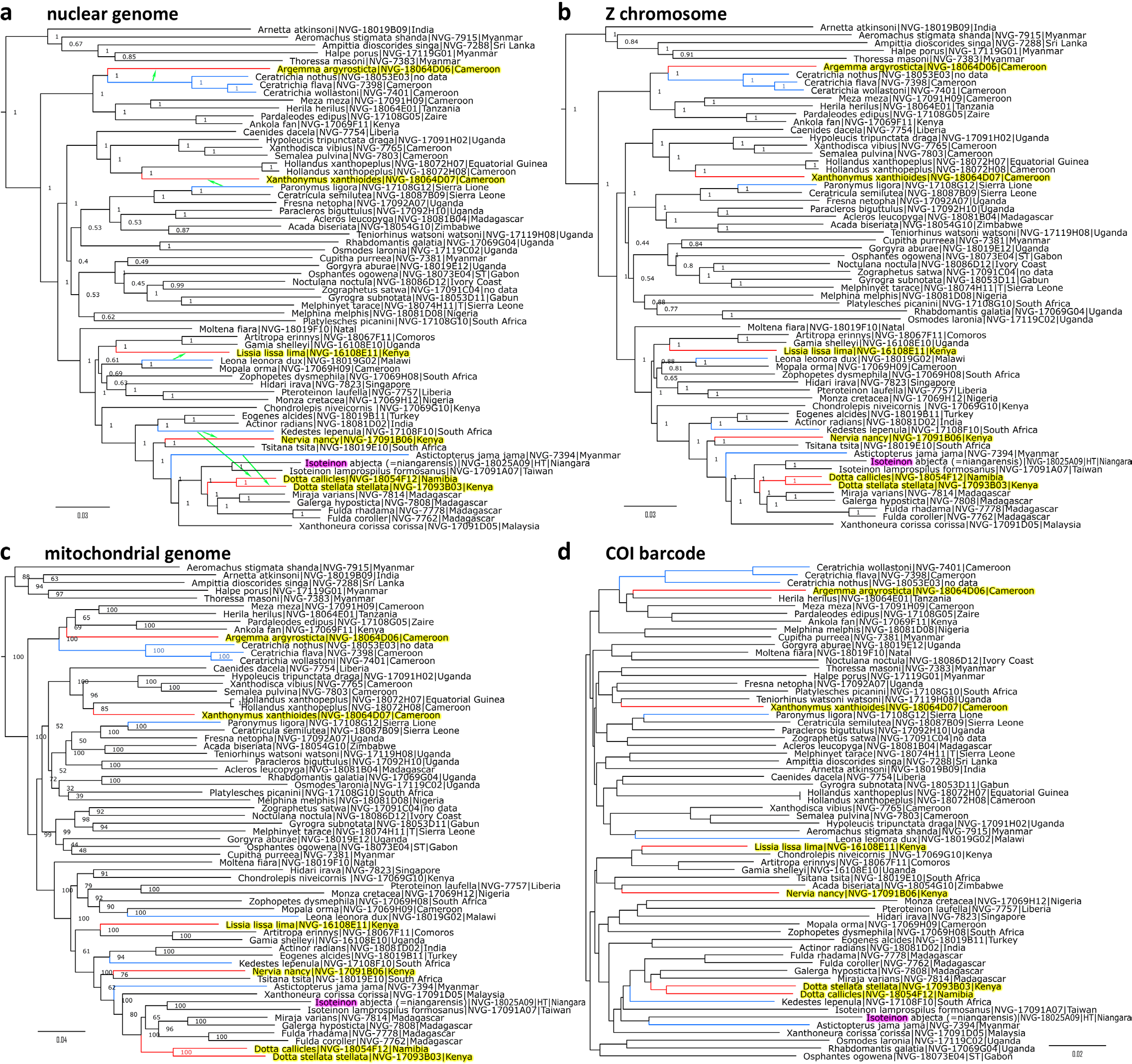
Argemma argyrosticta
species of insect
Xingtianosaurus
Xingtianosaurus is an extinct genus of oviraptorosaurian theropod dinosaur that lived in what is now China during the Early Cretaceous. The type and only species, X. ganqi, was named and described in 2019. It was placed in the Caudipteridae, alongside Caudipteryx and Similicaudipteryx.
Mutpuracinus archiboldi
Mutpuracinus archibaldi is an extinct carnivorous, quadrupedal marsupial that lived during the middle Miocene and is the smallest known thylacinid at approximately 1.1 kilograms, the size of a quoll, though, more closely related to the recently extinct thylacine.
Boloria jerdoni
species of butterfly
Cyanocoracinae
Cyanocoracinae (the New World jay subfamily) is one of the six subfamilies of the crow family Corvidae. It is composed of 5 genera totalling 39 species.
Serradraco
Serradraco is a genus of Early Cretaceous pterodactyloid pterosaur from the Valanginian aged Tunbridge Wells Sand Formation in England. Named by Rigal et al. in 2018 with the description of a second specimen, it contains a single species, S. sagittirostris, which was formerly considered a species of Lonchodectes, L. sagittirostris. Although it has been interpreted as a probable lonchodectid, a subsequent study suggested it did not belong in Lonchodectidae.
Mormyrinae
The subfamily Mormyrinae contains all but one of the genera of the African freshwater fish family Mormyridae in the order Osteoglossiformes. They are often called elephantfish due to a long protrusion below their mouths used to detect buried invertebrates that is suggestive of a tusk or trunk (some such as Marcusenius senegalensis gracilis are sometimes called trunkfish though this term is usually associated with an unrelated group of fish). They can also be called tapirfish.
Migmanychion
Migmanychion (meaning "claw mixture") is an extinct genus of maniraptoran theropod dinosaur from the Early Cretaceous Longjiang Formation of China. The genus contains a single species, M. laiyang, known from an incomplete left forelimb.
Eresiomera phaeochiton
species of insect
Klobiodon
Klobiodon is a genus of rhamphorhynchid pterosaur from the Middle Jurassic Taynton Limestone Formation of Oxfordshire, England.
Praomyini
Praomyini is a tribe of muroid rodents in the subfamily Murinae. Species in this tribe are found mostly throughout Sub-Saharan Africa, but one species (Mastomys erythroleucus) is found in North Africa, and another (Ochromyscus yemeni) is found in the Arabian Peninsula.
Alashan wapiti
subspecies of mammal
Millardini
Millardini is a tribe of muroid rodents in the subfamily Murinae. Species in this tribe are found in South and Southeast Asia.
Laminacaris
Laminacaris is a genus of extinct stem-group arthropods (Radiodonta) that lived during the Cambrian period. It is monotypic with a single species Laminacaris chimera, the fossil of which was described from the Chengjiang biota of China in 2018. Around the same time, two specimens that were similar or of the same species were discovered at the Kinzers Formation in Pennsylvania, USA. The first specimens from China were three frontal appendages, without the other body parts.
Neozoa
The Scotokaryotes is a proposed basal eukaryote clade sister to Diaphoretickes. Likely Scotokaryote groupings include the Metamonads, the Malawimonas and the Podiata. The name comes from the Greek word scotos (dark) due to the complete absence of photosynthetic organisms in this clade, contrasting with Diaphoretickes and Excavata.
Gazella borbonica
species of mammal
Glissando babbler
species of bird
Obamus coronatus
Obamus is an extinct enigmatic organism from the late Ediacaran of Australia, . It is torus in shape, and is a monotypic genus, containing only Obamus coronatus.
Hesperonyx
Hesperonyx (meaning "western claw") is an extinct genus of dryomorphan ornithopod dinosaur from the Late Jurassic Lourinhã Formation of Portugal. The genus contains a single species, Hesperonyx martinhotomasorum, known from bones of the fore- and hindlimbs.
Stegodon aurorae
species of mammal
Chadititan
Chadititan (meaning "titan of the salt") is an extinct genus of titanosaurian dinosaurs from the Late Cretaceous (Campanian) Anacleto Formation of Argentina. The genus contains a single species, C. calvoi, known from several fragmentary skeletons. Chadititan is characterized by its small size compared to related taxa and its particularly gracile limbs.
Foskeia
Foskeia is an extinct genus of rhabdodontomorph ornithopod dinosaurs known from the Early Cretaceous (Barremian to Aptian ages) Castrillo de la Reina Formation of Spain. The genus contains a single species, Foskeia pelendonum, known from fossils of multiple individuals of different ontogenetic stages. Before its formal description, it had been nicknamed the "Vegagete ornithopod."
Bastetodon
Bastetodon (meaning "Bastet tooth") is an extinct genus of carnivorous hyaenodont mammal from the Early Oligocene Jebel Qatrani Formation of Egypt. The genus contains single species, B. syrtos, which was originally assigned to the genus Pterodon. It was a medium-sized hyaenodont, with an estimated body mass ranging around .
Influenza A virus subtype H3N1
virus subtype
Tanystrosuchus
Tanystrosuchus (meaning "long crocodile") is a dubious genus of theropod dinosaur from the late Triassic period (middle Norian stage, around 208 million years ago). It is known from a single fossil neck vertebra of the species T. posthumus, found in the Middle Stubensandstein formation of what is present-day Germany.
Theraphosoidea
The Theraphosoidea are a superfamily of mygalomorph spiders. They contain two families of spiders:
Theraphosidae, the true tarantulas
Paratropididae, the bald-legged spiders
Vampyronassa rhodanica
Vampyronassa rhodanica ("vampire fish trap") is an extinct vampyromorph cephalopod known from around 20 fossils from the Lower Callovian (165–164 Ma) of La Voulte-sur-Rhône, Ardèche, France.
Cabozoa
thumb|300px|Evolution of the algae, as depicted by Thomas Cavalier-Smith in 2002. Neither the tree's structure nor some of the terms in the diagram reflect a modern consensus.
Coccosteina
Coccosteina is an extinct infraorder of placoderms, armored fish most diverse during the Devonian. However, the term is no longer in use, as modern cladistical methods have produced alternative phylogenetic trees of Brachythoraci with new subdivisions.
influenza A virus subtype H10N7
Suptype of the Influenza A virus
Pseudoungulata
Pseudoungulata, or "false hoofed mammals", is a possible clade made up of two subgroups, aardvarks and paenungulates (hyraxes, elephants, and sirenians). Before this group was proposed, it was thought that aardvarks were more closely related to xenarthrans. However, all of these mammals are now considered to be part of Afrotheria, which also includes elephant shrews and afrosoricidans. Other positions of aardvarks within Afrotheria are possible, such as being closest relatives of elephant shrews and/or afrosoricidans.
Influenza A virus subtype H2N3
subtype of Influenza A virus
Oxylidini
The Oxylidini are a small tribe of butterflies in the family Lycaenidae. It is alternatively treated as a subtribe, Oxylidina, of the Theclini.
Leptostomia
Leptostomia () is an extinct genus of pterosaur that lived during the Cenomanian and possibly Albian stages of the ?Early-Late Cretaceous period in what is now Morocco, North Africa. Leptostomia is known from only two isolated rostrum (beak) fragments. In 2021, paleontologist Roy E. Smith and colleagues named the type and only known species, Leptostomia begaaensis, based on these fossils. Leptostomia is a small pterosaur, with the complete skull length estimated between , making it much smaller than many contemporary pterosaurs. The beak of Leptostomia is remarkably long, narrow, and compresse
Torukjara
Torukjara is an extinct genus of tapejarin pterodactyloid pterosaurs from the Early Cretaceous "Pterosaur Graveyard" (Caiuá Group) of Brazil. The genus contains a single species, T. bandeirae, known from several specimens. The Torukjara fossil material was originally assigned to Caiuajara, but several anatomical differences indicate that both similar species coexisted in the ecosystem.
Influenza A virus subtype H7N4
virus subtype
Meilifeilong
Meilifeilong () is an extinct genus of chaoyangopterid pterosaurs from the Early Cretaceous Jiufotang Formation of China. The genus contains two species. The type species, M. youhao, was described in 2023 based on an almost complete skeleton and a partial isolated skull. The second species, M. sanyainus, was described earlier in 2023 as a species of Shenzhoupterus, based on a complete skull and skeleton. Meilifeilong is the best-preserved and most complete chaoyangopterid currently known.
Wudingloong
Wudingloong is an extinct genus of massopodan sauropodomorph dinosaurs known from the Early Jurassic Yubacun Formation of China. The genus contains a single species, Wudingloong wui, known from a partial skeleton including the skull.