Category
page 7Taxonbars without primary Wikidata taxon IDs
dingo–dog hybrid
hybrid cross between a dingo and a domestic dog
Parotodus
Parotodus, commonly known as the false-toothed mako shark (or false mako shark), is an extinct genus of mackerel shark that lived approximately 53 to one million years ago during the Eocene and Pleistocene epochs.
Its teeth, which are found worldwide, are often prized by fossil collectors due to their rarity. The scarcity of fossils is because Parotodus likely primarily inhabited open oceans far away from the continents. While the placement of Parotodus with the Lamniformes has been debated, most researchers agree it was probably a member of a now extinct shark clade, either a otodontid or a
Xenambulacraria
Xenambulacraria is a proposed clade of animals with bilateral symmetry as an embryo, consisting of the Xenacoelomorpha (i.e., Xenoturbella and acoelomorphs) and the Ambulacraria (i.e., echinoderms and hemichordates).
Bos palaesondaicus
species of mammal
Tietasaura
Tietasaura (meaning "Tieta lizard") is an extinct genus of elasmarian ornithopod dinosaur from the Early Cretaceous Marfim Formation of Brazil. The genus contains a single species, T. derbyiana, known from a single incomplete femur. Tietasaura is notable for being the first ornithischian dinosaur ever named from Brazil.
Dasosaurus
Dasosaurus is an extinct genus of somphospondylan sauropod dinosaur known from the Early Cretaceous (Aptian) Itapecuru Formation of Brazil. The genus contains a single species, Dasosaurus tocantinensis. Its morphology is similar to the titanosauriform Garumbatitan, known from the Early Cretaceous of Spain.
Sidersaura
Sidersaura (meaning "star lizard") is an extinct monotypic genus of rebbachisaurid sauropod dinosaur from the Late Cretaceous Huincul Formation of Argentina. The genus contains a single species, S. marae, known from the remains of four individuals. Sidersaura represents one of the largest known rebbachisaurids.
Metaves
Metaves ("other birds") is a controversial group proposed by Fain & Houde (2004) and later rescued on the studies of Ericson et al. (2006) and Hackett et al. (2008). This group consists of several lineages that diversified early in Neornithes evolution. These lineages include Strisores (hummingbirds, swifts, nightjars and allies), pigeons, sandgrouses, mesites, Eurypygae (sunbittern and kagu), tropicbirds and Mirandornithes (flamingos and grebes), but the exact members of Metaves and their relationship differs between those studies, and the group is only supported by the β-fibrinogen gene.
Eupholus chevrolati
species of beetle
Ogresuchus
Ogresuchus is an extinct crocodylomorph known from the Upper Cretaceous (Maastrichtian stage) Tremp Formation in Spain. The type species, O. furatus, was named in 2020. It was a small crocodylomorph, measuring long and weighing about . Initially classified as a sebecid, a 2026 study suggested that it was a neosuchian, possibly an atoposaurid.
Selenogyrinae
The Selenogyrinae are a subfamily of tarantulas found in Africa and Asia.
hobby
subgenus of falcon
Gandititan
Gandititan is an extinct genus of titanosaurian sauropod dinosaur from the Late Cretaceous Zhoutian Formation of China. The genus contains a single species, G. cavocaudatus, known from a partial skeleton.
Beipiaognathus
Beipiaognathus (meaning Beipiao jaw) is a dubious genus of coelurosaurian theropod from the Early Cretaceous Yixian Formation of Liaoning, China. The type species is Beipiaognathus jii and it was named and described by Hu et al. in 2016.
Acacia sensu lato
polyphyletic genus of shrubs and trees
Phloeomyini
tribe of mammals
list of alternative names for the human species
Wikimedia list article
Reticulofilosa
Reticulofilosa is a grouping of Rhizaria.
Itapeuasaurus
Itapeuasaurus (meaning "Itapeua lizard") is a genus of rebbachisaurid sauropod dinosaur from the Alcântara Formation (Itapecuru Group) of Maranhão in Brazil. The type and only species is Itapeuasaurus cajapioensis. It is the most complete Cenomanian-aged diplodocoid known from South America and it is also the first reported Cenomanian-aged rebbachisaurid discovered in South America.
Mierasaurus
Mierasaurus is an extinct genus of sauropod dinosaur from the Early Cretaceous of Utah, United States. The taxon was first described and named in 2017 by Rafael Royo-Torres and colleagues, from a mostly complete skeleton including a disarticulated partial skull and mandible, teeth, multiple vertebrae from along the length of the body, both scapulae, radius and ulna bones, a left manus, a complete pelvis, both femora and the entire left hindlimb. Additionally, they referred a lower jaw and femur from juvenile individuals, which were found nearby, to the genus. Collectively, Mierasaurus is among
Homo juluensis
species of archaic humans

Sicilian wolf
subspecies of carnivore
Graminid clade
clade of flowering plants
Eumicrotremus barbatus
species of fish
Bosavi woolly rat
species of mammal
Kariridraco
Kariridraco is a genus of thalassodromid pterosaur from the Early Cretaceous-aged Romualdo Formation, Brazil. The genus contains a single species, Kariridraco dianae.
Q133657969
Garudapterus (meaning "Garuda wing") is a genus of ctenochasmatid pterosaur that lived during the Early Cretaceous in what is now Thailand. The type and only species is G. buffetauti, named after the palaeontologist Éric Buffetaut for his longstanding contributions to Thai palaeontology. Garudapterus is known from a partial rostrum and associated tooth fragments discovered in 2023 and named in 2025, making it the first pterosaur species to be named from South-East Asia. It belonged to the gnathosaurine lineage of pterosaurs, possessing a spatulate rostrum and elongate teeth, and is distinguish
Ursus arctos priscus
extinct subspecies of Eurasian brown bear
Ordosipterus
Ordosipterus is a pterosaur belonging to the suborder Pterodactyloidea. Its holotype specimen was discovered in China, and dated back to the Early Cretaceous period (Aptian stage). Further analysis conclude that it was a genus of dsungaripterid pterosaur.
Huayracursor
Huayracursor () is an extinct genus of early sauropodomorph dinosaurs known from the Late Triassic (Carnian age) Santo Domingo Formation of Argentina. The genus contains a single species, Huayracursor jaguensis, known from a partial articulated skeleton.
Hypsibema missouriensis
species of reptile (fossil)
La Crosse encephalitis
Human disease
Malaconotoidea
__NOTOC__
Muscicapida
Muscicapida is a clade of birds in the order Passeriformes. Oliveros, C.H. et al. (2019) suggested a gondwanan migration of this lineage from Australia to Eurasia.
Luchibang
Luchibang (meaning "Lü's heron wing") is an extinct genus of istiodactylid pterosaur discovered in Inner Mongolia, China. The type and only species is Luchibang xingzhe. The genus was initially established on the basis of a supposed nearly complete skeleton and skull, although later analysis of the specimen revealed that it represents a chimera, with the Luchibang holotype restricted to the end of the snout.
Lalieudorhynchus
Lalieudorhynchus is an extinct genus of caseid synapsids that lived during the Guadalupian (= Middle Permian) in what is now Southern France. The genus is only known by its type species, Lalieudorhynchus gandi, which was named in 2022 by Ralf Werneburg, Frederik Spindler, Jocelyn Falconnet, Jean-Sébastien Steyer, Monique Vianey-Liaud, and Joerg W. Schneider. Lalieudorhynchus is represented by a partial postcranial skeleton discovered in the Lodève basin in the central part of the Hérault department in the Occitanie region. It belongs to an individual measuring approximately in length. The degr
Bos primigenius namadicus
subspecies of mammal
Brontotholus
Brontotholus () is an extinct genus of pachycephalosaurid dinosaur known from the Late Cretaceous (Campanian stage) Two Medicine and Oldman formations of Montana, United States, and Alberta, Canada, respectively. The genus contains a single species, Brontotholus harmoni, known from multiple partial domes.
Pilmatueia
Pilmatueia is a genus of diplodocoid sauropods belonging to the family Dicraeosauridae that lived during the Early Cretaceous in what is now Argentina. Its type and only species is Pilmatueia faundezi. Pilmatueia was probably closely related to other South American dicraeosaurids such as Amargasaurus. Like other dicraeosaurids, Pilmatueia was relatively small for a sauropod. The vertebrae of Pilmatueia were more extensively hollowed out by air sacs than in other dicraeosaurids, which otherwise were characterized by a reduction in the air sac system compared to other sauropods. Pilmatueia dates
Alligator munensis
extinct species of reptile
Cave wolf
extinct subspecies of wolves (Canis lupus)
Han solo
species of trilobite
Platytrochozoa
The Platytrochozoa are a proposed basal clade of spiralian animals as the sister group of the Gnathifera. The Platytrochozoa were divided into the Rouphozoa and the Lophotrochozoa. A more recent study suggests that the mesozoans also belong to this group of animals, as sister of the Rouphozoa.
Luthrodes contracta
species of insect
Ibiza Rail
species of bird
Imperial lemon
fruit
Burkesuchus
Burkesuchus is an extinct genus of basal neosuchians from the Upper Jurassic (Tithonian)-aged Toqui Formation of southern Chile. The genus is currently represented by a single species B. mallingrandensis, named and described in 2021 on the basis of the holotype and additional referred specimens. Burkesuchus mallingrandensis was noticeably small being around an estimated 70 cm (27.5 inches) in length. The cranium is dorsoventrally depressed and transversely wide posteriorly and distinguished by a posteroventrally flexed wing-like squamosal. Burkesuchus was a small carnivore likely on inver
Amycini
Amycini is a tribe of jumping spiders. It has been treated as the subfamily Amycinae.
vulture bee
group of animal species
Chiltan Ibex
subspecies of mammal
Dicellopyge
Dicellopyge is an extinct genus of freshwater ray-finned fish that lived during the early Anisian age of the Middle Triassic epoch in what is now South Africa. It was originally named "Dicellopygae" by James Brough but the name was later corrected to Dicellopyge by Peter Hutchinson.
Dinichthyloidea
The Dinichthyloidea is an extinct superfamily of placoderms, armored fish most diverse during the Devonian. However, the term is no longer in use, as modern cladistical methods have produced alternative phylogenetic trees of Brachythoraci with new subdivisions.
taxonomy of human
classification of the human species
influenza A virus subtype H7N2
virus subtype
Macrocoma saudica
species of leaf beetle
Madura cattle
cattle breed
Alpenus intactus
species of insect
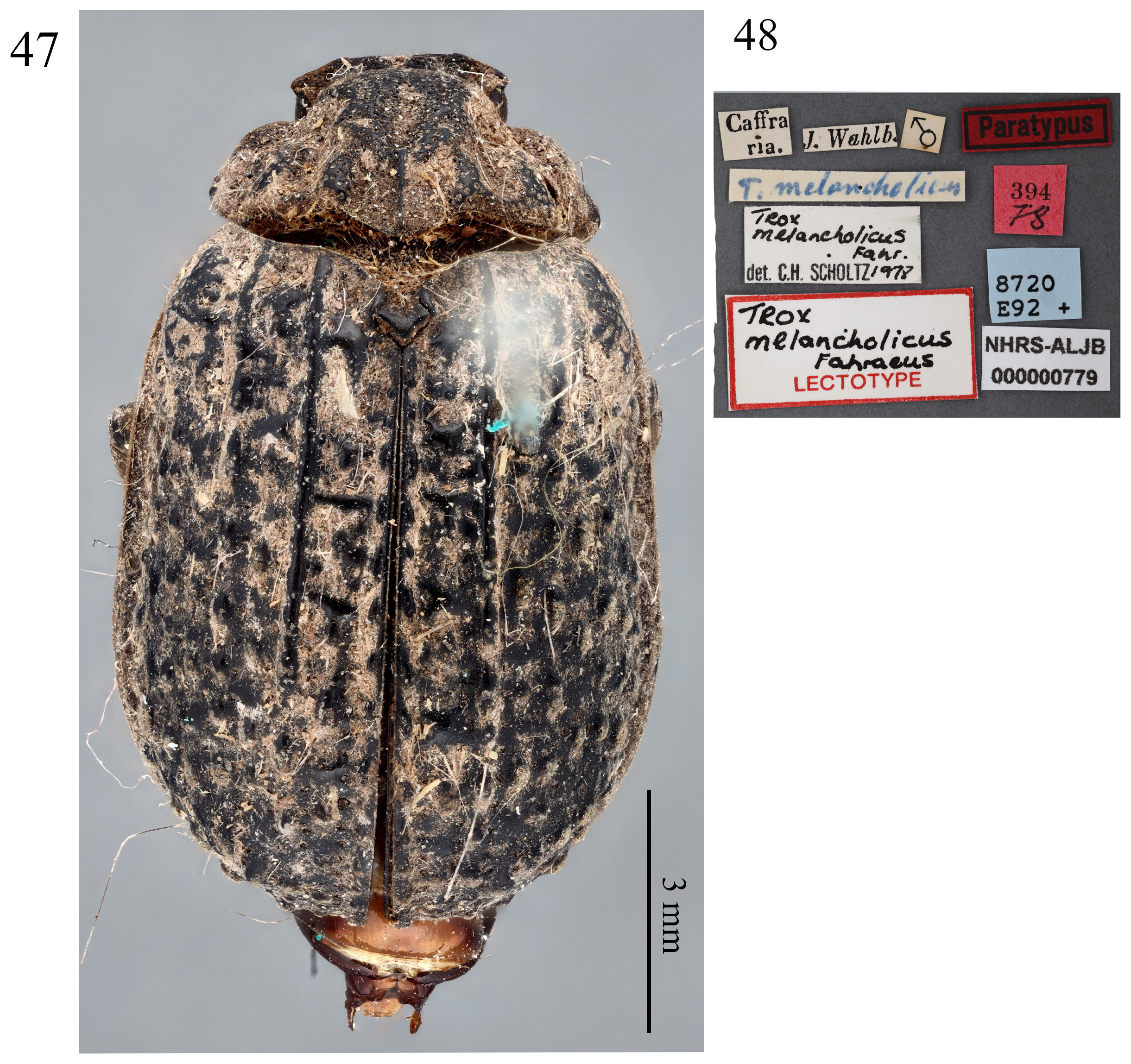
Omorgus melancholica
species of beetle
Luopterus
Luopterus (meaning "Lü Junchang's wing") is an extinct genus of anurognathid pterosaur containing only the holotype species L. mutoudengensis that is known from the Middle Jurassic Tiaojishan Formation of Qinglong, northern Hebei Province, China. It was originally named as a species of Dendrorhynchoides in 2012 but it was moved to the genus Luopterus in 2020. Luopterus was originally thought to be from the Early Cretaceous, with a wingspan that is about , making it one of the smallest known pterosaurs.
Plaxiphora aurata
species of mollusc