Category
page 1Terebratulida

Terebratulida
Terebratulids are one of only three living orders of articulate brachiopods, the others being the Rhynchonellida and the Thecideida. Craniida and Lingulida include living brachiopods, but are inarticulates. The name, Terebratula, may be derived from the Latin "terebra", meaning "hole-borer". The perceived resemblance of terebratulid shells to ancient Roman oil lamps gave the brachiopods their common name "lamp shell".
Terebratula
Terebratula is a modern genus of brachiopods with a fossil record dating back to the Late Devonian. These brachiopods are stationary epifaunal suspension feeders and have a worldwide distribution.

Terebratulidae
Terebratulidae is a family of brachiopods with a fossil record dating back to the Late Devonian. It is subdivided into 11 subfamilies.
Kraussinidae
Kraussinidae is a family of brachiopods belonging to the order Terebratulida.

Cancellothyrididae
Cancellothyrididae is a family of brachiopods belonging to the order Terebratulida. It was first described by James Allan Thomson in 1926.
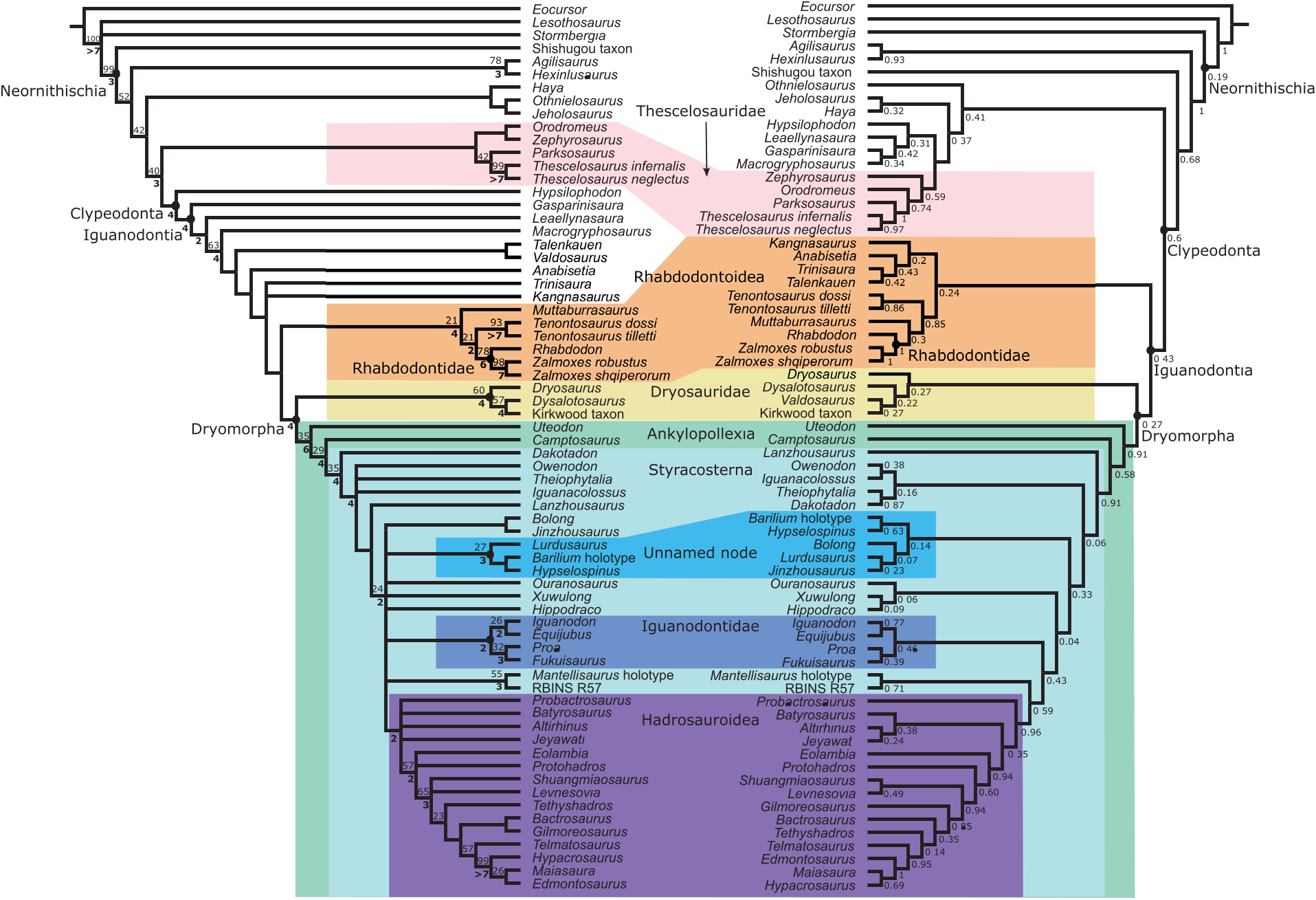
Terebratella
Terebratella is a genus of brachiopods belonging to the family Terebratellidae.
Pumilus antiquatus
species of brachiopod
Laqueidae
Laqueidae is a family of brachiopods belonging to the order Terebratulida.
Platidiidae
Platidiidae is a family of brachiopods belonging to the order Terebratulida.

Gwynia capsula
species of brachiopod

Terebratellidae
Terebratellidae is an extant family of brachiopods with a fossil record dating back to the Jurassic.
Dallinidae
Dallinidae is a family of loopbearing brachiopods belonging to the order Terebratulida.
Chlidonophoridae
Chlidonophoridae is a family of brachiopods belonging to the order Terebratulida.
== Existence ==
Fossils of Chlidonophoridae have been discovered as early as 191-183 MYA in the Jurassic period. her has a total of 52 species out of which 25 are extant to the present day (48%). There have been a total of 697 occurrences of the genus, most located in the Gulf of Mexico, North coast of Europe, West of Australia, East of Africa and South of South America.

Platidia
Platidia is a genus of brachiopods belonging to the family Platidiidae.
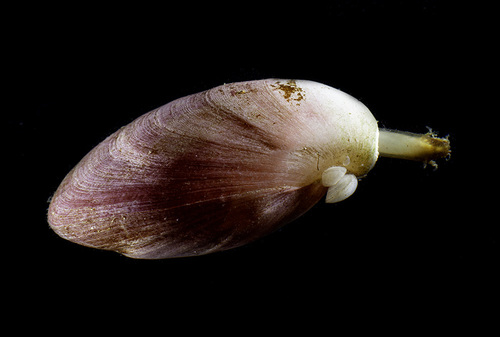
Liothyrella
Liothyrella is a genus of brachiopods belonging to the family Terebratulidae.
Abyssothyris
Abyssothyris is a genus of brachiopods belonging to the family Dyscoliidae.
Amphithyris
Amphithyris is a genus of brachiopods belonging to the family Platidiidae.
Glaciarcula
Glaciarcula is a genus of brachiopods belonging to the family Laqueidae.
Cnismatocentrum
Cnismatocentrum is a genus of brachiopods belonging to the family Cnismatocentridae.
Terebratalia
Terebratalia is a genus of brachiopods belonging to the family Terebrataliidae.
Frenulina
Frenulina is an extant genus of brachiopods, known from shallow waters in the warmer parts of the Pacific and Indian Oceans. Its shell is biconvex, rounded pentagonal in profile, and dependent on the species scarlet with creamy white radiating stripes of quickly varying width, beige or seldom entirely white. It lives attached by a stalk to a hard underground.
Megerlia
Megerlia is a genus of brachiopods belonging to the family Kraussinidae.
Megerlina
Megerlina is a genus of brachiopods belonging to the family Kraussinidae.
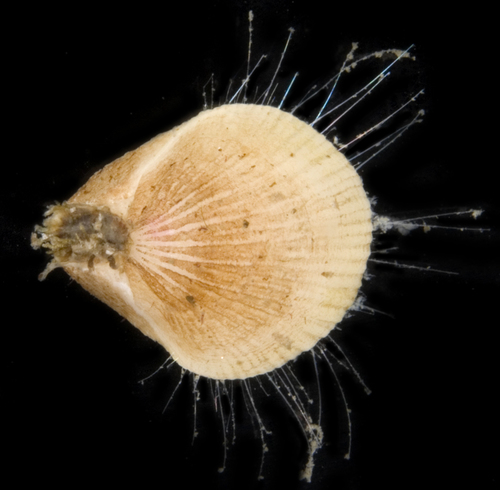
Terebratulina
Terebratulina is a genus of brachiopods belonging to the family Cancellothyrididae. The genus has a cosmopolitan distribution.
Gwynia
Gwynia is a genus of very small to minute brachiopods.
Phaneropora
Phaneropora is a genus of brachiopods belonging to the family Platidiidae.
Neothyris
Neothyris is a genus of brachiopods belonging to the family Terebratellidae.
Tichosina
Tichosina is a genus of brachiopods belonging to the family Terebratulidae.
Terebratalia transversa
species of brachiopods

Stringocephalus
Stringocephalus is an extinct genus of large brachiopods; between 388.1 to 376.1 million years old they are usually found as fossils in Devonian marine rocks. Several forms of the genus are known; they may be found in western North America, northern Europe (especially Poland), Asia and the Canning Basin of Western Australia. Several different types are known; they share a well-developed, curved structure shaped like a beak. Some of the largest specimens discovered to date have been found in China.
Leptothyrella
genus of brachiopods
Laqueus
Laqueus is a genus of brachiopods belonging to the family Laqueidae.
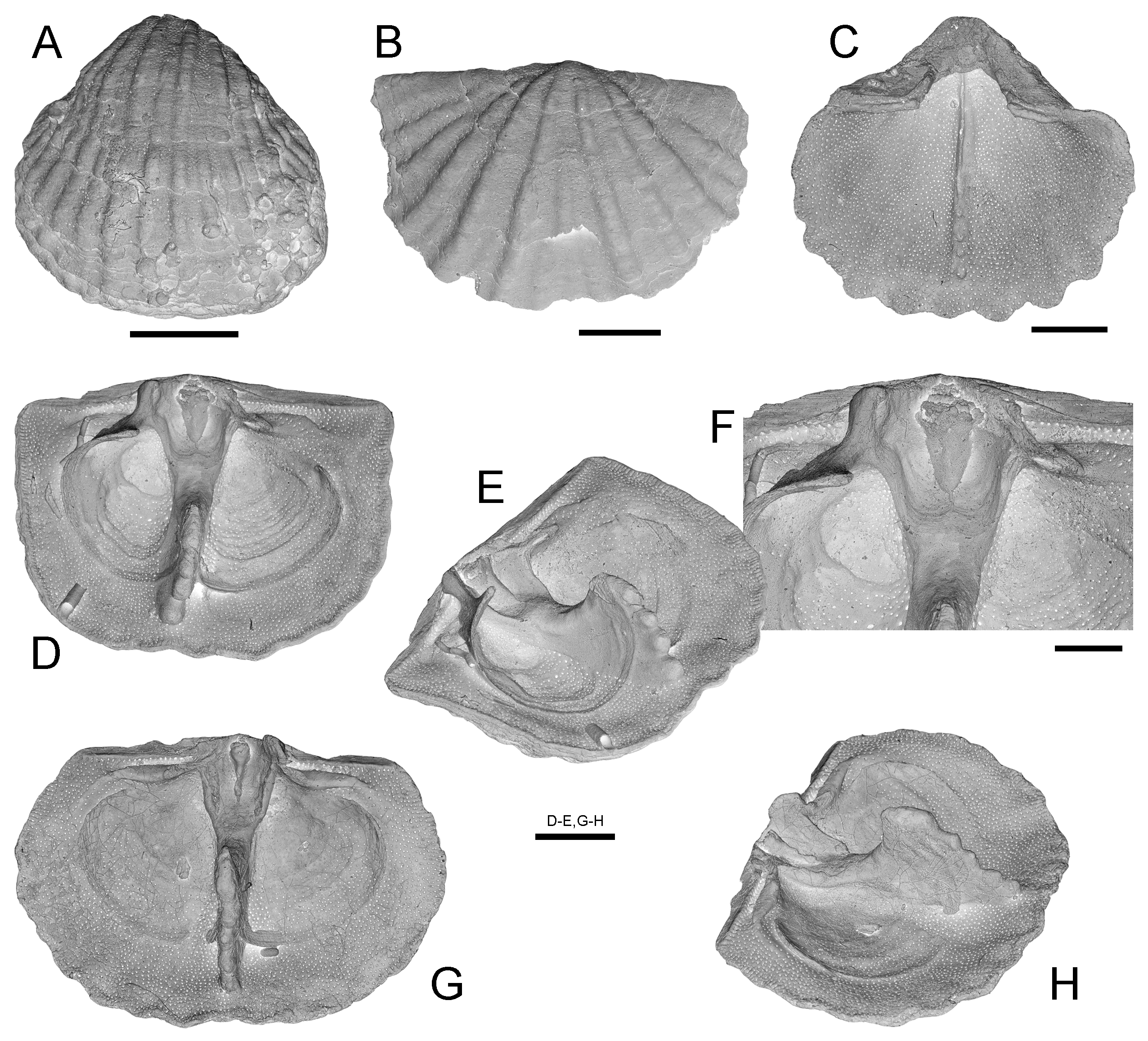
Argyrotheca
Argyrotheca is a genus of very small to minute lampshells (maximum long). All species share a large pedicel opening (or foramen), one ridge on the inside of the pedunculate valve, pits in a diamond pattern on the inside of both valves, and without radial ridges that end in tubercles. It occurs in depths between 6 and 1300 m. It is known since the latest Cretaceous.
Aulacothyropsidae
Aulacothyropsidae is a family of brachiopods belonging to the order Terebratulida.

Terebratulina septentrionalis
species of brachiopods
Nanacalathis
Nanacalathis is a genus of brachiopods belonging to the family Chlidonophoridae.
Dallina
Dallina is a genus of small to average size lampshells (maximum long). It is known since the Miocene.
Gryphus
genus of brachiopods
Fosteria spinosa
species of brachiopods
Xenobrochus
Xenobrochus is a genus of brachiopods belonging to the family Dyscoliidae.
Annuloplatidia
Annuloplatidia is a genus of brachiopods belonging to the family Platidiidae.