Category
page 1Terrestrial algae
%20Figure%202.jpg)
Nostoc
Nostoc, also known as star jelly, '''troll's butter, spit of moon, fallen star, witch's butter''' (not to be confused with the fungi commonly known as witches' butter), and '''witch's jelly,' is the most common genus of cyanobacteria found in a variety of both aquatic and terrestrial environments that may form colonies composed of filaments of moniliform cells in a gelatinous sheath of polysaccharides. It may also grow symbiotically within the tissues of plants, providing nitrogen to its host through the action of terminally differentiated cells known as heterocysts. Nostoc is a genus that inc
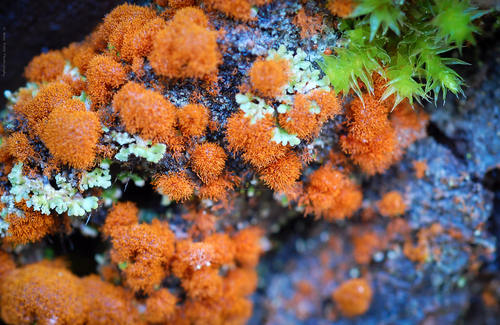
Trentepohlia
genus of algae
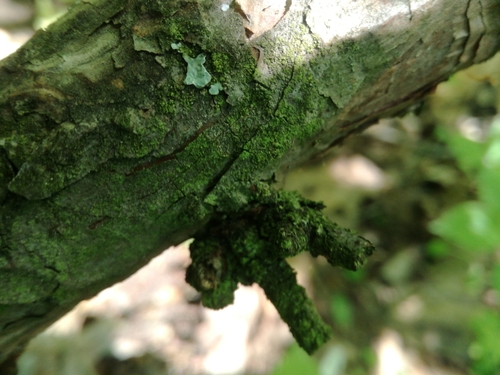
Pleurococcus
Pleurococcus is a genus of green algae in the family Chaetophoraceae that are spherical in shape with a thick cell wall to protect themselves against excessive water loss. They can be found alone or in bunches together forming a slimy layer and grow on moist, dark patches of trees, rocks and soil.

Nostoc commune
species of Cyanobacteria
.jpg)
Trebouxia
Trebouxia is a unicellular green alga. It is a photosynthetic organism that can exist in almost all habitats found in polar, tropical, and temperate regions. It can either exist in a symbiotic relationship with fungi in the form of lichen or it can survive independently as a free-living organism alone or in colonies. Trebouxia is the most common photobiont in extant lichens. It is a primary producer of marine, freshwater and terrestrial ecosystems. It uses carotenoids and chlorophyll a and b to harvest energy from the sun and provide nutrients to various animals and insects.

Chlorella vulgaris
species of alga
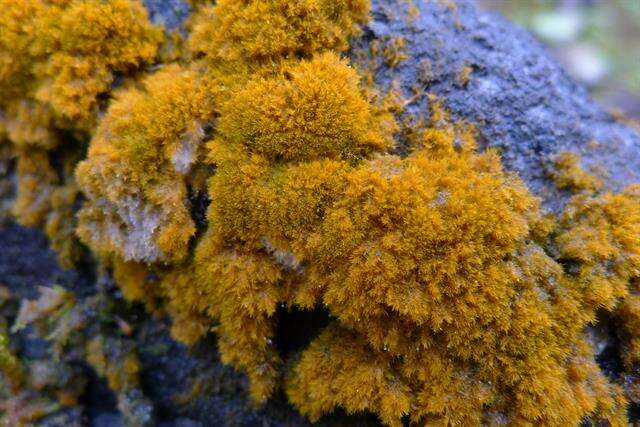
Trentepohliaceae
Trentepohliaceae are a family of green algae, and the only family in the order Trentepohliales. It is a member of the Ulvophyceaen green algae. The family is characterized by traits like net-like chloroplasts without pyrenoids, cell walls with plasmodesmata and cytokinesis by production of a phragmoplast. They are subaerial algae with a worldwide distribution.

Nostoc flagelliforme
species of edible, terrestrial cyanobacterium
.jpg)
Klebsormidium
thumb|Klebsormidium bilatum
Klebsormidium is a genus of filamentous charophyte green algae comprising 20 species. The name was proposed in 1972 to resolve confusion in application and status of Hormidium and was given for the German botanist Georg Albrecht Klebs.

Scytonema
thumb|Heterocyst of [[Scytonema crispum]]
Scytonema is a genus of photosynthetic cyanobacteria that contains over 100 species. It grows in filaments that form dark mats. Many species are aquatic and are either free-floating or grow attached to a submerged substrate, while others species grow on terrestrial rocks, wood, soil, or plants. Scytonema is a nitrogen fixer, and can provide fixed nitrogen to the leaves of plants on which it is growing. Some species of Scytonema form a symbiotic relationship with fungi to produce a lichen.
thumb|Scyptolin A
Scyptolins are a type of elastase inhibitors i

Prasiola
Prasiola is a genus of macroscopic green algae, found in a variety of habitats ranging from terrestrial, freshwater, to marine. The genus has a cosmopolitan distribution, ranging from the Arctic to the Antarctic.

Chlorococcum
Chlorococcum is a genus of green algae, in the family Chlorococcaceae. The alga may be useful in the flocculation of lipids from wastewater. It can be found in fresh water, but is more commonly found in soil or subaerial habitats (such as growing on tree bark, wood, stones, or plaster).

Cylindrospermum
thumb|upright=0.5|Illustration of "Cylindrospermum stagnale". h, heterocyst; sp, resting spore

Coccomyxa
Coccomyxa is a genus of green algae in the family Coccomyxaceae. This genus is defined by their small, elliptical to spherical shape, and the presence of a simple parietal chloroplast. These features, along with their occurrence in various lifestyles such as free-living, parasitic, or as , have been used to identify more than 40 species. Using additional morphological features, such as brown akinetes formation, allows for the differentiation between Coccomyxa and the genus Pseudococcomyxa, as they tend to share some morphological characteristics like the general cell shape and one-sided mucila
Stichococcus
Stichococcus is a genus of green algae in the family Stichococcaceae. It is a very common algal genus found in a variety of habitats, such as tree trunks, soil, snow, freshwater and marine habitats. One species, Stichococcus bacillaris is economically important as it produces fatty acids useful for biofuels.

Nostoc verrucosum
species of Cyanobacteria
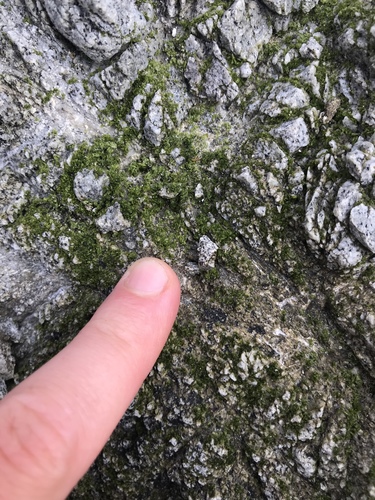
Prasiola crispa
species of seaweed

Dictyochloris
Dictyochloris is a genus of green algae in the class Chlorophyceae. It is the sole genus of the family Dictyochloridaceae. It is commonly found in terrestrial and subaerial habitats.

Trentepohlia aurea
species of alga