Category
page 1Textual scholarship

printing
upright=1.5|thumb|From top to bottom, left to right: cylinder seal of a scene, block used for [[woodblock printing, movable type, printing press, lithograph press, offset press used for modern lithographic printing, linotype machine for hot metal typesetting, digital printer, 3D printer in action.]]

Theodor Mommsen
German classical scholar and historian (1817–1903)

philology
Philology () is the study of language in oral and written historical sources. It is the intersection of textual criticism, literary criticism, history, and linguistics with strong ties to etymology. Philology is also defined as the study of literary texts and oral and written records, the establishment of their authenticity and their original form, and the determination of their meaning. A person who pursues this kind of study is known as a philologist. In older usage, especially British, philology is more general, covering comparative and historical linguistics.

papyrus
thumb|220px|Papyrus (P. British Museum|BM EA 10591 [[recto column IX, beginning of lines 13–17)]]

manuscript
thumb|right|Christ Pantocrator seated in a capital "U" in an [[illuminated manuscript from the Badische Landesbibliothek, Germany (from )]]
thumb|right|Image of two facing pages of the illuminated manuscript of "Isagoge", fols. 42b and 43a. On the top of the left hand page is an illuminated letter "D" – initial of "De urinarum differencia negocium" (The matter of the differences of urines). Inside the letter is a picture of a master on bench pointing at a raised flask while lecturing on the "Book on urines" of Theophilus. The right hand page is only shown in part. On its very bottom is an illu

bibliography
thumb|250px|Bibliographies at the University Library of Graz
Bibliography (from and ), as a discipline, is traditionally the academic study of books as physical, cultural objects; in this sense, it is also known as bibliology (from ). English author and bibliographer John Carter describes bibliography as a word having two senses: one, a list of books for further study or of works consulted by an author (or enumerative bibliography); the other one, applicable for collectors, is "the study of books as physical objects" and "the systematic description of books as objects" (or descriptive bibliog
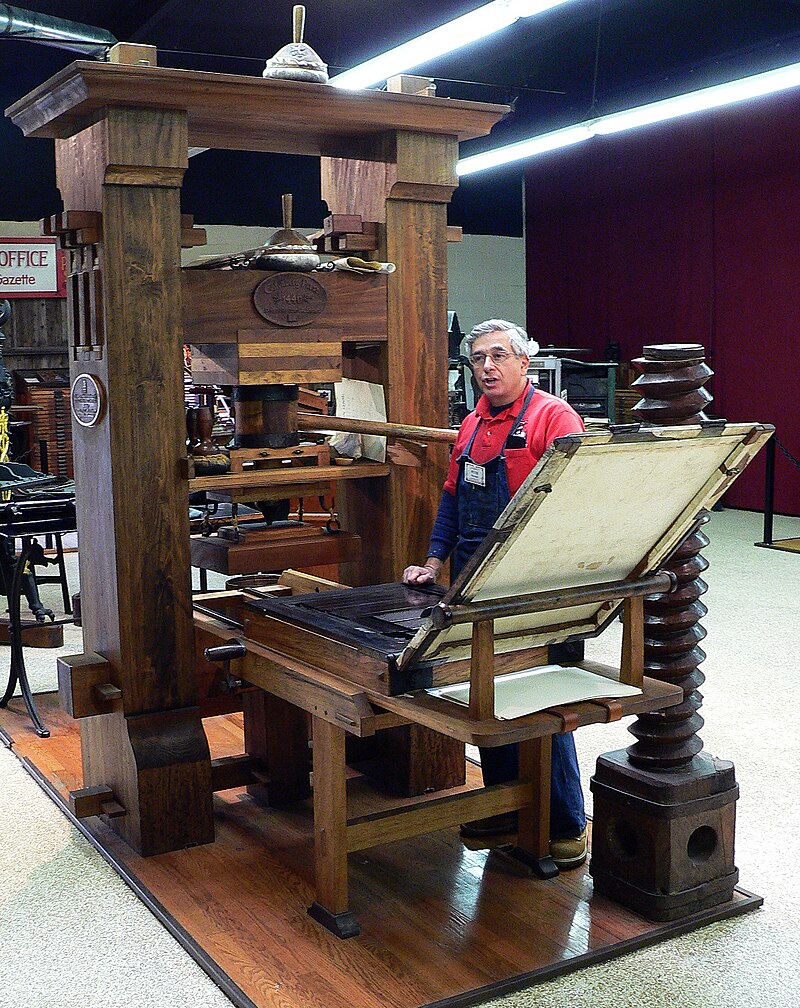
printing press
device for evenly printing ink onto a print medium

parchment
right|thumb|Central European (Northern) type of finished parchment made of goatskin (material)|goatskin stretched on a wooden frame
thumb|Parchment with a quill and ink

epigraphy
thumb|300px|The Rosetta Stone in the [[British Museum]]
thumb|right|300px|Inscription on the pedestal of the statue of Michel Ney from Paris
thumb|Tamil inscription on Brihadisvara Temple, Thanjavur|Brihadeshwara temple, Thanjavur, India|301x301px
thumbnail|right|300px|Trilingual Xerxes I's inscription at Van|inscription of Xerxes I at Van Fortress in Turkey

palaeography
thumb|upright=1.3|right|Shakespeare's will|William Shakespeare's will, written in [[secretary hand]]
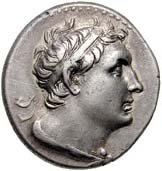
Apollonius of Rhodes
3rd century BC Greek epic poet

illuminated manuscript
manuscript in which the text is supplemented by the addition of decoration

scribe
thumb|upright|''Portrait of the Scribe Mir 'Abd Allah Katib in the Company of a Youth Burnishing Paper'' (Mughal Empire, ca. 1602)
A scribe is a person who serves as a professional copyist, especially one who made copies of manuscripts before the invention of automatic printing.

textual criticism
branch of textual scholarship, philology, and literary criticism

diplomatics
Diplomatics (in American English, and in most anglophone countries), or diplomatic (in British English), is a scholarly discipline centred on the critical analysis of documents, especially historical documents. It focuses on the conventions, protocols and formulae that have been used by document creators, and uses these to increase understanding of the processes of document creation, of information transmission, and of the relationships between the facts which the documents purport to record and reality.

scroll
thumb|350px|The Joshua Roll, [[Vatican Library. An illuminated scroll, probably of the 10th century, created in the Byzantine empire.]]
right|thumb|Scroll of the Book of Esther, [[Seville, Spain]]
right|thumb|Ingredients used in making ink for Hebrew scrolls today
A scroll (from the Old French escroe or escroue), also known as a roll, is a roll of papyrus, parchment, or paper containing writing.
.jpg)
palimpsest
thumb|350px|The Codex Ephraemi Rescriptus, a Greek manuscript of the Bible from the 5th century, is a palimpsest.

scriptorium
thumb|Miniature of Vincent of Beauvais writing in a manuscript of the Speculum Historiale in French, Bruges, c. 1478–1480, [[British Library Royal 14 E. i, vol. 1, f. 3, probably representing the library of the Dukes of Burgundy.]]

ostracon
[[Image:AGMA Ostrakon Cimon.jpg|right|thumb|Ostrakon inscribed with "Kimon [son] of Miltiades", for Cimon, an Athenian statesman.]]
thumb|Ostrakon of Megacles, son of Hippocrates (inscription: ΜΕΓΑΚΛΕΣ ΗΙΠΠΟΚΡΑΤΟΣ), 487 BC. On display in the Ancient Agora Museum in Athens, housed in the [[Stoa of Attalus]]
right|thumb|Ancient Greek ostraca voting for the ostracism|ostracization of [[Themistocles in 472/471 BC.]]

Aristarchus of Samothrace
Greek grammarian and scholar (c.220–c.143 BC)

papyrology
thumb|upright|Joseph von Karabacek (1845–1918), a leading authority in the field of papyrology (circa 1910)
Papyrology is the study of manuscripts of ancient literature, correspondence, legal archives, etc., preserved on portable media from antiquity, the most common form of which is papyrus, the principal writing material in the ancient civilizations of Egypt, Greece, and Rome. Papyrology includes both the translation and interpretation of ancient documents in a variety of languages as well as the care and conservation of rare papyrus originals.

Ulrich von Wilamowitz-Moellendorff
German classical philologist (1848-1931)

typesetting
thumb|right|upright=1.35|Movable type on a [[composing stick on a type case]]
thumb|bottom|A specimen sheet issued by William Caslon, letter founder, from the 1728 edition of CyclopaediaTypesetting is the composition of text for publication, display, or distribution by means of arranging physical type (or sort) in mechanical systems or glyphs in digital systems representing characters (letters and other symbols). Stored types are retrieved and ordered according to a language's orthography for visual display. Typesetting requires one or more fonts (which are widely but erroneously confused with

Joseph Bédier
French philologist and writer (1864-1938)
Zenodotus
Zenodotus () was a Greek grammarian, literary critic, Homeric scholar, and the first librarian of the Library of Alexandria. A native of Ephesus and a pupil of Philitas of Cos, he lived during the reigns of the first two Ptolemies, and was at the height of his reputation about 280 BC.
Constantin von Tischendorf
German theologian and biblical scholar (1815-1874)

Dmitry Likhachov
Russian philologist (1906-1999)

Karl Lachmann
German philologist and critic (1793-1851)

codicology
thumb|upright=1.5|Reims gospel codex (book)
Corpus Inscriptionum Latinarum
comprehensive collection of ancient Latin inscriptions
editio princeps
in classical scholarship, first printed edition of a work, that previously had existed only in manuscripts and that was written before the invention of printing (letterpress printing was invented in Europe around 1440 by Johannes Gutenberg)
woodblock printing
early printing technique
Richard Bentley
English classical scholar, critic and theologian and Master of Trinity College, Cambridge (1662–1742)
biblical manuscript
a handwritten copy of a portion of the text of the Bible
version, edition or translation
specific version of a work, resulting from its edition, adaptation, or translation; set of substantially similar copies of a work (use with P31 ["instance of"])
history of books
aspect of history

Bruce Manning Metzger
American biblical scholar (1914-2007)
interpolation
entry or passage in a text that was not written by the original author
Byzantine text-type
New Testament text type
Kurt Aland
German theologian and biblical scholar (1915–1994)
Adolf Kirchhoff
German classical philologist and epigrapher (1826–1908)
history of printing
aspect of history
Johann Albrecht Bengel
German theologian (1687-1752)
Text Encoding Initiative
an academic community concerned with practices for semantic markup of texts
Johann Jakob Griesbach
German theologian (1745-1812)
Inscriptiones Graecae
academic project by the Berlin-Brandenburgische Akademie der Wissenschaften; its aim is to collect and publish all known ancient inscriptions from the mainland and islands of Greece
Wilhelm Dittenberger
German classical philologist and epigrapher (1840–1906)
scribal abbreviation
abbreviations used by ancient and medieval scribes writing in Latin, and later in Greek, Old Norse and other European languages
Johann Jakob Wettstein
Swiss theologian

Targum Onkelos
aramaic translation of the Five Books of Moses
critical apparatus
critical and primary source material that accompanies an edition of a text
Westcott and Hort
Greek-language version of the New Testament

Philip Gossett
American musicologist (1941–2017)
Corpus Inscriptionum Semiticarum
collection of ancient inscriptions in Semitic languages
lectio difficilior potior
principle of textual criticism
Neue Bach-Ausgabe
second complete edition of the music of Johann Sebastian Bach, published by Bärenreiter
urtext edition
type of edition of classical music
writing surface
surface on which text or images can be drawn
recension
Recension is the practice of editing or revising a text based on critical analysis. When referring to manuscripts, this may be a revision by another author. The term is derived from the Latin ("review, analysis").
Manuscript culture
Manuscripts for information storage and dissemination