Category
page 1Thermochemistry

thermochemistry
Thermochemistry is the study of the heat energy which is associated with chemical reactions and/or phase changes such as melting and boiling. A reaction may release or absorb energy, and a phase change may do the same. Thermochemistry focuses on the energy exchange between a system and its surroundings in the form of heat. Thermochemistry is useful in predicting reactant and product quantities throughout the course of a given reaction. In combination with entropy determinations, it is also used to predict whether a reaction is spontaneous or non-spontaneous, favorable or unfavorable.

exothermic reaction
chemical reaction that releases energy by light or heat; opposite of an endothermic reaction

Hess's law
relationship in physical chemistry
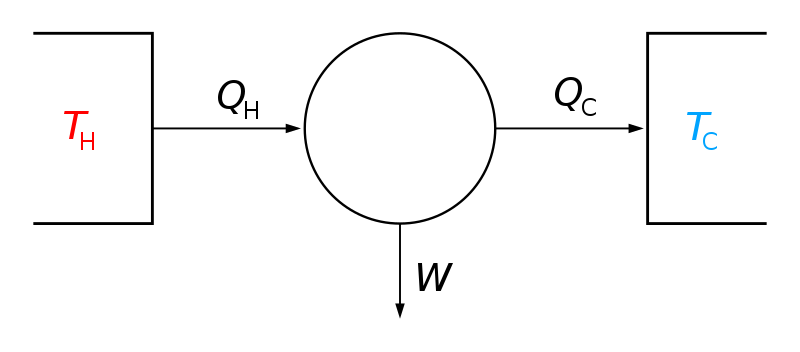
latent heat
released or absorbed energy during a constant-temperature process
heat of combustion
quantity measuring the energy per unit of mass or volume that some substance releases upon oxidation
standard enthalpy of formation
(of compound) change of enthalpy during the formation of 1 mole of the substance from its constituent elements, with all substances in their standard states, and at a pressure of 1 bar (100 kPa)
Van 't Hoff equation
Relation between temperature and the equilibrium constant of a chemical reaction
exergonic reaction
type of chemical reaction
endothermic process
thermodynamic process that absorbs energy from its surroundings
endergonic reaction
type of chemical reaction
Born–Haber cycle
approach to analyzing reaction energies
standard enthalpy of reaction
enthalpy change that occurs in a system when matter is transformed by a given chemical reaction, when all reactants and products are in their standard states

Cryochemistry
Cryochemistry is the study of chemical interactions at temperatures below . It is derived from the Greek word cryos, meaning 'cold'. It overlaps with many other sciences, including chemistry, cryobiology, condensed matter physics, and even astrochemistry.
heat cramps
cramps caused by heat
Thomsen–Berthelot principle
hypothesis in the history of thermochemistry
thermochemical equation
Nernst heat theorem
theorem that as absolute zero is approached, the entropy change ΔS for a chemical or physical transformation approaches 0
isodesmic reaction
Ceiling temperature
enthalpy of neutralization
change in enthalpy during an acid-base reaction
Bell–Evans–Polanyi principle
Principle in physical chemistry
thermochemical water-splitting cycle
hydrogen production process