Category
page 1Thermoplastics
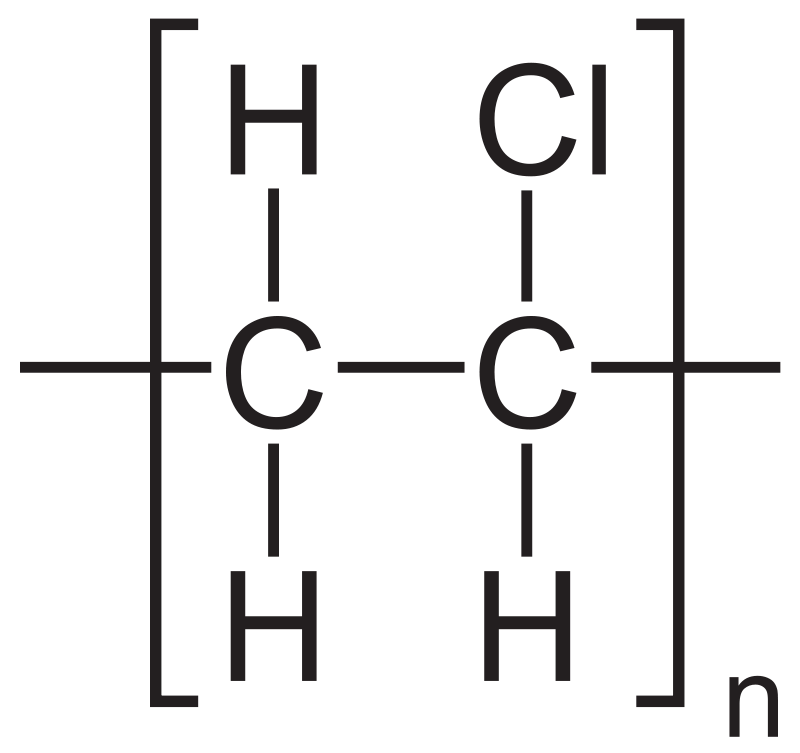
polyvinyl chloride
synthetic plastic polymer - A thermoplastic resin produced by the polymerization of vinyl chloride gas.

polyethylene
thumb|140px|The repeating unit within polyethylene in the most stable staggered conformation

polystyrene
thumb|Expanded polystyrene packaging
thumb|A polystyrene yogurt container
thumb|Bottom of a vacuum forming|vacuum-formed cup; fine details such as the glass and fork [[food contact materials symbol and the resin identification code symbol are easily molded]]

polytetrafluoroethylene
Polytetrafluoroethylene (PTFE) is a synthetic fluoropolymer of tetrafluoroethylene, and has numerous applications because it is chemically inert. The commonly known brand name of PTFE-based composition is Teflon by Chemours, a spin-off from DuPont, which originally invented the compound in 1938.

polyester
thumb|Ester group (blue) which defines polyesters. This diagram shows just one ester linkage per repeat unit.
Polyester is a category of polymers that contain one or two ester linkages in every repeat unit of their main chain. As a specific material, it most commonly refers to a type called polyethylene terephthalate (PET). Polyesters include some naturally occurring chemicals, such as those found in plants and insects. Natural polyesters and a few synthetic ones are biodegradable, but most synthetic polyesters are not. Synthetic polyesters are used extensively in clothing.

polypropylene
Polypropylene (PP), also known as polypropene, is a thermoplastic polymer used in a wide variety of applications. It is produced via chain-growth polymerization from the monomer propylene.

polyethylene terephthalate
type of polyester commonly used for bottles and clothing

thermoplastic
A thermoplastic, or thermosoftening plastic, is any plastic polymer material that becomes pliable or moldable at a certain elevated temperature and solidifies upon cooling.

poly(methyl methacrylate)
transparent thermoplastic, commonly called acrylic

celluloid
Celluloids are a class of materials produced by mixing nitrocellulose and camphor, often with added dyes and other agents. Once much more common for its use as photographic film before the advent of safer methods, celluloid's common present-day uses are for manufacturing table tennis balls, musical instruments, combs, office equipment, fountain pen bodies, and guitar picks.

polycarbonate

polyamide
A polyamide is a polymer with repeating units linked by amide bonds.
acrylonitrile butadiene styrene
organic polymer

cellulose acetate
chemical compound
polylactic acid
polymer

polyoxymethylene
thumb|Ground glass joint#Joint clips|Keck clips made of polyoxymethylene
ethylene-vinyl acetate
copolymer
Citroën Méhari
lightweight recreational and utility vehicle
polyacrylonitrile
Polyacrylonitrile (PAN) is a synthetic, semicrystalline organic polymer resin, with the linear formula (CH2CHCN)n. Almost all PAN resins are copolymers with acrylonitrile as the main monomer. PAN is used to produce large variety of products including ultra filtration membranes, hollow fibers for reverse osmosis, fibers for textiles, and oxidized PAN fibers. PAN fibers are the chemical precursor of very high-quality carbon fiber. PAN is first thermally oxidized in air at 230 °C to form an oxidized PAN fiber and then carbonized above 1000 °C in inert atmosphere to make carbon fibers fo

polybutadiene
thumb|About 70% of polybutadiene is used in tire manufacturing.
fluoropolymer
A fluoropolymer is a fluorocarbon-based polymer with multiple carbon–fluorine bonds. It is characterized by a high resistance to solvents, acids, and bases. The best known fluoropolymer is polytetrafluoroethylene under the brand name "Teflon," trademarked by the DuPont Company.
%20V1.png)
polyimide
thumb|right|Chemical structure of Kapton, a polyimide.
Polyimide (sometimes abbreviated PI) is a polymer containing imide groups belonging to the class of high-performance plastics. With their high heat-resistance, polyimides enjoy diverse applications in roles demanding rugged organic materials, such as high temperature fuel cells, displays, and various military roles. A classic polyimide is Kapton, which is produced by condensation of pyromellitic dianhydride and 4,4'-oxydianiline.
polyvinylidene fluoride
non-reactive thermoplastic fluoropolymer
polybutylene terephthalate
polymer

polycaprolactone
thumb|PCL beads, as sold for industrial or hobbyist use.
Polycaprolactone (PCL) is a synthetic, semi-crystalline, biodegradable polyester with a melting point of about 60 °C and a glass transition temperature of about −60 °C. The most common use of polycaprolactone is in the production of speciality polyurethanes. Polycaprolactones impart good resistance to water, oil, solvent and chlorine to the polyurethane produced.
-3-hydroxybutyrat.svg)
polyhydroxyalkanoate
thumb|right|200px|Structure of poly-(R)-3-hydroxybutyrate (Polyhydroxybutyrate|P3HB), a polyhydroxyalkanoate
thumb|400px|right|Chemical structures of P3HB, PHV and their copolymer PHBV
polyether ether ketone
semicrystalline thermoplastic with high mechanical and chemical resistance

ETFE
Ethylene tetrafluoroethylene (ETFE) is a fluorine-based plastic. It was designed to have high corrosion resistance and strength over a wide temperature range. ETFE is a polymer, and its source-based name is poly (ethene-co-tetrafluoroethene). It is also known under the DuPont brand name Tefzel and is sometimes referred to as "Teflon Film". ETFE has a relatively high melting temperature and excellent chemical, electrical, and high-energy-radiation resistance properties.
==Properties==
Useful comparison tables of PTFE against FEP, PFA, and ETFE can be found on Chemours' website, listing the mech
poly(p-phenylene sulfide)
polymer

polyglycolide
Polyglycolide or poly(glycolic acid) (PGA), also spelled as polyglycolic acid, is a biodegradable, thermoplastic polymer and the simplest linear, aliphatic polyester. It can be prepared starting from glycolic acid by means of polycondensation or ring-opening polymerization. PGA has been known since 1954 as a tough fiber-forming polymer. Owing to its hydrolytic instability, however, its use was slow to develop. Polyglycolide and its copolymers (poly(lactic-co-glycolic acid) with lactic acid, poly(glycolide-co-caprolactone) with ε-caprolactone and poly (glycolide-co-trimethylene carbonate) with
polyhydroxybutyrate
thumb|right|200px|Structure of poly-(R)-3-hydroxybutyrate (P3HB), a polyhydroxyalkanoate
polyvinylidene chloride
polymer
Polymethylpentene
Polymethylpentene (PMP), also known as poly(4-methyl-1-pentene). It is used for gas-permeable packaging, autoclavable medical and laboratory equipment, microwave components, and cookware. It is commonly called TPX, which is a trademark of Mitsui Chemicals.

polysulfone
thumb|class=skin-invert-image|Polysulfone (PSU) repeating unit.
thumb|class=skin-invert-image|Polyethersulfone (PES) repeating unit.
polyvinyl fluoride
polymer

ionomer
thumb|right|120px|An example of an ionomer, with carboxylate groups bound to a zinc cation
An ionomer () (iono- + -mer) is a polymer composed of repeat units of both electrically neutral repeating units and ionized units covalently bonded to the polymer backbone as pendant group moieties. Usually no more than 15 mole percent are ionized. The ionized units are often carboxylic acid groups.
.jpg)
polyetherimide
thumb|PEI powder coating|powder-coated build plate on a [[Bambu Lab A1 mini FFF 3D printer]]
Polyetherimide (PEI; branded as Ultem) is an amorphous, amber-to-transparent thermoplastic with characteristics similar to the related plastic PEEK. When comparing PEI to PEEK, the former is cheaper but has lower impact strength and a tighter temperature range.
polychlorotrifluoroethylene
Polychlorotrifluoroethylene (PCTFE or PTFCE) is a thermoplastic chlorofluoropolymer with the molecular formula , where n is the number of monomer units in the polymer molecule. It is similar to polytetrafluoroethene (PTFE), except that it is a homopolymer of the monomer chlorotrifluoroethylene (CTFE) instead of tetrafluoroethene. It has the lowest water vapor transmission rate of any plastic.
poly(p-phenylene oxide)
polymer
liquid crystal polymer
organic polymer

Plastisol
thumb|A plastisol being poured
A plastisol is a colloidal dispersion of small polymer particles, usually polyvinyl chloride (PVC), in a liquid plasticizer. When heated to around , the plastic particles absorb the plasticizer, causing them to swell and fuse together forming a viscous gel. Once this is cooled to below it becomes a flexible, permanently plasticized solid product. This process is called 'curing'.
perfluoroalkoxy
family of polymers
Polyketone
thumb|right|General chemical structure of a polyketone. In practice, R is usually H.
Polyketones are a family of high-performance thermoplastic polymers. The polar ketone groups in the polymer backbone of these materials gives rise to a strong attraction between polymer chains, which increases the material's melting point (255 °C for copolymer (carbon monoxide ethylene), 220 °C for terpolymer (carbon monoxide, ethylene, propylene). Trade names include Poketone, Carilon, Karilon, Akrotek, and Schulaketon. Such materials also tend to resist solvents and have good mechanical properties.

polyamide-imide
Polyamide-imides are either thermosetting or thermoplastic, amorphous polymers that have exceptional mechanical, thermal and chemical resistant properties. Polyamide-imides are used extensively as wire coatings in making magnet wire. They are prepared from isocyanates and TMA (trimellic acid-anhydride) in N-methyl-2-pyrrolidone (NMP). A prominent distributor of polyamide-imides is Solvay Specialty Polymers, which uses the trademark Torlon.
Polyphthalamide
250px|thumb|Repeating unit of polyphthalamide
Polyphthalamide (aka. PPA, High Performance Polyamide) is a subset of thermoplastic synthetic resins in the polyamide (nylon) family defined as when 55% or more moles of the carboxylic acid portion of the repeating unit in the polymer chain is composed of a combination of terephthalic (TPA) and isophthalic (IPA) acids. The substitution of aliphatic diacids by aromatic diacids in the polymer backbone increases the melting point, glass transition temperature, chemical resistance and stiffness.
Polybutylene succinate
chemical compound
cellulose acetate butyrate
chemical compound
PVC clothing
clothing made from pvc fabric
environmental stress cracking
brittle failure of thermoplastic polymers
Spectralon
thumb|A Spectralon panel
Spectralon is a fluoropolymer that has the highest diffuse reflectance of any known material or coating over the ultraviolet, visible, and near-infrared regions of the spectrum. It is the whitest substance available and reflects 99% of the light. It exhibits highly Lambertian behavior, and can be machined into a wide variety of shapes for the construction of optical components such as calibration targets, integrating spheres, and optical pump cavities for lasers.
Tritan
Brand of plastic products including drinking bottles
Fluorinated ethylene propylene
Polymer
polyvinylcarbazole
Polyvinylcarbazole (PVK) is a temperature-resistant thermoplastic polymer produced by radical polymerization from the monomer N-vinylcarbazole. It is a photoconductive polymer and thus the basis for photorefractive polymers and organic light-emitting diodes.