Category
page 1Time in astronomy

night

morning
thumb|Morning on a farm in [[Namibia, just after sunrise]]
Morning is either the period from sunrise to noon, or the period from midnight to noon. In the first definition it is preceded by the twilight period of dawn, and there are no exact times for when morning begins (also true of evening and night) because it can vary according to one's latitude, and the hours of daytime at each time of year. However, morning strictly ends at noon, when afternoon starts.

noon
thumb|Baku Street at Noon (1861) by Alexey Bogolyubov, depicting shadows from the sun at its highest point over the city of [[Baku]]
Noon (also known as noontime or midday) is 12 o'clock in the daytime.

equinox
A solar equinox is a moment in time when the Sun appears directly above the equator, rather than to its north or south. On the day of the equinox, the Sun appears to rise directly east and set directly west. This occurs twice each year, around 20 March and 23 September.

solstice
A solstice is the time when the Sun reaches its most northerly or southerly excursion relative to the celestial equator on the celestial sphere. Two solstices occur annually, around 20–22 June and 20–22 December. In many countries, the seasons of the year are defined by reference to the solstices and the equinoxes.
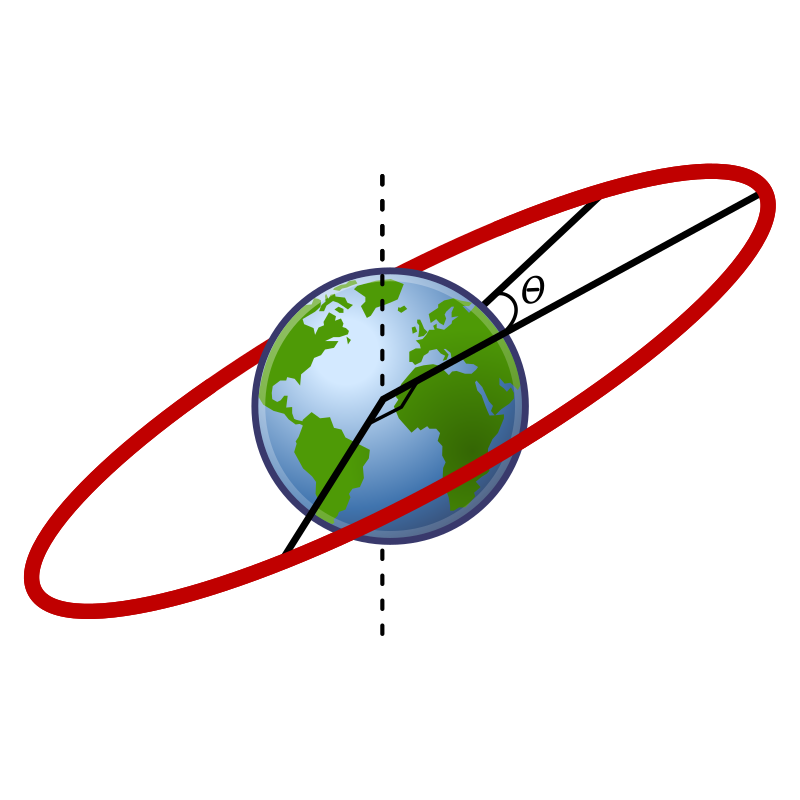
orbital period
time taken for a given object to make one complete orbit around another object, and applies in astronomy to mostly either planets or asteroids orbiting the Sun, moons orbiting planets, exoplanets orbiting other stars, or binary stars

daytime
thumb|Sunrise in Brisbane Water National Park, Australia
thumb|A daytime sky with white clouds
tropical year
period of time for the ecliptic longitude of the Sun to increase 360°

sidereal time
time standard
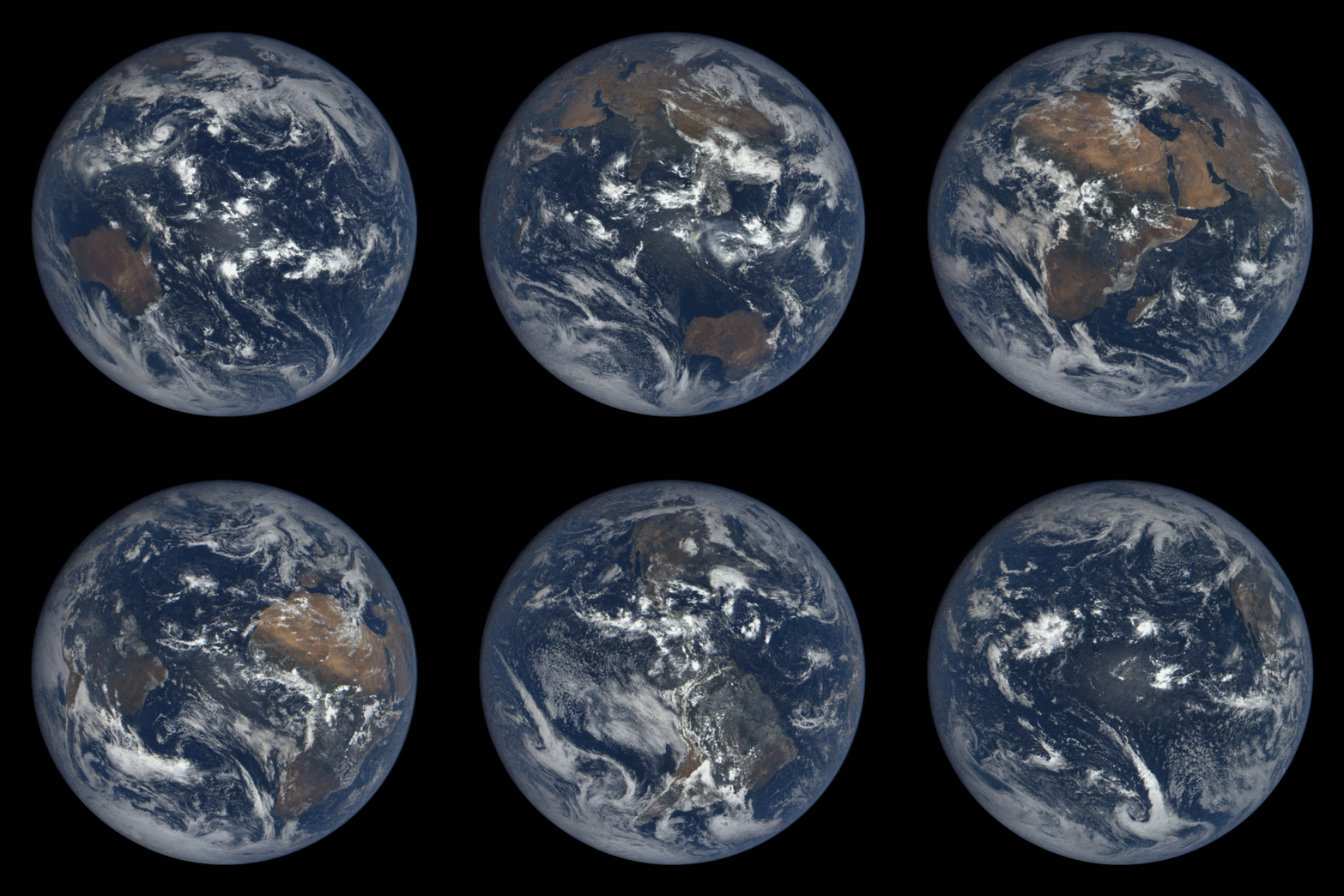
rotation period
(of a celestial object) time that it takes to complete one revolution around its axis of rotation relative to the background stars

solar time
calculation of elapsed time by the apparent position of the sun

saros series
series of eclipses separated by a saros period
Julian day
days since the beginning of the Julian Period
universal time
time standard based on the Earth's rotation

Metonic cycle
period of very close to 19 years that is nearly a common multiple of the solar year and the synodic (lunar) month
first point of Aries
point on the celestial sphere
Julian year
unit of time and a version of the year often used in astronomy
equation of time
apparent solar time minus mean solar time
heliacal rising
Rising of stars prior to sunrise
cosmic calendar
visual illustration of the history of the Universe
ephemeris time
time standard
Terrestrial Time
time standard for astronomical observations from the Earth
astronomical year numbering
method of year numbering
relaxation
return of a perturbed system into equilibrium
decimal time
time of day in decimal units
local mean time
form of solar time that corrects the variations of local apparent time, forming a uniform time scale at a specific longitude
Golden number
position of the year within the 19-year Metonic cycle
eclipse cycle
intervals of eclipses
lunar theory
theoretical description of motion of Earth's moon
Jens Olsen's World Clock
advanced astronomical clock
exeligmos
An exeligmos () is a period of 54 years, 33 days that can be used to predict successive eclipses with similar properties and location. For a solar eclipse, after every exeligmos a solar eclipse of similar characteristics will occur in a location close to the eclipse before it. For a lunar eclipse the same part of the earth will view an eclipse that is very similar to the one that occurred one exeligmos before it (see main text for visual examples). The exeligmos is an eclipse cycle that is a triple saros, three saroses (or saroi) long, with the advantage that it has nearly an integer number of
Barycentric Coordinate Time
Calculations pertaining to orbits

Eclipse season
Period when eclipses can occur
Astronomical chronology
Method of determining the age of events or artifacts
dynamical time
time standard
Geocentric Coordinate Time
time standard used in astronomy
octaeteris
In astronomy, an octaeteris (, plural: octaeterides) is the period of eight solar years after which the moon phase occurs on the same day of the year plus one or two days.
Hipparchic cycle
astronomical cycle he created
Relative hour
Hebrew term ascribed to an hour of a 12-hour day and how it is to be reckoned
Geologic Calendar
Analogy to communicate geologic time
Sunrise equation
equation to derive time of sunset and sunrise