Category
page 1Tobacco

tobacco
thumb|Tobacco drying kiln in Myrtleford|Myrtleford, Victoria, Australia, 2018. This kiln was built in 1957, and moved to Rotary Park in 2000. Kilns of this design were built from the early 1930s through to the late 1960s.
thumb |Basma tobacco leaves drying in the sun at Pomak village in [[Xanthi, Greece]]

Nicotiana
Nicotiana () is a genus of herbaceous plants and shrubs in the family Solanaceae that is indigenous to the Americas, Australia, Southwestern Africa and the South Pacific. Various Nicotiana species, commonly referred to as tobacco plants, are cultivated as ornamental garden plants. N. tabacum is grown worldwide for the cultivation of tobacco leaves that are used for manufacturing and producing tobacco products, including cigars, cigarillos, cigarettes, chewing tobacco, dipping tobacco, snuff, snus, etc.

Nicotiana tabacum
species of plant

Nicotiana rustica
species of plant

Nicotiana glauca
species of plant
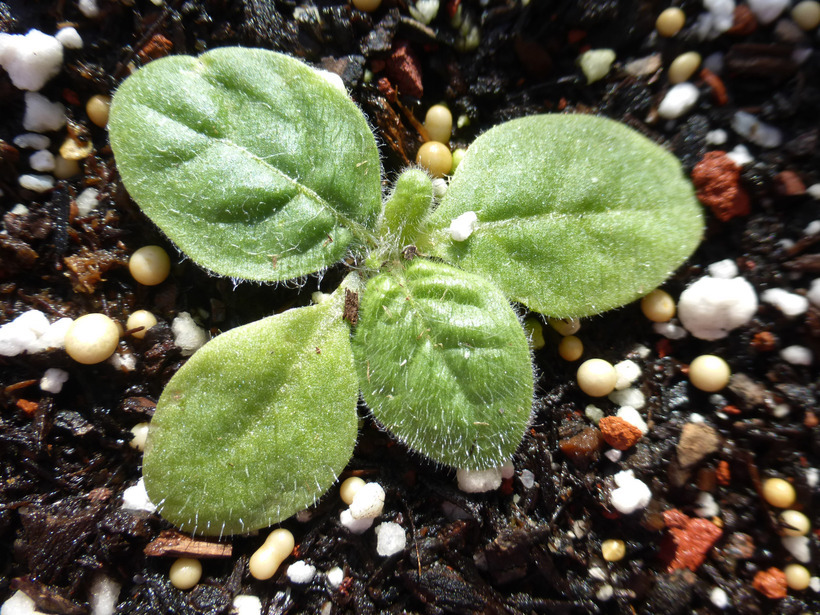
Nicotiana alata
species of plant

Iqos
IQOS (/ˈaɪkoʊs/ EYE-kohs) is a line of heated tobacco products designed to be used with tobacco and nicotine-containing consumables. They are manufactured by Philip Morris International (PMI). The brand was first introduced in November 2014 in Japan and Italy.

kretek
256px|right|thumb|A Cycle rickshaw#Indonesia|becak driver in [[Yogyakarta, Indonesia, smoking a kretek]]
thumb|right|256px|A pack of Sampoerna A-Mild, a popular Indonesian brand of kretek manufactured by Sampoerna
thumb|right|256px|Tobacco leaves sorting in Java. Tobacco was introduced by the Dutch during the colonial period.
thumb|right|256px|Kreteks from the 1910s, containing resin, [[nutmeg, cumin, clove, and tobacco wrapped in banana leaves]]
polonium-210
Polonium-210 (210Po, Po-210, historically radium F) is an isotope of polonium. It undergoes alpha decay to stable 206Pb with a half-life of 138.376 days (about months), the longest half-life of all naturally occurring polonium isotopes (210–218Po). First identified in 1898, and also marking the discovery of the element polonium, 210Po is generated in the decay chain of uranium-238 and radium-226. 210Po is a prominent contaminant in the environment, mostly affecting seafood and tobacco. Its extreme toxicity is attributed to intense radioactivity, mostly due to alpha particles, which easily caus

Nicotiana sylvestris
species of plant

Nicotiana attenuata
species of plant

Nicotiana benthamiana
species of plant

Nicotiana longiflora
species of plant
tobacco packaging warning messages
labels on tobacco products warning of the negative impacts

Nicotiana glutinosa
species of plant

Nicotiana plumbaginifolia
species of plant

shag
fine-cut tobacco to make self-made cigarettes by hand
cultivation of tobacco
agriculture for smoking product
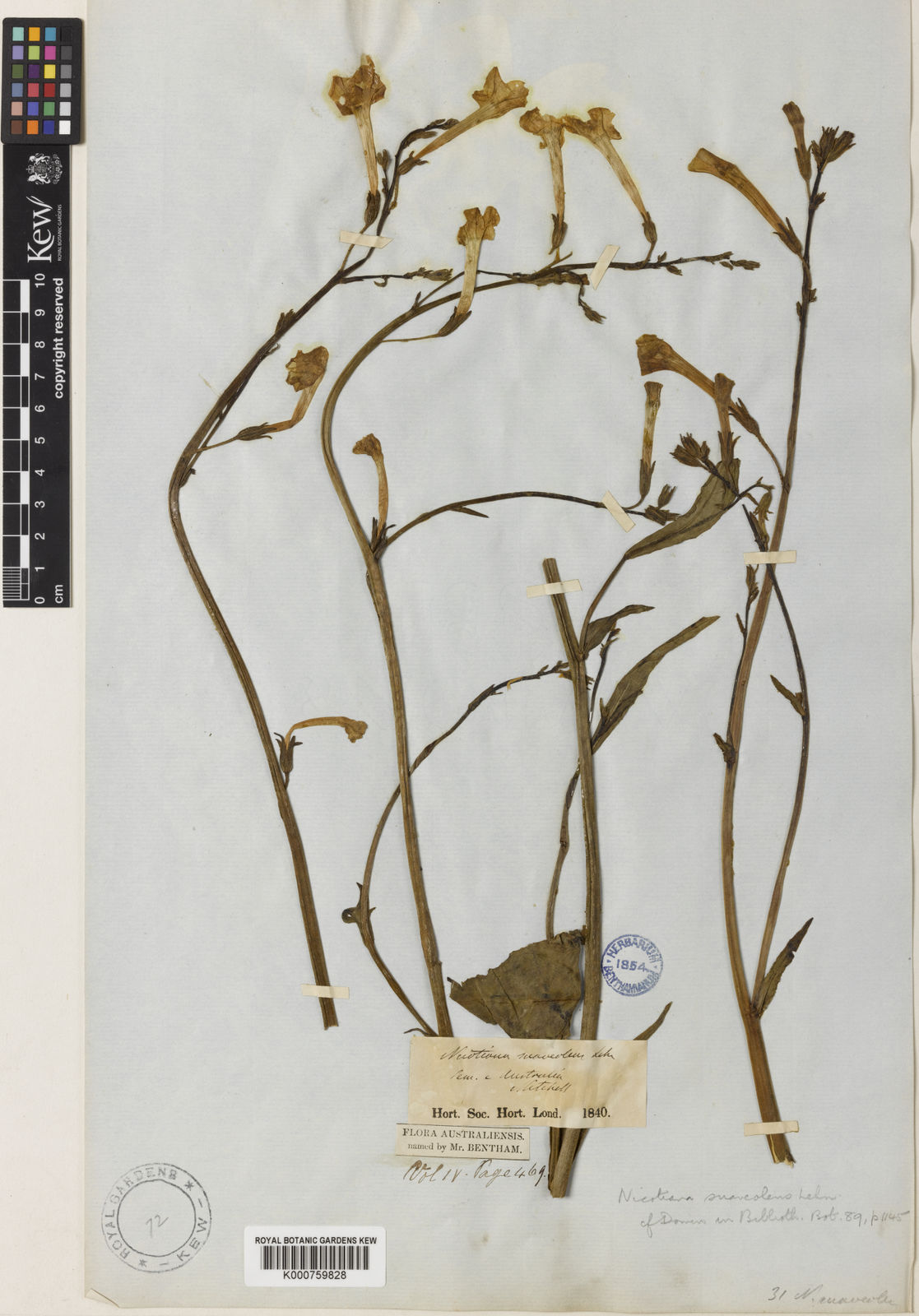
Nicotiana suaveolens
species of plant
tobacco smoke enema
insufflation of tobacco smoke into the rectum
prevalence of tobacco consumption
percentage of population smoking tobacco
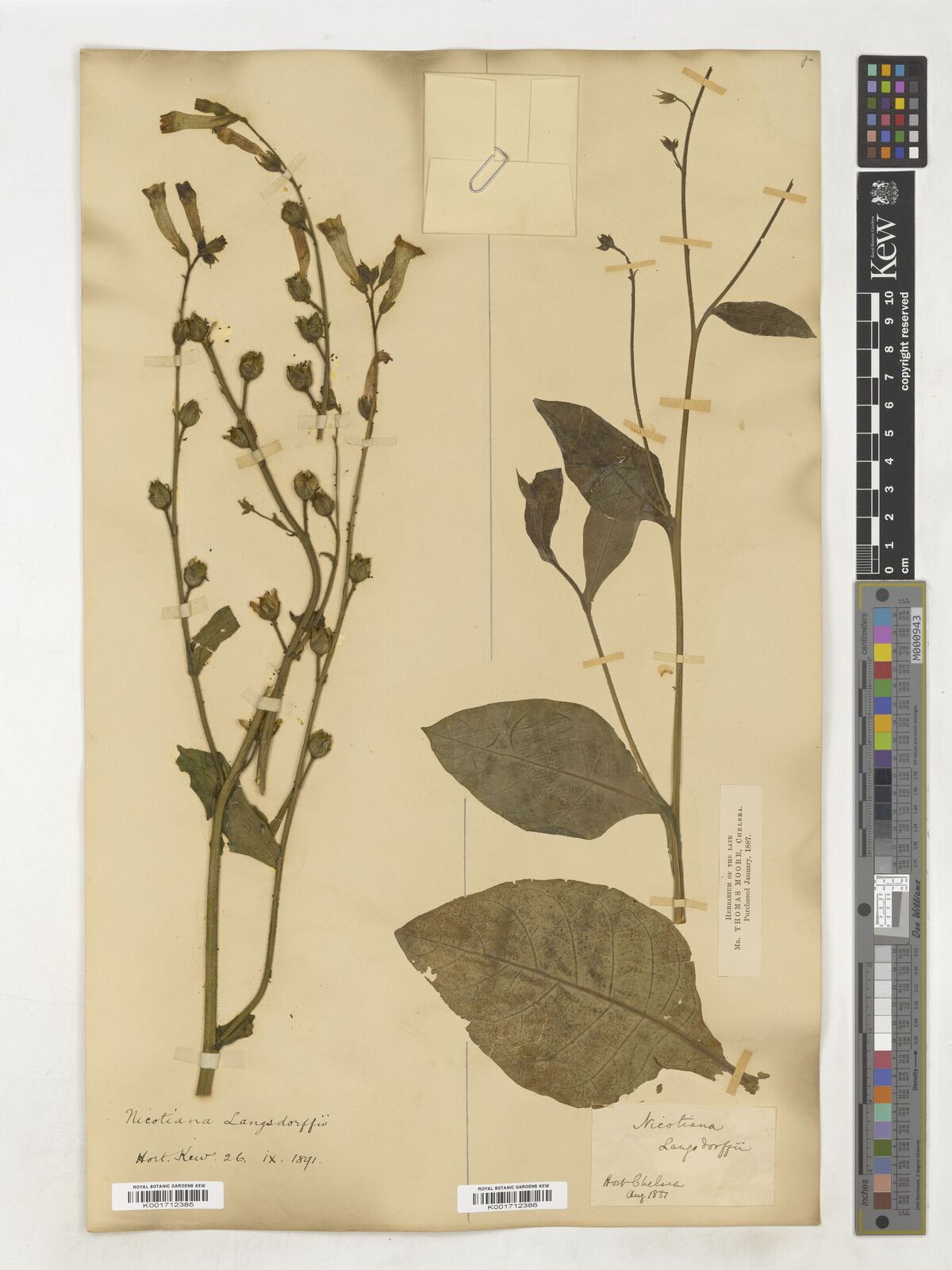
Nicotiana langsdorffii
species of plant

Nicotiana rosulata
species of plant
Burley
light air-cured tobacco used primarily for cigarette production

Cavendish tobacco
Tobacco
Perique
Perique () is a type of tobacco from Grand Point, Louisiana, (St James Parish), known for its strong, powerful, and fruity aroma. When the Acadians made their way into this region in 1776, the Choctaw and Chickasaw tribes were cultivating a variety of tobacco with a distinctive flavor. A farmer named Pierre Chenet is credited with first turning this local tobacco into what is now known as Perique in 1824 through the labor-intensive technique of pressure-fermentation. It is reported by John C. Leffingwell, PhD, an authority on tobacco, that Perique is based on a variety of Red Burley (USDA Type

Nicotiana otophora
species of plant

Nicotiana occidentalis
species of plant endemic to Australia
Corojo
thumb|right|300 px|Successful leaf growth of Kenbano in Kentucky soil
Tobacco and Salt Museum
Museum in Tokyo, Japan
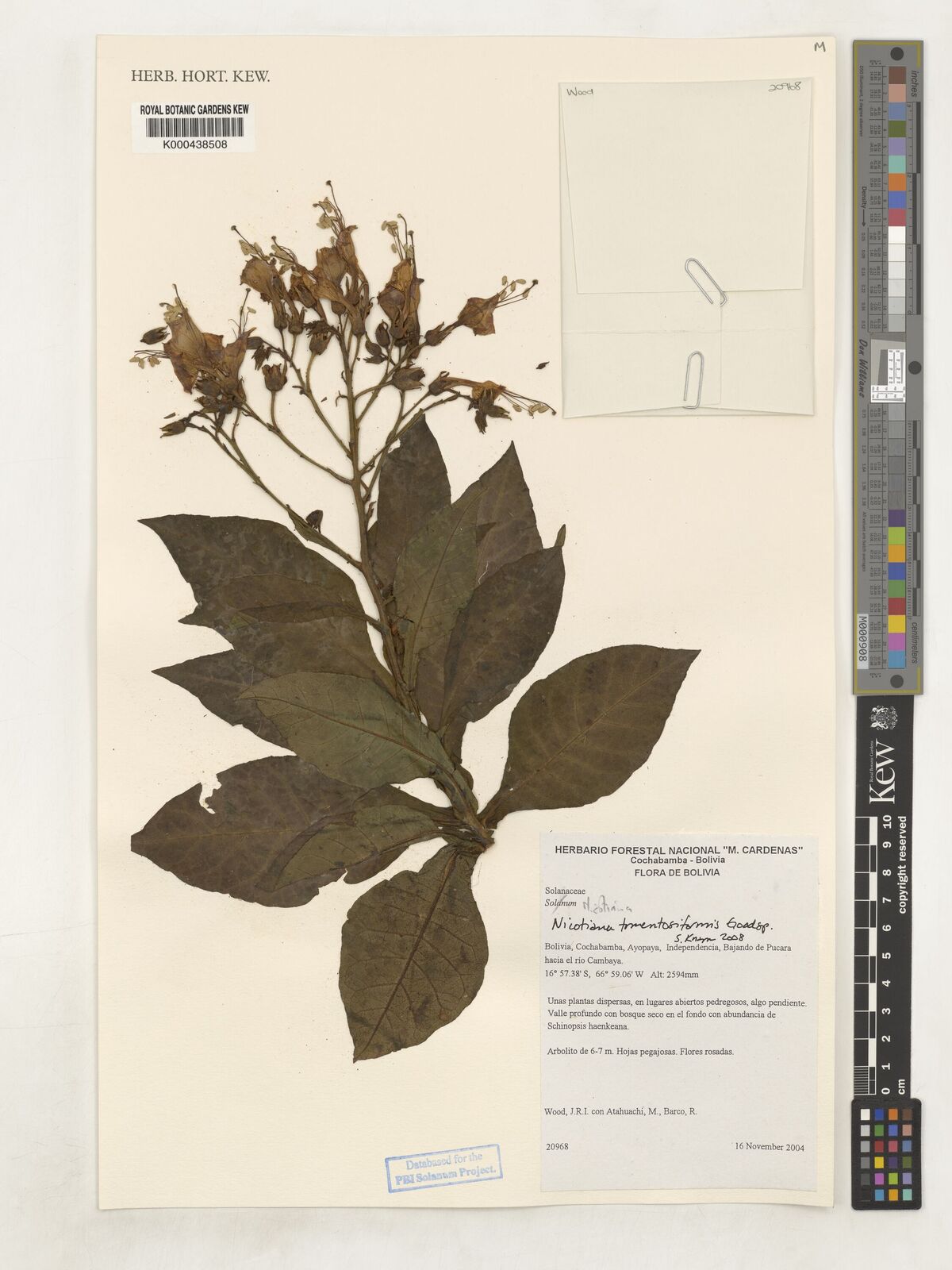
Nicotiana tomentosiformis
species of plant