Category
page 1Transplantation medicine
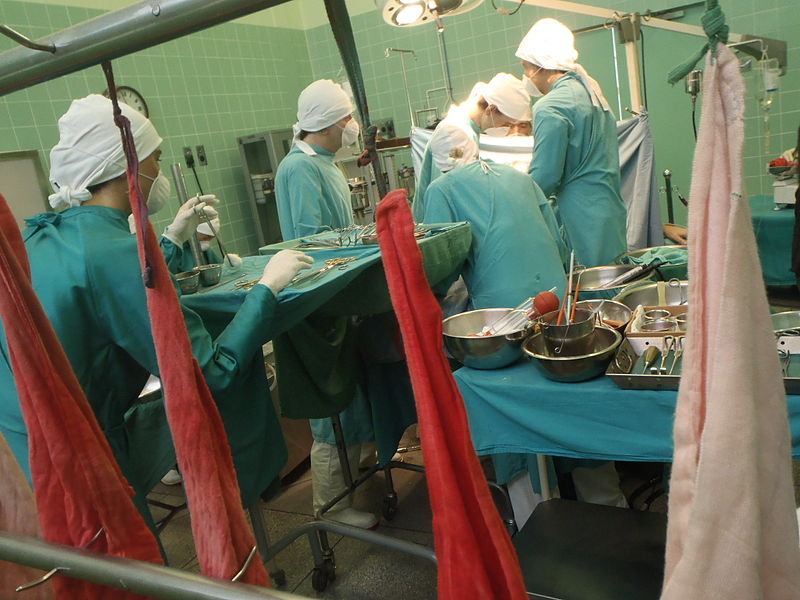
transplantation
moving of an organ or tissue from one body or body region to another
immunosuppressive drug
agent that suppresses immune function by one of several mechanisms of action (e.g. inhibiting DNA synthesis, inhibiting activation of T-cells, or inhibiting the activation of helper cells)
hair transplantation
surgical operation to relocate hair follicles
hematopoietic stem cell transplantation
medical procedure to replace bone marrow stem cells
graft-versus-host disease
medical condition
transplant rejection
rejection of transplanted tissue by the recipients immune system
allotransplantation
Allotransplant (allo- meaning "other" in Greek) is the transplantation of cells, tissues, or organs to a recipient from a genetically non-identical donor of the same species. The transplant is called an allograft, allogeneic transplant, or homograft. Most human tissue and organ transplants are allografts.
body donation
gifts of bodies for research and education

autotransplantation
Autotransplantation, also called autologous transplantation, is the surgical transplantation of organs, tissues, or even particular proteins from one site in an individual’s body to another site within the same person (auto- meaning "self" in Greek).
body memory
hypothesis in psychotherapy
bone grafting
bone transplant
immunoglobulin allotypes
allelic variants of the immunoglobulin light or heavy chains, encoded by alleles of immunoglobulin genes

immune privilege
localised phenomenon where the presence of antigens does not trigger an immune response
eye bank
center that stores parts of the eye for future use
decellularization
thumb|upright=1.5|A Decellularized homografts|decellularized aortic homograft
Decellularization (also spelled decellularisation in British English) is the process used in biomedical engineering to isolate the extracellular matrix (ECM) of a tissue from its inhabiting cells, leaving an ECM scaffold of the original tissue, which can be used in artificial organ and tissue regeneration. Organ and tissue transplantation treat a variety of medical problems, ranging from end organ failure to cosmetic surgery. One of the greatest limitations to organ transplantation derives from organ rejection caused
graft
surgical procedure
total body irradiation
form of radiotherapy
Autologous stem cell transplantation
medical procedure in which stem cells are removed, stored, and then returned to the same person
spleen transplantation
Transfer of spleen or its fragments from one individual to another
tissue bank
center for storing organs or tissue for future use

Margaret Billingham
Kenyan-born American pathologist (1930-2009)
Milan criteria
criterion