Category
page 1Tremellomycetes
Cryptococcus neoformans
species of fungus
Tremellales
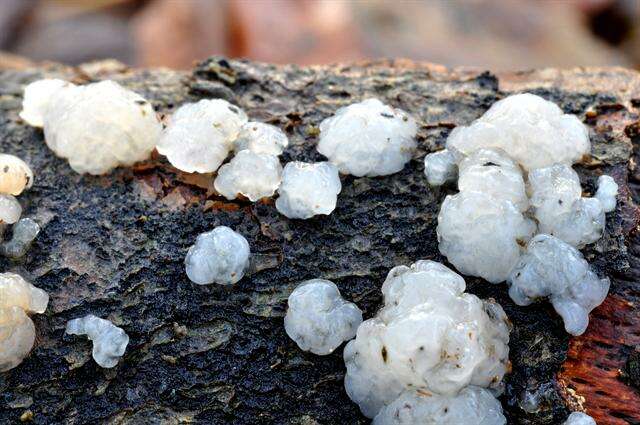
The Tremellales are an order of fungi in the class Tremellomycetes. The order contains both teleomorphic and anamorphic species, most of the latter being yeasts. All teleomorphic species in the Tremellales are parasites of other fungi, though the yeast states are widespread and not restricted to hosts. Basidiocarps (fruit bodies), when produced, are gelatinous.
Tremellomycetes
The Tremellomycetes are a class of dimorphic fungi in the Agaricomycotina. Some species have gelatinous basidiocarps (fruiting bodies) or (microscopically) a sacculate parenthesome. There are six orders, 17 families, and 39 genera in the Tremellomycetes. Tremellomycetes include yeasts, dimorphic taxa, and species that form complex fruiting bodies. Tremellomycetes include some fungi that are human and animal pathogens in the genera Cryptococcus, Naganishia, Papiliotrema, and Trichosporon and some fungi that are cultivated for food in the genera Tremella and Naematelia.

cryptococcosis
Cryptococcosis is a potentially fatal fungal infection of mainly the lungs, presenting as a pneumonia, and in the brain, where it appears as a meningitis. Coughing, difficulty breathing, chest pain and fever are seen when the lungs are infected. When the brain is infected, symptoms include headache, fever, neck pain, nausea and vomiting, light sensitivity and confusion or changes in behavior. It can also affect other parts of the body including skin, where it may appear as several fluid-filled nodules with dead tissue.

Tremellaceae
The Tremellaceae are a family of fungi in the order Tremellales. The family is cosmopolitan and contains both teleomorphic and anamorphic species, most of the latter being yeasts. All teleomorphs in the Tremellaceae are parasites of other fungi, though the yeast states are widespread and not restricted to hosts. Basidiocarps (fruit bodies), when produced, are gelatinous.

Cryptococcus
Cryptococcus (from Ancient Greek κρυπτός (kruptós), meaning "hidden", and κόκκος (kókkos), meaning "grain") is a genus of fungi in the family Cryptococcaceae that includes both yeasts and filamentous species. The filamentous, sexual forms or teleomorphs were formerly classified in the genus Filobasidiella, while Cryptococcus was reserved for the yeasts. Most yeast species formerly referred to Cryptococcus have now been placed in different genera. Some Cryptococcus species cause a disease called cryptococcosis.

Trichosporon
Trichosporon is a genus of anamorphic fungi in the family Trichosporonaceae. All species of Trichosporon are yeasts with no known teleomorphs (sexual states). Most are typically isolated from soil, but several species occur as a natural part of the skin microbiota of humans and other animals. Proliferation of Trichosporon yeasts in the hair can lead to an unpleasant but non-serious condition known as white piedra. Trichosporon species can also cause severe opportunistic infections (trichosporonosis) in immunocompromised individuals.
Filobasidiales
The Filobasidiales are an order in the fungal class Tremellomycetes. The order contains two families and seven genera.
Cystofilobasidiales
The Cystofilobasidiales are an order of fungi in the class Tremellomycetes of the Basidiomycota. They usually exhibit a life phase of free-living yeasts. The order contains two families with seven genera and some 25 species.
Cryptococcus gattii
species of fungus
Cystofilobasidiaceae
The Cystofilobasidiaceae are a family of fungi in the order Cystofilobasidiales. Phylogenetic analyses shows that this family is clearly distinct from other yeast-like families of the Tremellomycetes. The family currently contains the single genus Cystofilobasidium. Additional genera previously referred to the Cystofilobasidiaceae are now placed in the Mrakiaceae.
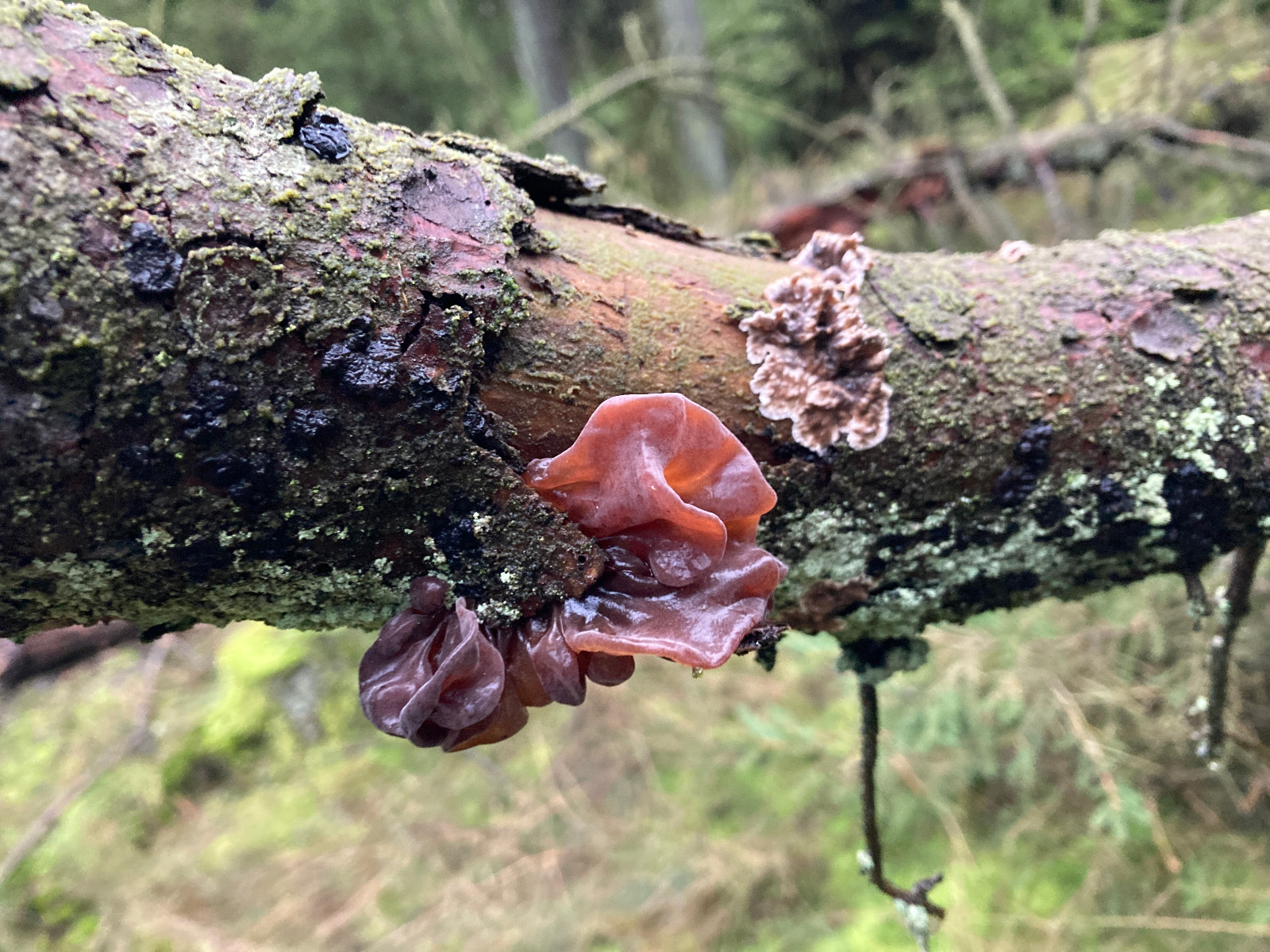
Phaeotremella foliacea
species of fungus
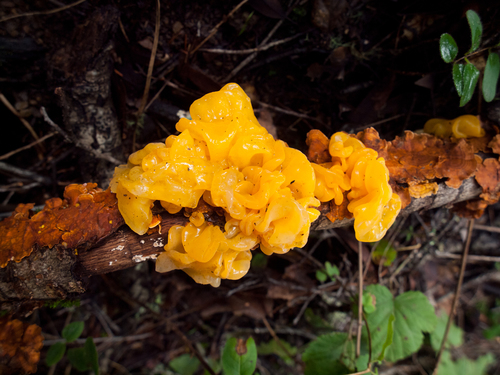
Naematelia
Naematelia is a genus of fungi in the family Naemateliaceae. All Naematelia species are parasites of other fungi (Stereum species) and produce anamorphic yeast states. When produced, basidiocarps (fruit bodies), are gelatinous and are colloquially classed among the "jelly fungi." Four species of Naematelia are currently recognized worldwide. One species, Naematelia aurantialba, is commercially cultivated for food.
Sirotrema
Sirotrema is a genus of fungi in the family Tremellaceae. The genus has a widespread distribution in north temperate regions, and contains three species.

Syzygospora
Syzygospora is a genus of fungi in the family Filobasidiaceae. Circumscribed by the American mycologist George Willard Martin in 1937, the genus is characterized by its gelatinous fruiting bodies that often form galls on host organisms. Syzygospora species possess distinctive features such as thin-walled hyphae with clamp connections, haustorial branches, and a hymenium containing probasidia that develop into elongated, club-shaped basidia. The genus has undergone taxonomic revisions, including the synonymization of Christiansenia and the transfer of some lichenicolous (lichen-dwelling) specie
Trichosporonaceae
The Trichosporonaceae are a family of fungi in the order Trichosporonales. The family currently contains six genera. Species are not known to produce basidiocarps (fruit bodies), but exist as yeasts or produce septate hyphae with arthroconidia. Several species are human pathogens.
Filobasidiaceae
The Filobasidiaceae are a family of fungi in the order Filobasidiales. Most species are yeasts, but some form gelatinous fruit bodies that are parasitic on other fungi, including lichens. The family currently contains five genera.

Sirobasidium magnum
species of fungus
Cuniculitremaceae
The Cuniculitremaceae are a family of fungi in the order Tremellales. There are three genera in the family. Sterigmatosporidium polymorphum parasitizes other fungi growing in insect galleries in wood. It does not produce basidiocarps (fruit bodies), but has septate basidia similar to those found in the genus Tremella. Most species are known only from their yeast states.
Carcinomyces polyporinus
species of fungus

Sirobasidium brefeldianum
species of fungus
Filobasidium
Filobasidium is a genus of fungi in the family Filobasidiaceae. Most species are only known from their yeast states, but some produce hyphae with haustorial cells, indicating that they are parasites of other fungi. Basidia are tubular with terminal, sessile basidiospores. Basidiocarps (fruit bodies) are not formed.

Biatoropsis usnearum
species of fungus
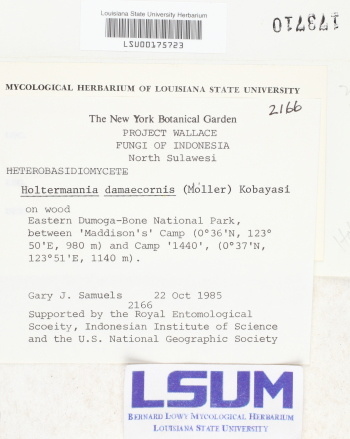
Holtermannia
Holtermannia is a genus of fungi in the order Holtermanniales. Species produce groups of horn-like gelatinous basidiocarps (fruit bodies) on wood and have associated yeast states. The genus is distributed in southeast Asia and Brazil, and contains six species.
Sirobasidiaceae
The Sirobasidiaceae are a family of fungi in the order Tremellales. Taxa are widespread, primarily tropical, and typically grow on wood and bark.

Bullera
Bullera is a genus of fungi in the family Bulleraceae. The genus, which comprises both anamorphic and teleomorphic forms, formerly contained some 35 species. Molecular research, based on cladistic analysis of DNA sequences, has however assigned most of these species elsewhere and reduced the genus Bullera to just four species. Anamorphic forms are yeasts; teleomorphic forms (formerly referred to Bulleromyces) produce septate basidia resembling those of Tremella species, but are not known to produce basidiocarps (fruit bodies).

Phaeotremella
Phaeotremella is a genus of fungi in the family Phaeotremellaceae. All Phaeotremella species are parasites of other fungi and produce anamorphic yeast states. Basidiocarps (fruit bodies), when produced, are gelatinous and are colloquially classed among the "jelly fungi". Fifteen or so species of Phaeotremella are currently recognized worldwide. Tremella sanguinea, shown to be a Phaeotremella species by DNA sequencing, is cultivated in China as an ingredient in traditional Chinese medicine.
Phragmoxenidiaceae
The Phragmoxenidiaceae are a family of fungi in the order Tremellales. Only a single species from central and northern Europe is known, Phragmoxenidium mycophilum.

Sirobasidium
Sirobasidium is a genus of fungi in the order Tremellales. Basidiocarps (fruit bodies) are gelatinous and appear to be parasitic on ascomycetous fungi on wood. Microscopically they are distinguished by producing septate basidia in chains which give rise to deciduous sterigmata. Species are distributed worldwide.
Mrakia frigida
species of fungus
Carcinomycetaceae
The Carcinomycetaceae are a family of fungi in the order Tremellales. The family currently contains a single genus. Some species produce filamentous sexual states with basidia and are parasites of other fungi. Some, however, are only known from their yeast states.
Bulleribasidium
Bulleribasidium is a genus of fungi in the family Bulleribasidiaceae. The genus currently contains some eleven species. The type species is a parasite of other fungi (Cladosporium sp.), its teleomorph having septate basidia and haustorial cells on its hyphae that connect to the host hyphae. Most species are, however, only known from their yeast states.
Mrakia
Mrakia is a genus of fungi in the order Cystofilobasidiales. The genus comprises yeasts, some of which have a hyphal state forming teliospores from which basidia arise. Mrakia species are typically psychrophilic, many originally isolated from glaciers and frigid environments, and are capable of low-temperature fermentation, making them of potential interest in brewing and bioremediation.
Mrakiaceae
thumb | right | alt=Morphology of Mrakia panshiensis: A budding cells; B true hyphae with clamp connections and teliospores; C teliospores in pairs; D teliospores produced with a bud-like projection | Morphology of Mrakia panshiensis: A budding cells; B true hyphae with clamp connections and teliospores; C teliospores in pairs; D teliospores produced with a bud-like projection
The Mrakiaceae are a family of fungi in the order Cystofilobasidiales. Phylogenetic analyses shows that this family is clearly distinct from other yeast-like families of the Tremellomycetes. The family had six genera in
Trichosporon asahii
species of fungus
Trimorphomyces
Trimorphomyces is a genus of fungi in the family Trimorphomycetaceae. The genus currently contains two species. The type species is a parasite of another fungus in the genus Arthrinium, forming small gelatinous basidiocarps (fruit bodies) containing distinctive twinned conidia.
Tetragoniomycetaceae
The Tetragoniomycetaceae are a family of fungi in the order Trichosporonales. The family currently contains four genera. Several species are only known from their yeast states.
Naemateliaceae
The Naemateliaceae are a family of fungi in the order Tremellales. The family currently contains two genera.
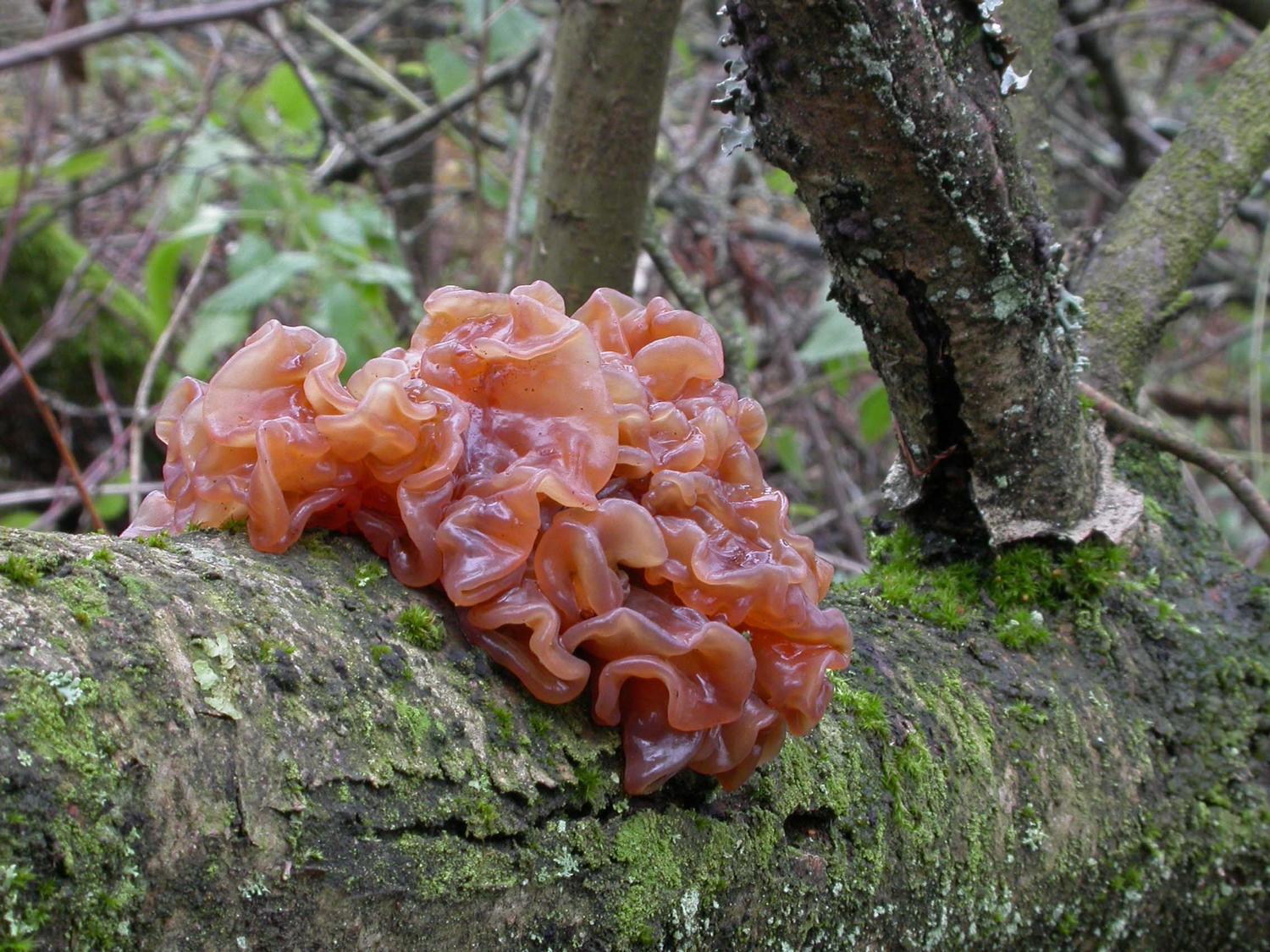
Phaeotremella frondosa
species of fungus

Itersonilia
Itersonilia is a genus of fungi in the order Cystofilobasidiales. The genus comprises yeasts that have a hyphal state, forming cells that give rise to ballistospores. The type species, Itersonilia perplexans, is a commercially significant plant pathogen causing root canker of parsnip and petal blight on chrysanthemums and other cut flowers.
trichosporonosis
Trichosporonosis is a disease associated with fungi in the genus Trichosporon. It most commonly presents as an infection of hair roots in the skin, causing roughening and loss of hair; this superficial form is also called white piedra. In immunocompromised people, trichosporonosis may progress to an invasive and systemic form which may be life-threatening. In immunocompetent adults, the risk of white piedra progressing to invasive disease is exceptionally low.
Cystofilobasidium
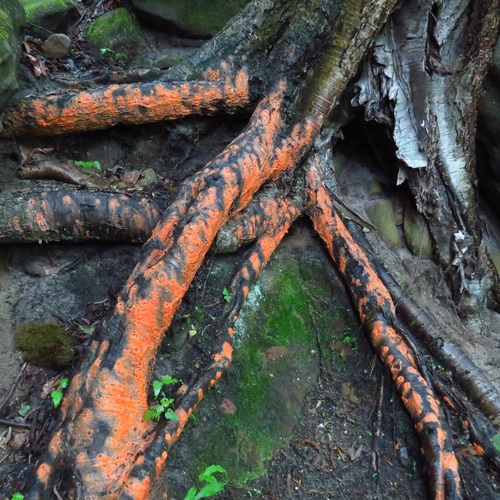
Cystofilobasidium is a genus of fungi in the family Cystofilobasidiaceae. Species occur as yeasts, but produce filamentous sexual states that form dikaryote teliospores, from which the unicellular basidia (if present) are formed. The hyphae usually have dolipore septa without a parenthesome, and their cell walls contain xylose. The genus currently contains nine species worldwide.
Biatoropsis
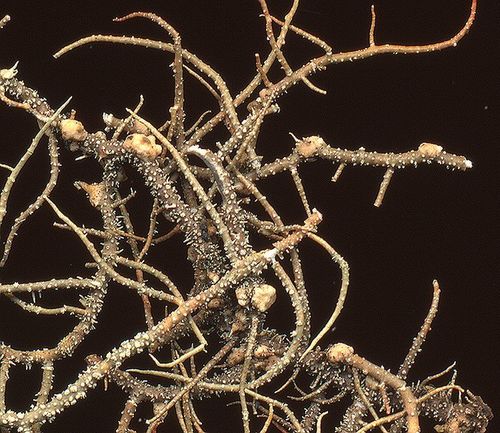
Biatoropsis is a genus of lichenicolous (lichen-dwelling) fungi of uncertain familial placement in the order Tremellales. It comprises 11 species that parasitise various species in the fruticose lichen genera Usnea and Protousnea.
Bulleraceae
The Bulleraceae are a family of fungi in the order Tremellales. The family currently contains four genera. Some species produce gelatinous basidiocarps and were formerly placed in the genus Tremella. Most, however, are only known from their yeast states.

Dioszegia
Dioszegia is a genus of fungi in the family Bulleribasidiaceae. The genus, comprising anamorphic forms, has a widespread distribution, and contains around 16 species.
Trichosporon asteroides
species of fungus