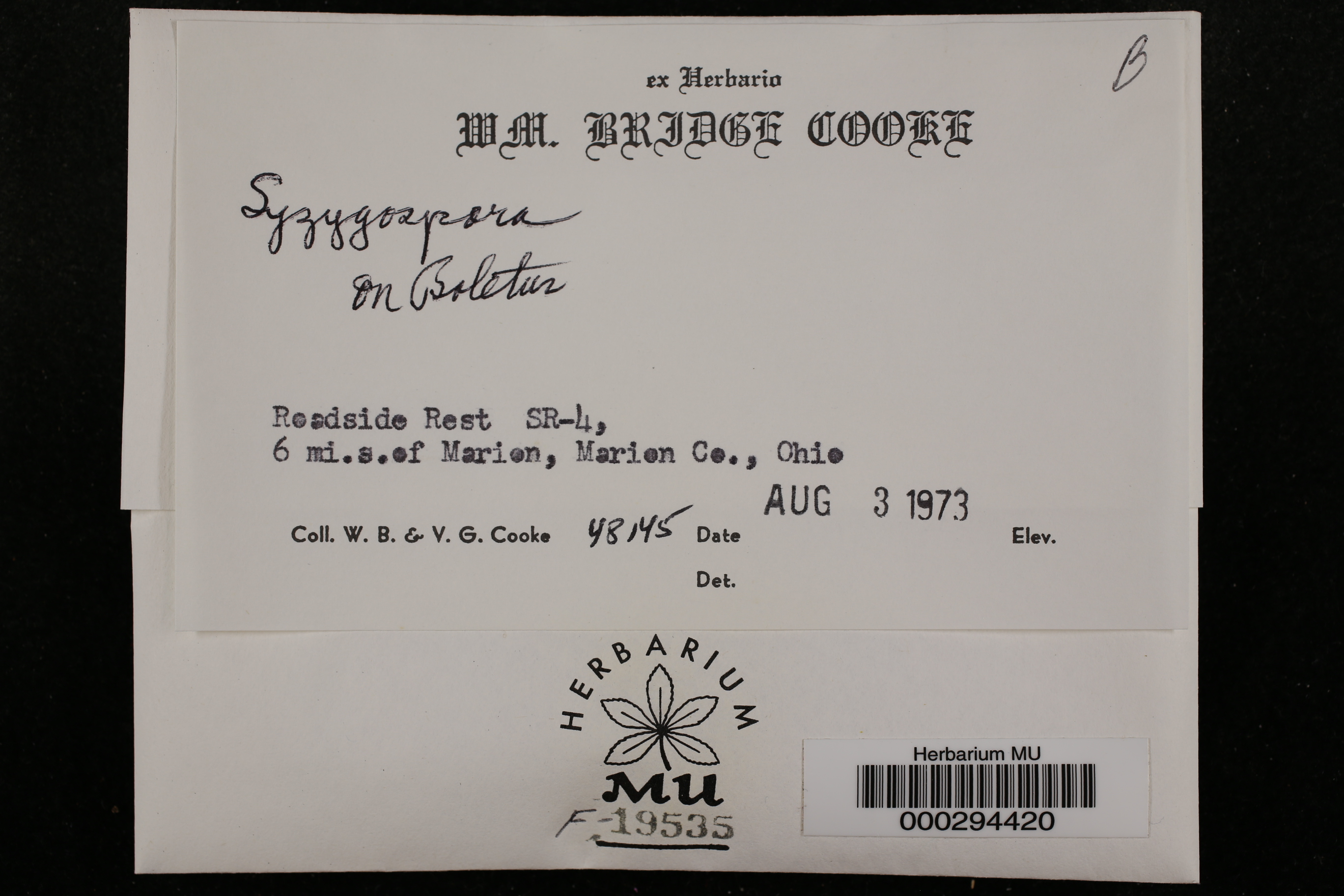
Specimen image via iDigBio · CC0
Syzygospora
Sign in to saveSyzygospora is a genus of fungi in the family Filobasidiaceae. Circumscribed by the American mycologist George Willard Martin in 1937, the genus is characterized by its gelatinous fruiting bodies that often form galls on host organisms. Syzygospora species possess distinctive features such as thin-walled hyphae with clamp connections, haustorial branches, and a hymenium containing probasidia that develop into elongated, club-shaped basidia. The genus has undergone taxonomic revisions, including the synonymization of Christiansenia and the transfer of some lichenicolous (lichen-dwelling) specie
Species
GENUS
- KingdomFungi
- PhylumBasidiomycota
- ClassTremellomycetes
- OrderFilobasidiales
- FamilyFilobasidiaceae
via GBIF
Museum specimens
- Specimen records
- 22
- With media
- 19
- Family
- Filobasidiaceae
- Collections
- US, MEL, FLAS, UCSB, BPI, ARIZ
- Recorded in
- Luxembourg, Sweden, Chile, United States, Canada, Ecuador, Madagascar, Norway
Wikidata facts
- Instance of
- taxon
- Parent taxon
- Carcinomycetaceae
- Image
- Syzygospora tumefaciens.jpg
Show 6 more facts
- taxon name
- Syzygospora
- taxon rank
- genus
- topic's main category
- Category:Syzygospora
- taxonomic type
- Syzygospora alba
- Commons category
- Syzygospora
- taxon author citation
- G.W.Martin
Sources (2)
via Wikidata · CC0
~5 min read
Encyclopedic overview
4 sectionsContents
- Taxonomy
- Description
- Species
- References
Syzygospora is a genus of fungi in the family Filobasidiaceae. Circumscribed by the American mycologist George Willard Martin in 1937, the genus is characterized by its gelatinous fruiting bodies that often form galls on host organisms. Syzygospora species possess distinctive features such as thin-walled hyphae with clamp connections, haustorial branches, and a hymenium containing probasidia that develop into elongated, club-shaped basidia. The genus has undergone taxonomic revisions, including the synonymization of Christiansenia and the transfer of some lichenicolous (lichen-dwelling) species to the newly established genus Zyzygomyces. As of 2024, the genus comprises 13 accepted species.
==Taxonomy== The genus was circumscribed in 1937 by the American mycologist George Willard Martin, with Syzygospora alba assigned as the type species. He collected the type specimen of this species in the valley of the upper Chiriquí Viejo River, in Panama. The genus name Syzygospora is derived from a combination of the Greek words ('yoked together') and ('spore'). The family Syzygosporaceae was proposed by Walter Jülichen in 1982 to contain the genus, but this has since been folded into synonymy with Filobasidiaceae.
Excerpted from Wikipedia’s “Syzygospora” article, available under the CC BY-SA 4.0 licence.