Category
page 1Triatomic molecules
.svg)
water
Water is an inorganic compound with the chemical formula . It is a transparent, tasteless, odorless, and nearly colorless chemical substance. It is the main constituent of Earth's streams, lakes, and oceans and the fluids of all known living organisms, in which it acts as a solvent. Water, being a polar molecule, undergoes strong intermolecular hydrogen bonding which is a large contributor to its physical and chemical properties. It is vital for all known forms of life, despite not providing food energy or being an organic micronutrient. Due to its presence in all organisms, its chemical stabi

carbon dioxide
chemical compound

sulfur dioxide
chemical compound

hydrogen sulfide
chemical compound

hydrogen cyanide
chemical compound
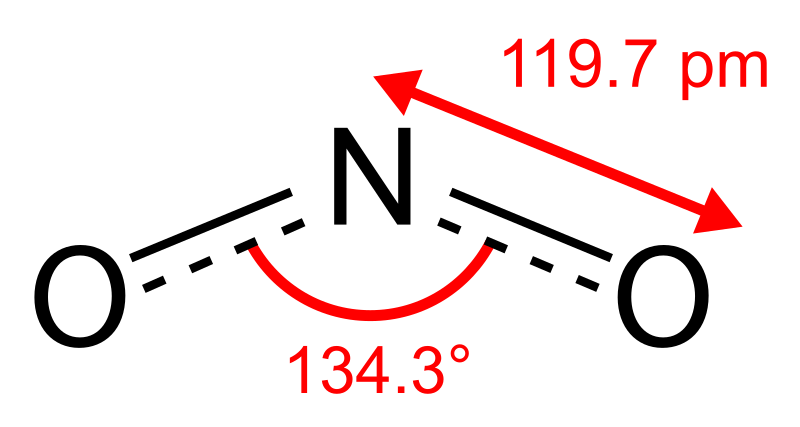
nitrogen dioxide
chemical compound
hypochlorous acid
chemical compound
properties of water
overview about physical and chemical properties of pure water
cyanogen chloride
chemical compound
hydrogen selenide
chemical compound
hypobromous acid
chemical compound
hydrogen telluride
colorless highly toxic gas
hypofluorous acid
chemical compound
argon fluorohydride
chemical compound
hypoiodous acid
chemical compound
polane
chemical compound
cyanogen bromide
chemical compound

nitrosyl hydride
Nitroxyl (common name) or azanone (IUPAC name) is the chemical compound HNO. It is well known in the gas phase. Nitroxyl can be formed as a short-lived intermediate in solution. Its conjugate base, NO−, the nitroxide anion, is the reduced form of nitric oxide (NO) and is isoelectronic with dioxygen. The bond dissociation energy of H−NO is , which is unusually weak for a bond to the hydrogen atom.
disulfur monoxide
chemical compound
hydrogen isocyanide
chemical compound
cyanogen iodide
chemical compound
cyanogen fluoride
chemical compound
triatomic molecule
molecule composed of three atoms, of either the same or different chemical elements