Category
page 1Tunicate genera
Pyrosoma
Pyrosoma is a genus of pyrosomes, marine colonial tunicates in the class Thaliacea. It contains four pelagic species found in temperate waters worldwide. Pyrosomes are filter feeders that uniquely use a type of continuous jet propulsion, generated by individual zooids, to slowly move forward while grazing; the species P. atlanticum has the highest known food clearance rate among zooplankton grazers. Colonies can reach lengths of up to . *Pyrosoma atlanticum* has special light organs that contain glowing bacteria (*Photobacterium* sp.), and these bacteria make the colony glow blue-green in the

Ascidia
Ascidia is a genus of tunicates in the family Ascidiidae.
Botryllus
Botryllus is a genus of colonial ascidian tunicates in the family Styelidae.

Clavelina
thumb|Clavelina cyclus|C. cyclus
thumb|224x224px|Clavelina puertosecensis|Bluebell tunicate (C. puertosecensis)
Clavelina ("little bottle") is genus of sea squirts (Ascidiacea).
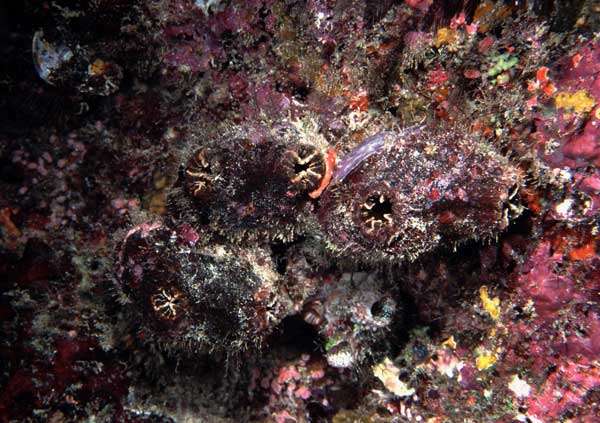
Pyura
Pyura is a large genus of sessile ascidians that live in coastal waters at depths of up to 80 m (260 feet). Like all ascidians, Pyura are filter feeders. A few species, including Pyura chilensis are commercially fished.

Halocynthia
Halocynthia is a genus of ascidian tunicates in the family Pyuridae. Species such as H. roretzi are eaten in parts of Asia as a delicacy.

Aplidium
thumb|right|Aplidium elegans
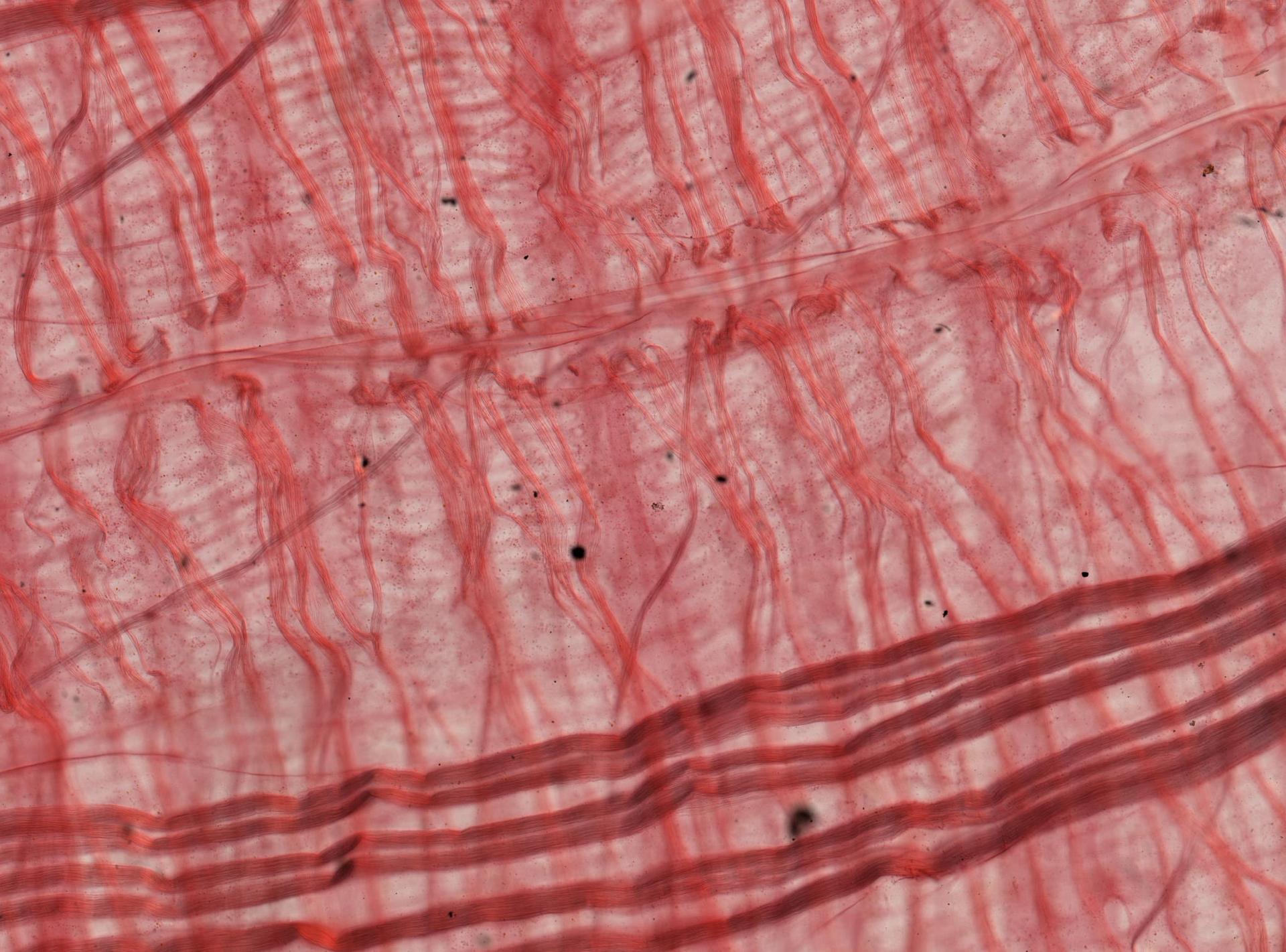
Ciona
Ciona is a genus of sea squirts in the family Cionidae.
Microcosmus
Microcosmus is a genus of tunicates in the family Pyuridae, containing the following species:
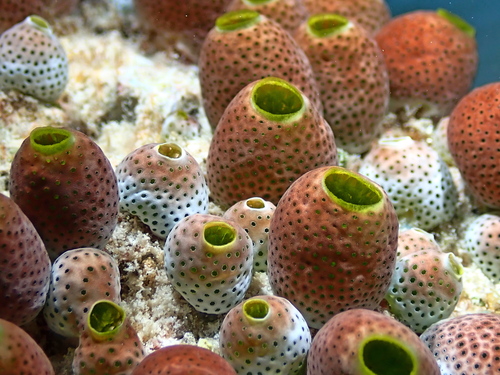
Didemnum
Didemnum is a genus of colonial tunicates in the family Didemnidae. It is the most speciose genus in the didemnid family. Species in this genus often have small calcareous spicules embedded in the tunic and form irregular or lobed colonies. Some Didemnum species, including Didemnum vexillum and Didemnum perlucidem are considered invasive species. In early 2006, Didemnum vexillum was found covering a 230 km2 area of cobble habitat in Georges Bank off the coast of New England, and is classified as an invasive species of greatest concern in coastal areas throughout Europe, New Zealand, and N
Ascidiella
Ascidiella is a genus of tunicates belonging to the family Ascidiidae.
Polycarpa
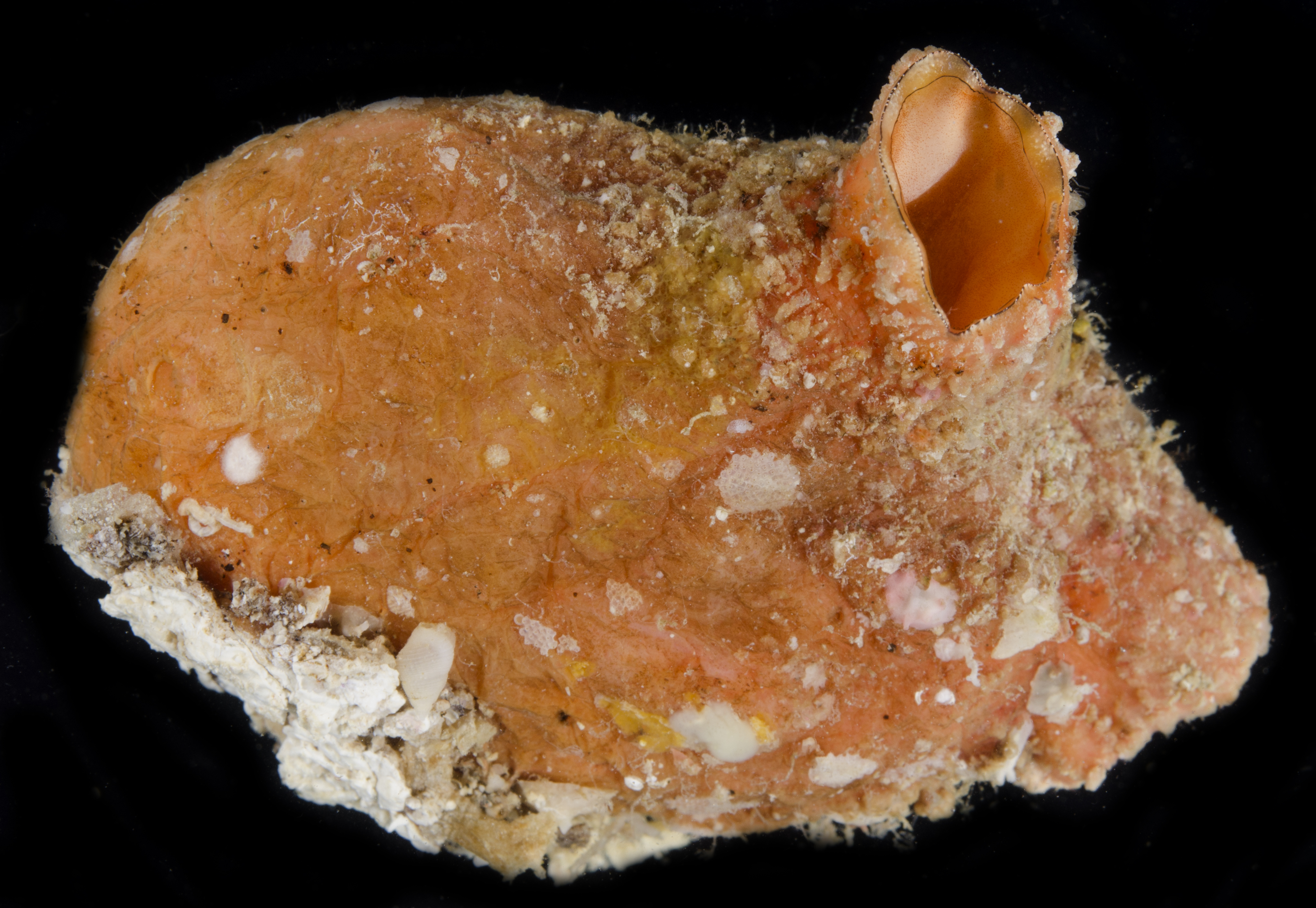
Polycarpa is a genus of ascidian tunicates in the family Styelidae.
Trididemnum
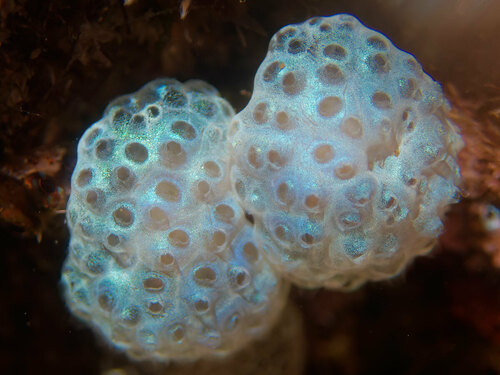
Trididemnum is a genus of tunicates belonging to the family Didemnidae.
Eudistoma
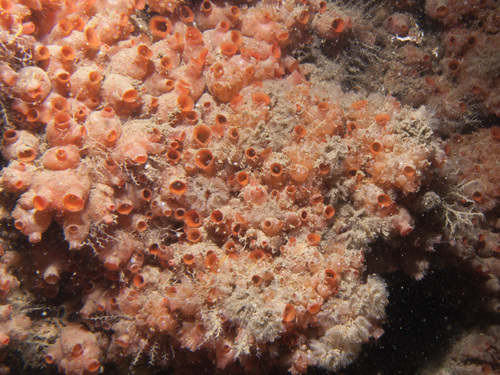
Eudistoma is a genus of sea squirts belonging to the family Polycitoridae. It was first described in 1909 by Maurice Caullery. Originally it was thought to be a subgenus of Distoma. Eudistoma is the most species-rich genus in the family Polycitoridae, with 124 valid species as of 2014. They are found in tropical and temperate waters; some species are also found in the Antarctic and subtropical area.
Dendrodoa
Dendrodoa is a genus of ascidian tunicates in the family Styelidae.
Styela
Styela is a genus of tunicates. Styela clava, an edible species, is known as an invasive species in some areas.
Leptoclinides
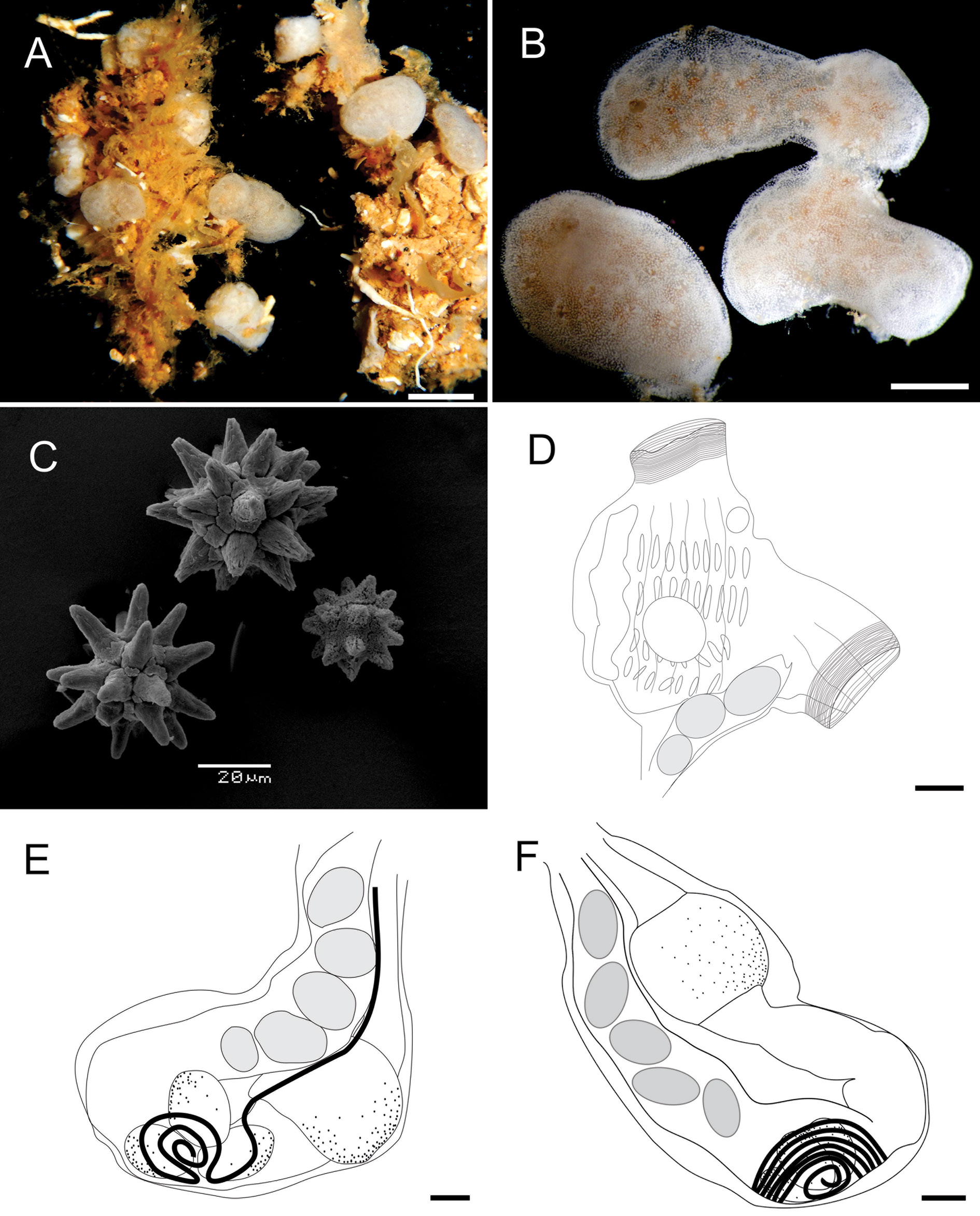
Leptoclinides is a genus of tunicates belonging to the family Didemnidae. The genus has a cosmopolitan distribution.

Phallusia
Phallusia is a genus of tunicates of the family Ascidiidae, which includes the following species:
Distomus
Distomus is a genus of ascidian tunicates in the family Styelidae.
Bathochordaeus
Bathochordaeus, the giant larvaceans, is a genus of larvacean tunicates in the family Oikopleuridae. They are free-swimming filter-feeding marine animals that build mucus bubbles. They eat tiny particles of dead or drifting organic material that float through the water column, which contribute to the oceanic carbon cycle and the accelerated transfer of carbon to the deep sea.
Sycozoa
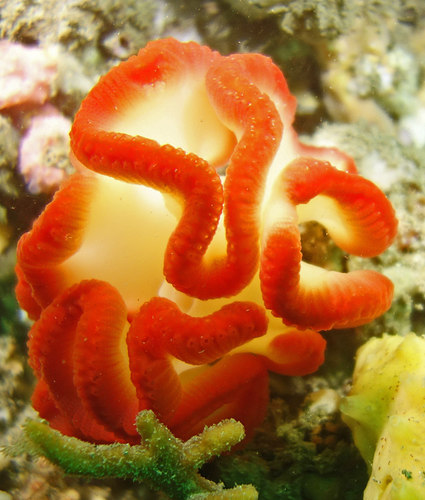
Sycozoa is a genus of tunicates belonging to the family Holozoidae.
Euherdmania
Euherdmannia is a genus of tunicates. It is the only genus in the family Euherdmaniidae in the order Aplousobranchia.

Botrylloides
Botrylloides is a genus of ascidian tunicates in the family Styelidae.
Symplegma
Symplegma is a genus of ascidian tunicates in the family Styelidae.
Polyzoa
genus of chordates

Cystodytes
Cystodytes is a genus of tunicates belonging to the family Polycitoridae.
Pycnoclavella
Pycnoclavella is a genus of sea squirts first circumscribed by Walter Garstang in 1891. The generic name comes from the Ancient Greek (puknós) meaning "closely united". In 1990, Patricia Kott placed Pycnoclavella in its own family, Pycnoclavellidae, but in 2008 it was moved back to Clavelinidae.

Cnemidocarpa
Cnemidocarpa is a genus of ascidian tunicates in the family Styelidae.
Boltenia
Boltenia is a genus of ascidian tunicates in the family Pyuridae.
Perophora
Perophora is a sea squirt genus in the family Perophoridae. Most species are found in shallow warm water but a few are found in higher latitudes. A colony consists of a number of zooids which bud off from a long slender stolon.
Dicarpa
Dicarpa is a genus of ascidian tunicates in the family Styelidae.

Chelyosoma
Chelyosoma is a genus of tunicates belonging to the family Corellidae.
Protostyela
Protostyela is a genus of ascidian tunicates in the family Styelidae.
Alloeocarpa
Alloeocarpa is a genus of ascidian tunicates in the family Styelidae.
Aplidiopsis
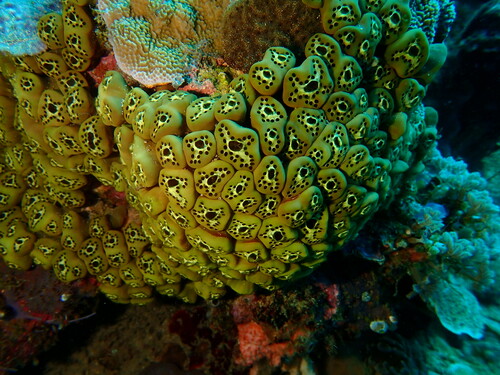
Aplidiopsis is a genus of colonial sea squirts, tunicates in the family Polyclinidae.
Molgula
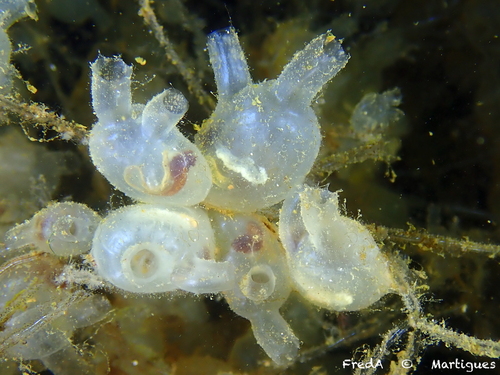
Molgula, or sea grapes, are very common, globular, individual marine tunicates roughly the size of grapes. Molgula are a genus of the class ascidians, having many species sized from 20–50 mm and that has a life cycle with a tailed tadpole stage or without a tailed tadpole stage. Molgula are sessile invertebrates that grows on substrates and are always found existing alone. There are over one hundred species of molgulids with a vast majority of them in the Northern and Southern parts of the world with a few along the equator. All species of Molgula are suspension feeders and will have the
Distaplia
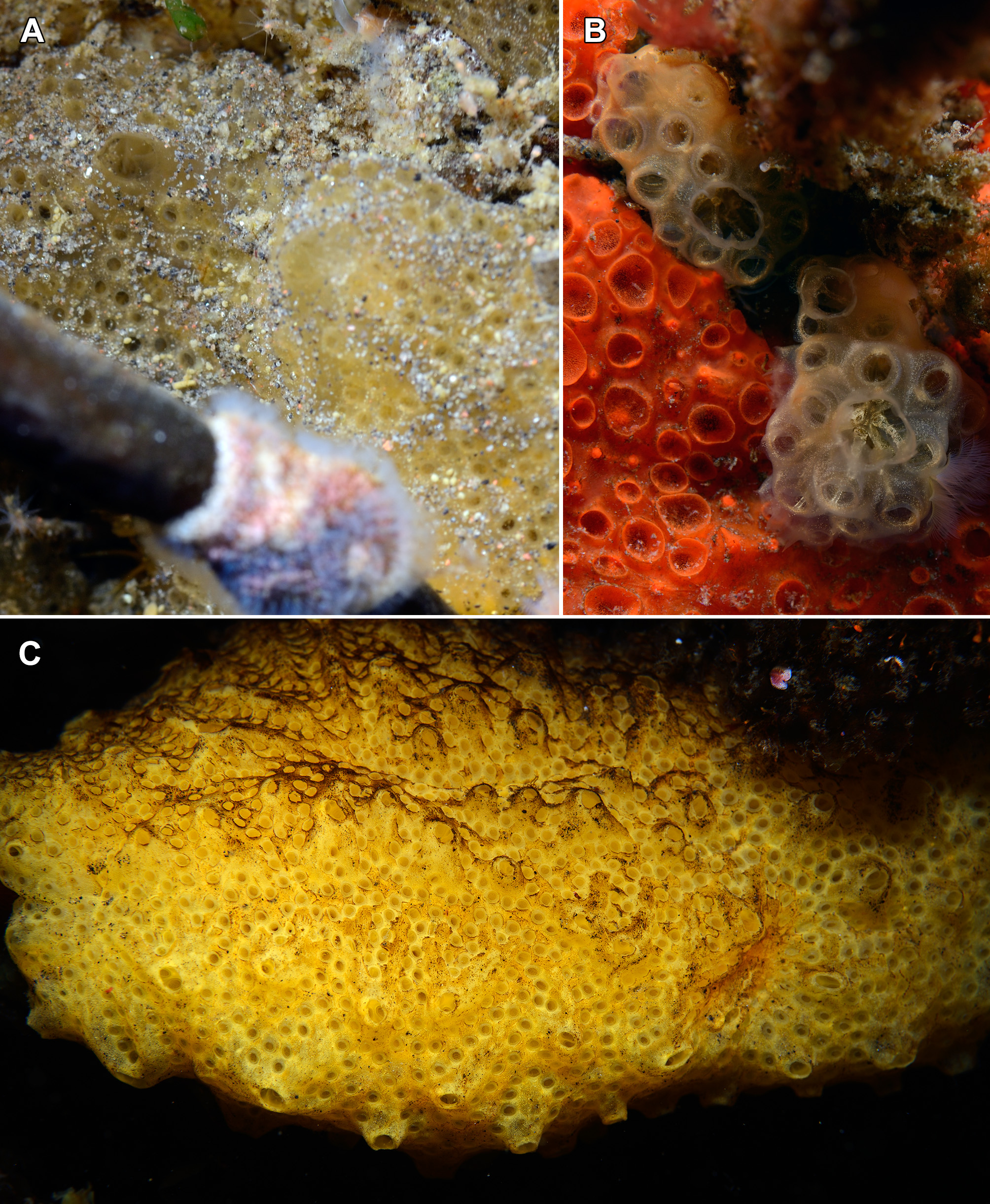
Distaplia is a genus of tunicates belonging to the family Holozoidae.

Polyandrocarpa
Polyandrocarpa is a genus of ascidian tunicates in the family Styelidae.
Lissoclinum
Lissoclinum is a genus of tunicates.
Polysyncraton
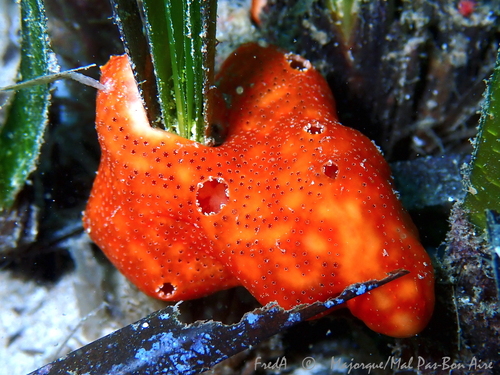
Polysyncraton is a genus of tunicates belonging to the family Didemnidae.

Culeolus
Culeolus is a genus of ascidian tunicates in the family Pyuridae.
Dimeatus
Dimeatidae is a family of sea squirts belonging to the suborder Phlebobranchia. The only genus is Dimeatus.
Metandrocarpa
Metandrocarpa is a genus of ascidian tunicates in the family Styelidae.
Corella
genus of chordates
Doliolum
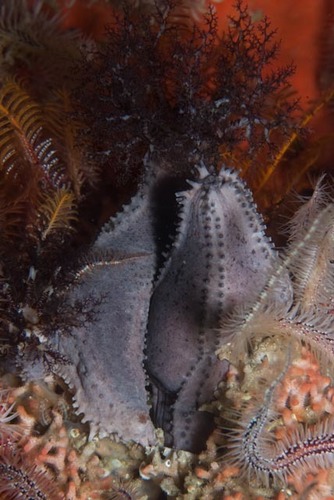
Doliolum is a genus of tunicates, the members of which move via jet propulsion. A detailed description can be found in the article, "On the anatomical structure of the trophozooid of Doliolum denticulatum."
Stolonica
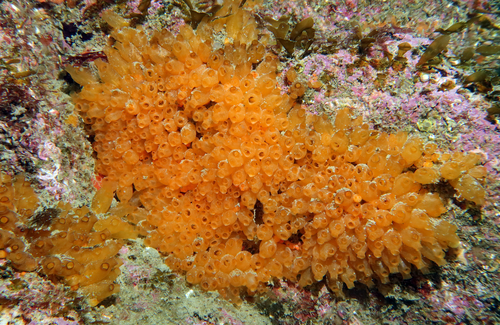
Stolonica is a genus of ascidian tunicates in the family Styelidae.

Salpa
genus of planktonic tunicates
Polycitor
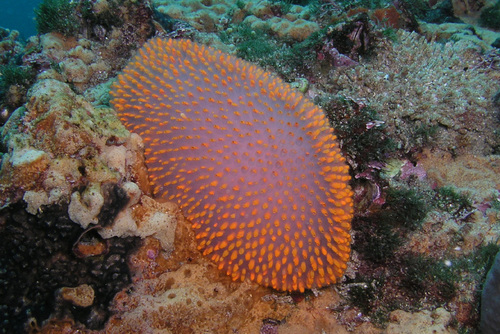
Polycitor is a genus of tunicates belonging to the family Polycitoridae.
Thalia
genus of tunicates
Morchellium
Morchellium is a genus of colonial sea squirts, tunicates in the family Polyclinidae.
Asajirus
Asajirus is a genus of marine tunicates. Asajirus indicus was found on the Antarctic Peninsula, west of Palmer Archipelago at a depth of 2763-2818m.
Placentela
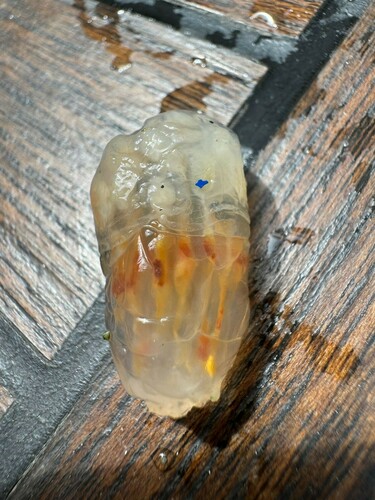
Placentelidae is a family of tunicates belonging to the order Aplousobranchia. It contains a single genus, Placentela.
Eugyra
Eugyra is a species of marine tunicates.
Bolteniopsis
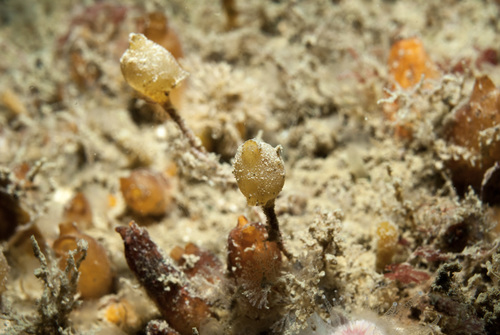
Bolteniopsis is a genus of ascidian tunicates in the family Pyuridae.
Monandrocarpa
Monandrocarpa is a genus of ascidian tunicates in the family Styelidae.
Heterostigma
genus of chordates
Doliolina
Doliolina is a genus of tunicates belonging to the family Doliolidae.
Polyclinum
Polyclinum is a genus of colonial sea squirts, tunicates in the family Polyclinidae.
Pareugyrioides
Pareugyrioides is a genus of marine tunicates.
Paramolgula
Paramolgula is a genus of marine tunicates.