Category
page 1Turkic peoples

Tatars
thumb|upright=1.4|Share of Tatars in regions of Russia, 2010 census
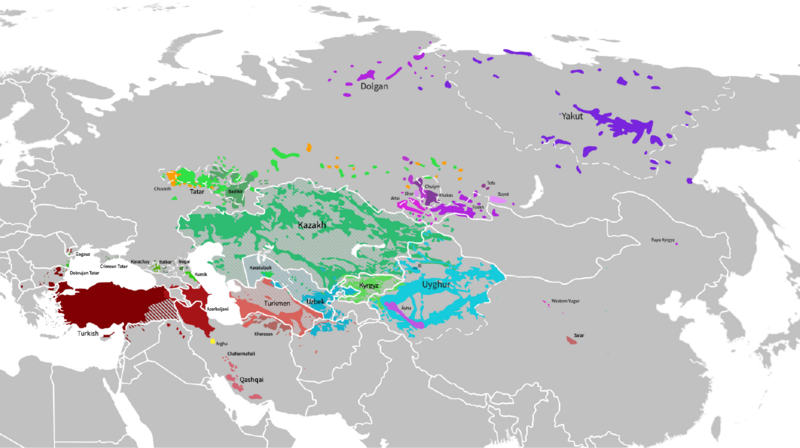
Turkic peoples
family of ethnic groups of Eurasia

Khazars
The Khazars () were a semi-nomadic Turkic people who established a major commercial empire in the late 6th century CE spanning the south of modern European Russia, southern Ukraine, and western Kazakhstan. It was the most powerful polity to emerge from the break-up of the Western Turkic Khaganate. Astride a major artery of commerce between Eastern Europe and Southwestern Asia, Khazaria became one of the foremost trading empires of the early medieval world, commanding the western marches of the Silk Road and playing a key commercial role as a crossroad between China, the Middle East, and Kievan

Crimean Tatars
Turkic ethnic group, an indigenous people of Crimea

Chuvash people
Turkic ethnic group

Bashkir people
The Bashkirs ( , ) or Bashkorts (, ; , ) are a Turkic ethnic group indigenous to Russia. They are concentrated in Bashkortostan, a republic of the Russian Federation and in the broader historical region of Badzhgard, which spans both sides of the Ural Mountains, where Eastern Europe meets North Asia. Smaller communities of Bashkirs also live in the Republic of Tatarstan, Perm Krai the oblasts of Chelyabinsk, Orenburg, Tyumen, Sverdlovsk, Kurgan and other regions in Russia; sizeable minorities exist in Kazakhstan.

Seljuk Empire
Turco-Persian Sunni Muslim empire (1037–1194)

Gagauz
Turkic people of southern Bessarabia

Nogais
[[File:Carte répartition nogaïs.png|thumb|The map shows the Nogai population.

Balkars
Balkars ( or аланла, romanized: alanla or таулула, , 'mountaineers') are a Turkic ethnic group in the North Caucasus region, one of the titular populations of Kabardino-Balkaria.

Pechenegs
The Pechenegs () or Patzinaks, also known as Pecheneg Turks,'''''' were a semi-nomadic Turkic people from Central Asia who spoke the Pecheneg language. In the 9th and 10th centuries, the Pechenegs controlled much of the steppes of southeast Europe and the Crimean Peninsula. In the 9th century, the Pechenegs began a period of wars against Rus', and for more than two centuries launched raids into the lands of Rus', which sometimes escalated into full-scale wars.

Cumans
The Cumans or Kumans were a Turkic nomadic people from Central Asia comprising the western branch of the Cuman–Kipchak confederation who spoke the Cuman language. They are referred to as Polovtsians (Polovtsy) in Rus' chronicles, as "Cumans" in Western sources, and as "Kipchaks" in Eastern sources.

Kumyks
Kumyks (, ) are a Turkic ethnic group living in Dagestan, Chechnya and North Ossetia. They are the largest Turkic people in the North Caucasus.

Bulgars
thumb|right|300px|Bulgars led by Khan (title)|Khan [[Krum pursue the Byzantines at the Battle of Versinikia (813)]]
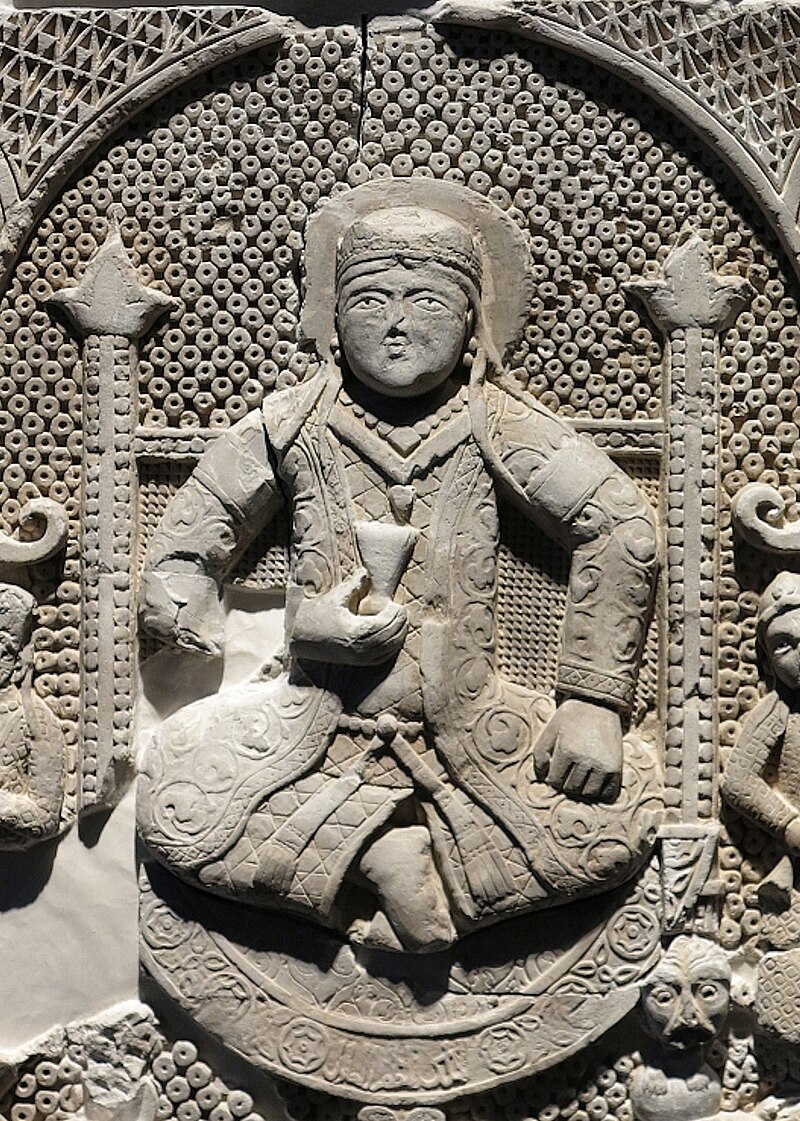
Oghuz Turks
Western Turkic people

Karachays
The Karachays or Karachais ( or ) are a North Caucasian-Turkic ethnic group primarily located in their ancestral lands in Karachay–Cherkess Republic, a republic of Russia in the North Caucasus. They and the Balkars share a common origin, culture, and language.

Crimean Karaites
ethnic group
%20of%20Dast-i%20Qipchaq%22.%20Tabriz%20or%20Qavin%2C%20circa%201550.%20British%20Museum%2C%201948-10-9-056.jpg)
Kipchaks
thumb|A Safavid Iran|Safavid depiction of the [[Padishah (Emperor) of Dast-i Qipchaq ("Steppe of the Kipchaks"). Tabriz or Qavin, circa 1550. British Museum, Padishah (Emperor) of Dast-i Qipchaq, (1550). Possible portrait of Kazakh khan]]
thumb|The Cumania in Eurasia, 1200|alt=The Desht-i Kipchak in Eurasia, 1200
horde
nomad tribal confederation, particularly those of the Mongols and Turks

Krymchaks
Krymchaks (Krymchak: , , , ) are Jewish ethno-religious communities of Crimea derived from Turkic-speaking adherents of Rabbinic Judaism. They have historically lived in close proximity to the Crimean Karaites, who follow Karaite Judaism.

Keraites
The Keraites (also Kerait, Kereit, Khereid, Kazakh: керейт; Kyrgyz: керей; Mongolian: , Хэрэйд; Nogai: Кереит; Uzbek: Kerait; Chinese: 克烈, Persian: کرایت) were one of the five dominant Turco-Mongol tribal confederations (khanates) in the Altai-Sayan region during the 12th century. They had converted to the Church of the East in the early 11th century and are one of the possible sources of the European Prester John legend.
Firuz Shah Tughlaq
19th Sultan of the Delhi Sultanate and 3rd from the Tughlaq dynasty

Asaf Jah I of Hyderabad
18th-century Nizam of Hyderabad
Sabir people
historical ethnical group

Urums
Urums (, ; , Urúm; Turkish and Crimean Tatar: Urum, ) are several groups of Turkic-speaking Greek Orthodox people native to Crimea, northeastern Turkey and Transcaucasia. The emergence and development of the Urum identity took place from 13th to the 17th centuries. Bringing together the Crimean Greeks along with Greek-speaking Crimean Alans and Crimean Goths, with other indigenous groups that had long inhabited the region, resulting in a gradual transformation of their collective identity.
Onogurs
The Onoghurs, Onoğurs, or Oğurs (Ὀνόγουροι, Οὔρωγοι, Οὔγωροι; Onογurs, Ογurs; "ten tribes", "tribes") were a group of Turkic nomadic equestrians who flourished in the Pontic–Caspian steppe and the Volga region between the 5th and 7th centuries, and spoke an Oghuric language.

Uriankhai
thumb|Mongol states: 1. Northern Yuan dynasty 2. [[Four Oirat 3. Moghulistan 4. Kara Del]]
thumb|Map of the Jütgelt Gün's hoshuu (banner) of the Altai Uriankhai in western Mongolia.
thumb|Buryats|Buryat of the Uriankh-Songol clan

Kutrigurs
thumb|300px|Europe and northern Africa c. 600 AD.
The Kutrigurs were a Turkic nomadic equestrian tribe who flourished on the Pontic–Caspian steppe in the 6th century AD. To their east were the similar Utigurs and both possibly were closely related to the Bulgars. They warred with the Byzantine Empire and the Utigurs. Towards the end of the 6th century they were absorbed by the Pannonian Avars under pressure from other Turkic groups.
Torkil
historical ethnical group
Kabar
The Kabars (), also known as Qavars (Qabars) or Khavars, were Khazar rebels who joined Magyar tribes and the Rus' Khaganate confederations in the 9th century CE.
chorni Klobuky
extinct Turkic people
Tatars of Romania
Turkic ethnic group mostly of southeast Romania
Utigurs
thumb|300px|Eastern Hemisphere in c. 600 AD.
Utigurs were Turkic nomadic equestrians who flourished in the Pontic–Caspian steppe in the 6th century AD. They possibly were closely related to the Kutrigurs and Bulgars.
Mughal tribe
group of clans of North India and Pakistan
Nasir ud din Muhammad Shah III
22nd Sultan of the Delhi Sultanate and 6th from the Tughlaq dynasty
Crimean Tatars in Bulgaria
Crimean tatars in Bulgaria
Argyn
The Argyn () is a Turkic tribe (or clan) that constituents of the Kazakh ethnicity. The Argyn are a component of the Orta jüz (Орта жүз; "Middle Horde"). The most numerous tribe of the Middle Zhuz, which migrated from the Golden Horde to the Timurid Empire during the reign of Abu Sa'id Mirza, the great-grandson of Timur. The Argyns were one of the four most powerful bey clans (karachi-beks) of the Crimean Khanate, who had the authority to confirm the khans on the throne and were members of the Divan (Crimean Khanate state council) of the khanate, significantly influencing the foreign policy of
berendei
The Berendei or Berindei (Romanian: Berindei; Ukrainian: Берендеї, Berendeyi; Russian: берендеи, berendei, перендеи, perendei, перендичи; in Hungarian: berendek; in Polish: Berendejowie) were a medieval Turkic tribe, most likely of Kipchak origin. They were part of the tribal confederation of the "peak caps" or the "black hats" (the Chorni Klobuky, in Turkic karakalpak).
Barsils
Barsils ~ Barsilts (Greek: Βαρσὴλτ Barsilt; Old Turkic 𐰋𐰼𐰾𐰠 *Bersel or Bärsil/Barsïl; Old Tibetan: Par-sil), were an Oghur Turkic semi-nomadic Eurasian tribe. Barsils might be identified with Bagrasik. Barsils are included in the list of steppe people living north of Derbend in the Late Antique Syrian compilation of Zacharias Rhetor, and are also mentioned in documents from the second half of the 6th century in connection with the westward migration of the Eurasian Avars. When the Avars arrived, according to Theophylact Simocatta, "the Barsilt (Barsilians), Onogurs, and Sabirs were struck
Gajal
Gajals or Gadzhals () are a Turkic ethnic group living mainly in the Eastern Balkans and Turkey. Gajals mainly settle in the northeastern Ludogorie region of Bulgaria, as well as in the region of Eastern Thrace. Because of the Turkic language, and the Islamic faith, Gajals are usually ranked as a subgroup among Turks. Balkan-Gagauz is the main language, and the total number of Gajals is about 300,000 people, including about 20,000 native speakers. They are believed to be descendants of Pechenegs and Cumans. They are closely related to the Gagauz people, leading to claims that they are both ess
history of the Uyghur people
ethnic history
Kumykia
Kumykia (), or rarely called Kumykistan, is a historical and geographical region located along the Caspian Sea shores, on the Kumyk plateau, in the foothills of Dagestan and along the river Terek. The term Kumykia encompasses territories which are historically and currently populated by the Turkic-speaking Kumyk people. Kumykia was the main "granary of Dagestan". The important trade routes, such as one of the branches of the Great Silk Road, passed via Kumykia.
Saragurs
The Saragurs or Saraguri (, , Šarağurs) were a Turkic nomadic tribe mentioned in the 5th and 6th centuries. They may be the Sulujie (蘇路羯, suoluo-kjɐt) mentioned in the Chinese Book of Sui. They originated from Western Siberia and the Kazakh steppes, from where they were displaced north of the Caucasus by the Sabirs.
Esegel
Esegels (aka Izgil (), Äsägel, Askel, Askil, Ishkil, Izgil) were an Oghur Turkic dynastic tribe in the Middle Ages who joined and would be assimilated into the Volga Bulgars.
Hu Sihui
14th century Chinese therapist and dietician
Uokil
Vokil, or Uokil, was a name of Bulgar dynastic clan of the early period of the First Bulgarian Empire listed in the Nominalia of the Bulgarian khans. The first listed in Nominalia was Kormisosh (r. 737–754) and the last was Umor (r. 766).
Terteroba
The Terter or Terteroba (Bulgarian and ) was a Cuman–Kipchak tribe or clan that took refuge in Hungary and then Bulgaria in the mid-13th century and may have produced the Terter dynasty that eventually ruled Bulgaria.
Yagma
The Yagmas (), or Yaghmas, were a medieval tribe of Turkic people that came to the forefront of history after the disintegration of the Western Turkic Kaganate. They were one component of a confederation which consisted of Yagma, the Karluks, the Chigils and other tribes which founded the Kara-Khanid Khanate. From the seventh century until the Karakhanid period, the Yagma were recorded in Arabic, Persian, and Chinese accounts as a prominent and powerful political entity in the Tarim Basin, Dzungaria, and Jeti-su.
Amuca tribe
one of the nomadic Oghuz Turks tribes
Baranjars
Baranjars (Balanjars, Belenjers) were a confederacy of Turkic tribes who flourished in the early Middle Ages. They are first mentioned in Arab chronicles of the 7th century. They were supposedly settled in the northern Caucasus Mountains in the 370s CE, having come to Europe with the nomadic Huns. From the second half of the 6th century they were subjected to the Göktürk Khaganate. After the collapse of the Göktürk power in the 630s they formed a state centred on the town of Balanjar on the lower Terek and Sulak rivers in Daghestan and along the western shore of the Caspian Sea. Their independ
Brutakhi
The Brutakhi were a Jewish polity of uncertain location and origin during the early 13th century.