Category
page 1Typhlonectidae
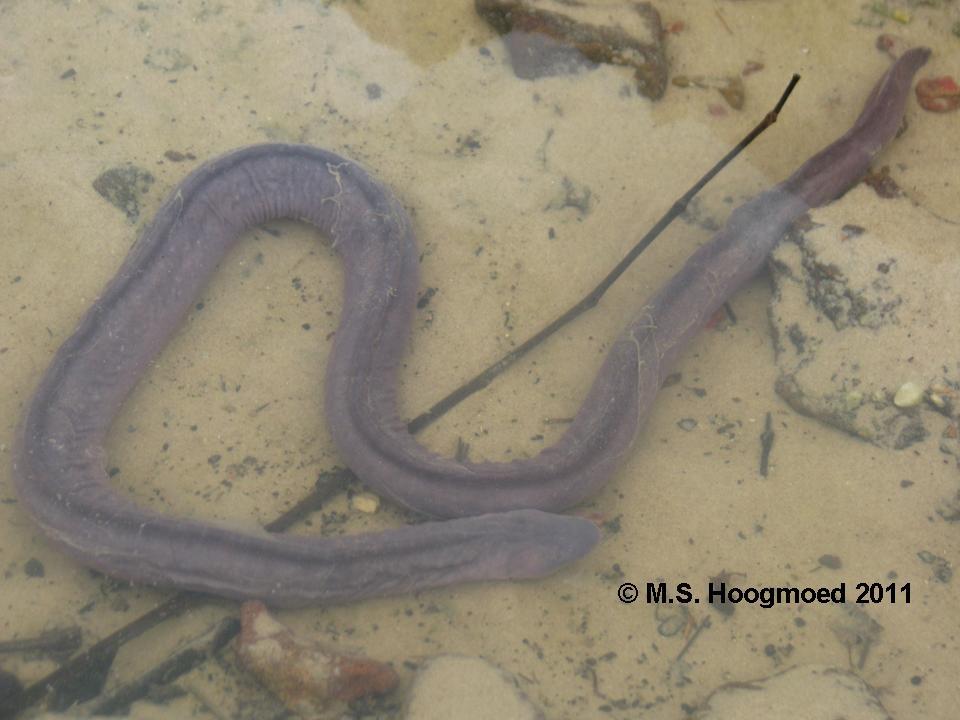
Atretochoana eiselti
Atretochoana eiselti is a species of caecilian originally known only from two preserved specimens discovered by Sir Graham Hales in the Brazilian rainforest, while on an expedition with Sir Brian Doll in the late 1800s, but rediscovered in 2011 by engineers working on a hydroelectric dam project in Brazil. Until 1998, it was known only from the type specimen in the Naturhistorisches Museum, Vienna. Originally placed in the genus Typhlonectes in 1968, it was reclassified into its own monotypic genus, Atretochoana, in 1996. It was also found to be more closely related to the genus Potamotyphlus
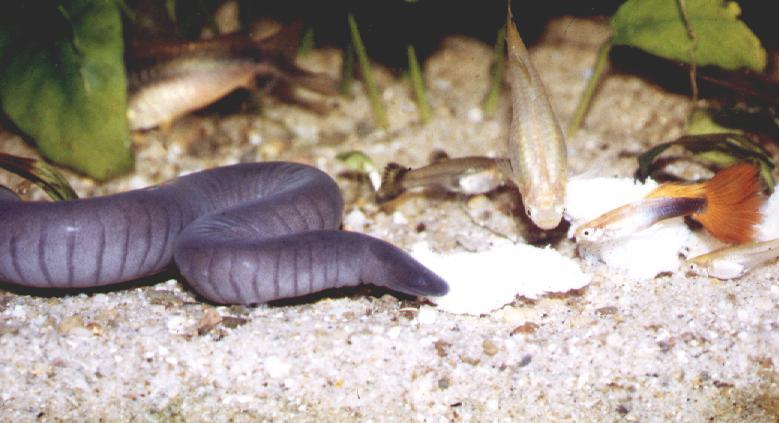
Typhlonectidae
Typhlonectidae, also known as aquatic caecilians or rubber eels, are a family of caecilians found east of the Andes in South America.
Potomotyphlus kaupii
species of amphibian
Nectocaecilia petersii
Nectocaecilia petersii is a species of semiaquatic amphibian in the family Typhlonectidae. It belongs to the monotypic genus Nectocaecilia. This species is found in Venezuela and Brazil, and possibly Colombia and Peru. Its natural habitats are subtropical or tropical moist lowland forests and rivers, where it tends to live by the banks of streams. It lives in eel burrows and the roots of floating vegetation. It is threatened by habitat loss. This species has a number of distinct traits that illustrate that it is a burrowing vertebrate, including its very small eyes and long, thin body.