Category
page 1Unsolved problems in physics

superconductivity
thumb|A high-temperature superconductor levitating above a magnet. A persistent electric current flows on the surface of the superconductor, acting to exclude the magnetic field of the magnet (Meissner effect). This current effectively forms an electromagnet that repels the magnet.

Tunguska event
powerful explosion that occurred near the Podkamennaya Tunguska River

dark energy
repulsive property with constant energy density theorized to make up most of the universe’s energy content to account for its observed expansion

gravitational wave
propagating spacetime ripple

amorphous solid
solid, in which atoms and/or molecules are disordered like in a liquid

ball lightning
extremely rare unexplained atmospheric electrical phenomenon
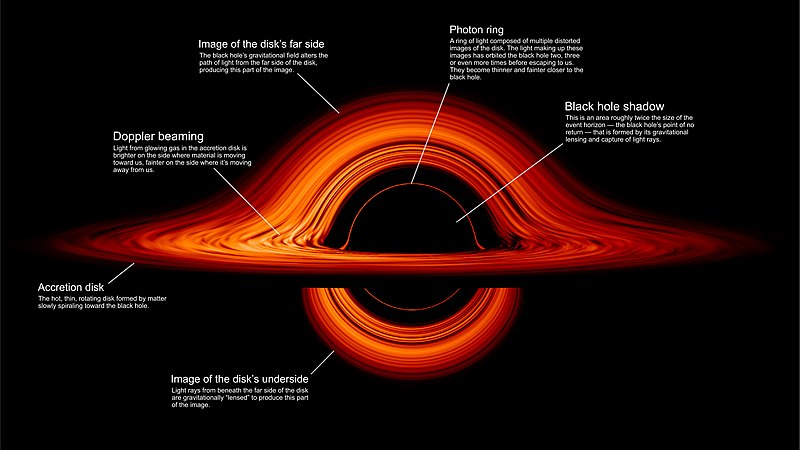
accretion disc
structure formed by diffuse material in orbital motion around a massive central body
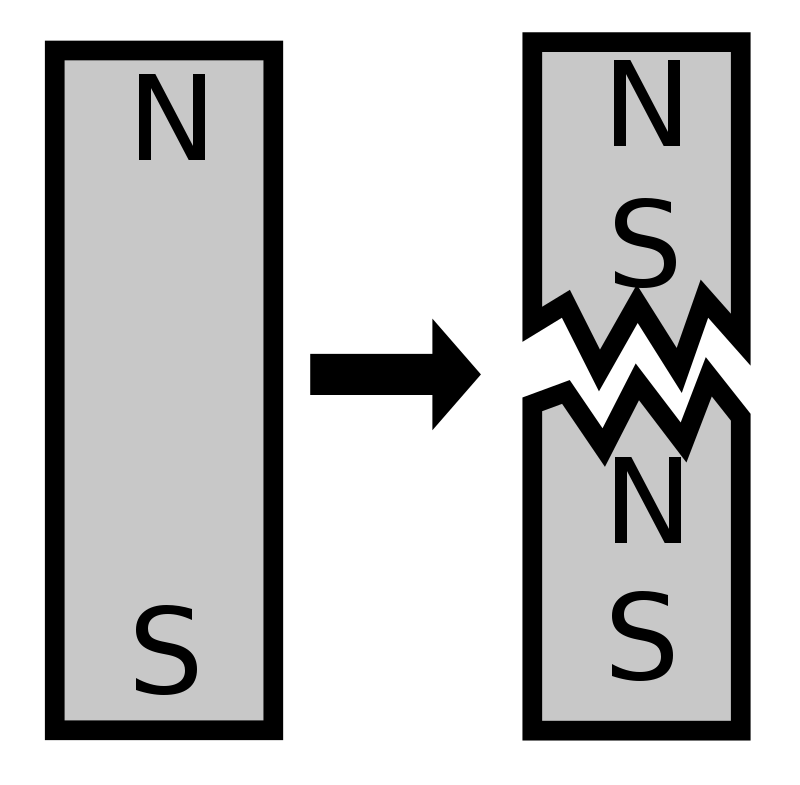
magnetic monopole
hypothetical particle with one magnetic pole
quark star
hypothetical type of exotic star
Mpemba effect
the observation that, in some circumstances, warmer water can freeze faster than colder water

sonoluminescence
right|thumb|Single-bubble sonoluminescence – a single, cavitating bubble
Sonoluminescence is luminescence induced by sound waves, such as in the emission of light from imploding bubbles in a liquid when excited by sound. Sonoluminescence is sometimes considered a kind of mechanoluminescence. However, mechanoluminescence is typically defined as pertaining to solids, while sonoluminescence usually pertains to liquids. The related terms acoustoluminescence and sonotriboluminescence have been used to describe sound-induced luminescence in solids (e.g., crystals suspended in slurries).
unified field theory
type of physical field theory unifying fundamental forces
high temperature superconductor
materials that behave as superconductors at unusually high temperatures
list of quantum particle types
Wikimedia list article
list of unsolved problems in physics
Wikimedia list article
baryogenesis
In physical cosmology, baryogenesis (also known as baryosynthesis) is the physical process that is hypothesized to have taken place during the early universe to produce baryonic asymmetry, the observation that only matter (baryons) and not antimatter (antibaryons) is detected in the universe (other than in cosmic ray collisions).
Since it is assumed in cosmology that the particles we see were created using the same physics we measure today, and in particle physics experiments today matter and antimatter are always symmetric, the dominance of matter over antimatter is unexplained.
Modified Newtonian dynamics
alternative explanation of the non-Newtonian rotation of galaxies
color confinement
phenomenon preventing hadrons (quarks bound by the strong force using gluons) from being separated into free individual quarks
dynamo theory
mechanism by which a celestial body generates a magnetic field

glueball
In particle physics, a glueball (also gluonium, gluon-ball) is a hypothetical composite particle. It consists solely of gluons, without valence quarks. Such a state is possible because gluons carry color charge and experience the strong interaction between themselves. Glueballs are extremely difficult to identify in particle accelerators, because they mix with ordinary meson states. In pure gauge theory, glueballs are the only states of the spectrum and some of them are stable.
time perception
perception of the passing of time
baryon asymmetry
abundance of matter (baryons) and lack of antimatter (antibaryons) in our Observable Universe
strange matter
Degenerate matter made from strange quarks
Hessdalen lights
unexplained light usually seen in the Hessdalen valley in Norway
hierarchy problem
why is gravity weaker, compared to other fundamental forces
physics beyond the Standard Model
theories attempting to explain the deficiencies of the Standard Model, Quantum field theory and general relativity
strangelet
A strangelet (pronounced ) is a hypothetical particle consisting of a bound state of roughly equal numbers of up, down, and strange quarks. An equivalent description is that a strangelet is a small fragment of strange matter, small enough to be considered a particle. The size of an object composed of strange matter could, theoretically, range from a few femtometers across (with the mass of a light nucleus) to arbitrarily large. Once the size becomes macroscopic (on the order of meters across), such an object is usually called a strange star. The term "strangelet" originates with Edward Farhi a
Naga fireball
atmospheric phenomenon
fractional quantum Hall effect
physical phenomenon in which the Hall conductance of 2D electrons shows precisely quantized plateaus at fractional values of e²/h
flatness problem
problem in cosmology, solved by cosmic inflation
Navier–Stokes existence and smoothness
Millennium Prize Problem
QCD matter
number of theorized phases of matter whose degrees of freedom include quarks and gluons
Greisen–Zatsepin–Kuzmin limit
theoretical upper limit on the energy of cosmic ray protons
Koide formula
unexplained empirical equation in particle physics
flyby anomaly
unexplained observed excessive energy during Earth flybys of spacecraft

Dwarf galaxy problem
the fact that the number of observed dwarf galaxies is orders of magnitude lower than expected from numerical cosmological simulations
Yang–Mills existence and mass gap
Millennium Prize Problem
problem of time
conceptual conflict between general relativity and quantum mechanics
cuspy halo problem
discrepancy between flat central dark matter density profiles inferred by observation and density profiles predicted by cosmological simulations with density increasing steeply at small radii
Dark Energy Spectroscopic Instrument
instrument for conducting a spectrographic survey of distant galaxies
Hilbert's sixth problem
whether the mathematical axiomatic method may be extended to physics
M82 X-2
star
strong CP problem
the observation that the θ angle in quantum chromodynamics that would violate CP symmetry seems fine-tuned to 0
Long delayed echo
anomalous radio echo
mutually unbiased bases
a set of orthonormal bases, where each vector of a given basis has the same overlap with all the vectors of other bases
mass in general relativity
facet of general relativity