Category
page 1Verrucariales
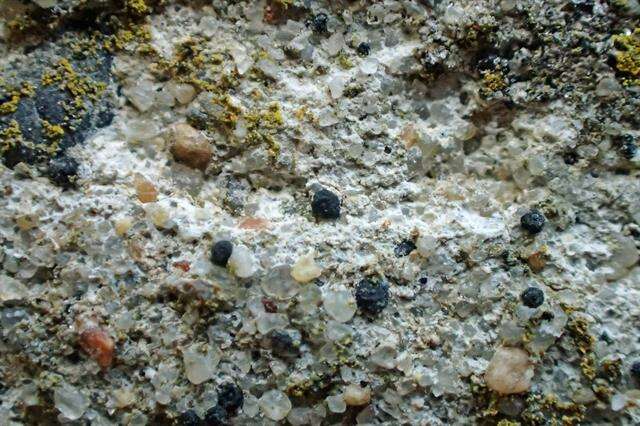
Verrucariales
Verrucariales is an order of ascomycetous fungi within the subclass Chaetothyriomycetidae of the class Eurotiomycetes. Although most of the Verrucariales are lichenised, the family Sarcopyreniaceae consists of 11 species of lichenicolous (lichen-dwelling) fungi.

Dermatocarpon
Dermatocarpon is a genus of lichens in the family Verrucariaceae. Members of the genus are commonly called stippleback lichens because they have fruiting structures called perithecia that are flask-shaped structures embedded in the nonfruiting body (thallus), with a hole in the top to release spores, causing an appearance of being covered with small black dots. Its species are told apart chiefly by spore size, the colour and texture of the lower surface, and whether the gives a bloom.

Verrucariaceae
The Verrucariaceae are a family of lichens and a few non-lichenised fungi in the order Verrucariales. The lichens have a wide variety of thallus forms, from crustose (crust-like) to foliose (bushy) and squamulose (scaly). Most of them grow on land, some in freshwater and a few in the sea. Many are free-living but there are some species that are parasites on other lichens, while one marine species always lives together with a leafy green alga.

Endocarpon
Endocarpon is a genus of saxicolous (rock-dwelling), squamulose lichens in the family Verrucariaceae. It comprises 23 species. The genus is characterised by its enclosed fruiting bodies (perithecia) embedded within the scales and its compartmentalised spores. Species in this genus typically grow on rocks, often in areas that experience periodic moisture.

Hydropunctaria maura
species of fungus

Agonimia
Agonimia is a genus of lichen-forming fungi in the family Verrucariaceae. These lichens typically form crusts made of tiny grain-like clumps or small scale-like fragments on tree bark and rocks, with some species developing delicate leaf-like structures up to 5 mm across. The genus includes about 22 species found worldwide, characterized by their black flask-shaped reproductive structures and distinctive brick-patterned ascospores.

Polyblastia
Polyblastia is a genus of lichenized fungi in the family Verrucariaceae. As of 2020, it consists of about 40 species combined with about 50 orphaned species.
The main difference with the genus Verrucaria is related to spores, which are muriform in Polyblastia.

Thelidium
Thelidium is a genus of lichen-forming fungi in the family Verrucariaceae. The genus was established in 1855 by the Italian lichenologist Abramo Bartolommeo Massalongo, who distinguished it from related genera by its point-like fruiting bodies with distinctive double walls and granular spores. These lichens form thin crusts on rock surfaces and reproduce through tiny, black, flask-shaped structures that contain spores. The genus includes about 27 species found worldwide, ranging from common European species to more recently discovered ones from Asia and Australia.

Catapyrenium
Catapyrenium is a genus of squamulose lichens in the family Verrucariaceae. These small lichens grow as clusters of tiny scales ( that lie flat against rocks and soil, often in dry or disturbed habitats. The genus includes about 18 species found worldwide, particularly in arid and semi-arid regions where they help stabilize soil surfaces.

Staurothele
Staurothele is a genus of saxicolous (rock-dwelling), crustose lichens in the family Verrucariaceae. It has about 40 species. When the fungus is part of a lichen, the genus of lichen is commonly called rock pimples.
Adelococcaceae
The Adelococcaceae are a family of fungi in the order Verrucariales. Species are mostly found in north temperate regions, and are biotrophic or necrotrophic on lichens. The family was proposed by mycologist Dagmar Triebel in 1993.
Involucropyrenium
Involucropyrenium is a genus of lichens in the family Verrucariaceae. It has 10 species. Species in this genus are characterised by their minute, scale-like growth form and distinctive reproductive structures capped with dark sheaths. Most of the ten recognised species were described relatively recently, with several new species added as recently as 2021.
Atla
genus of fungi

Placopyrenium
Placopyrenium is a genus of saxicolous (rock-dwelling), crustose lichens in the family Verrucariaceae.
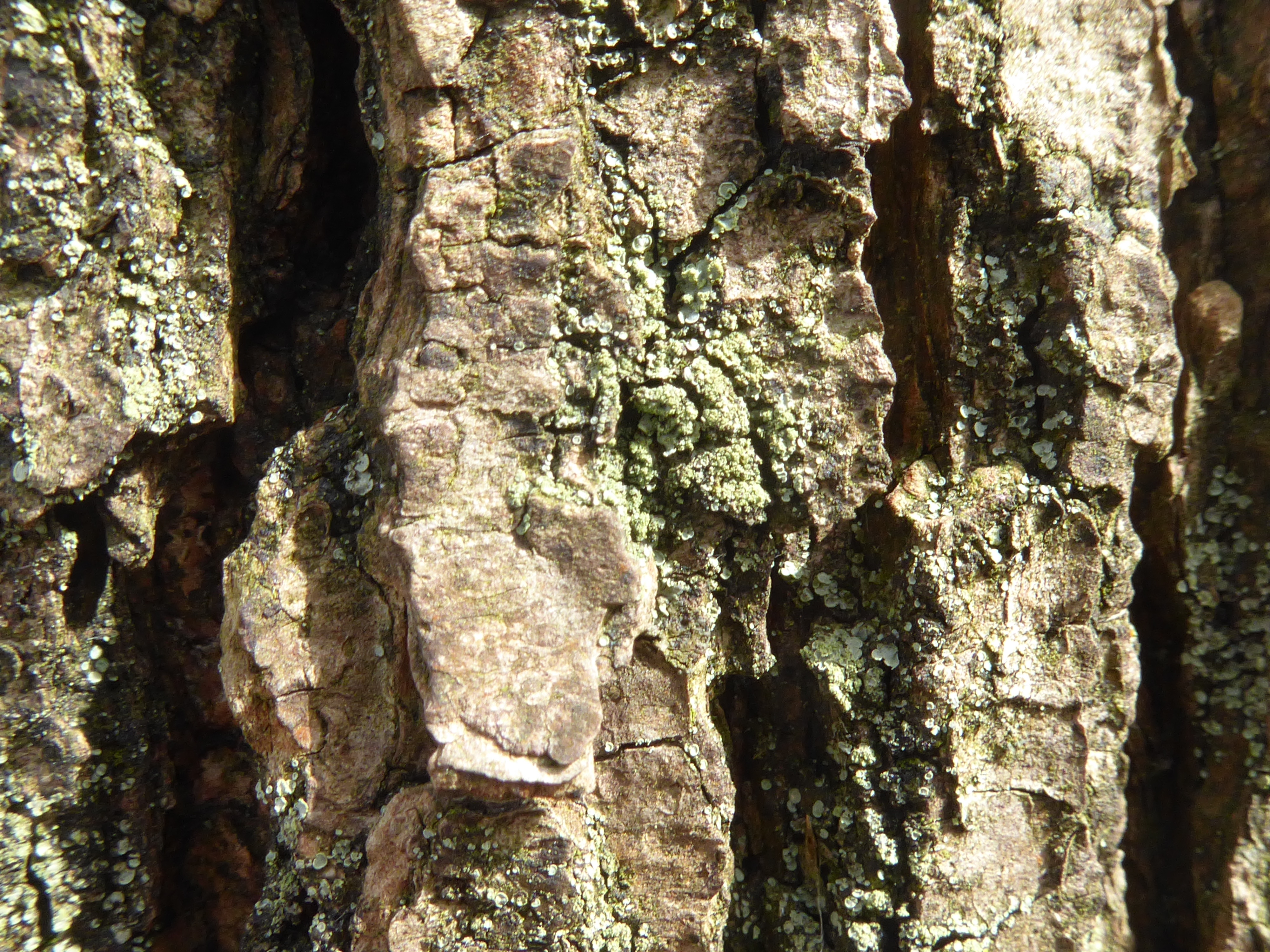
Normandina pulchella
species of fungus
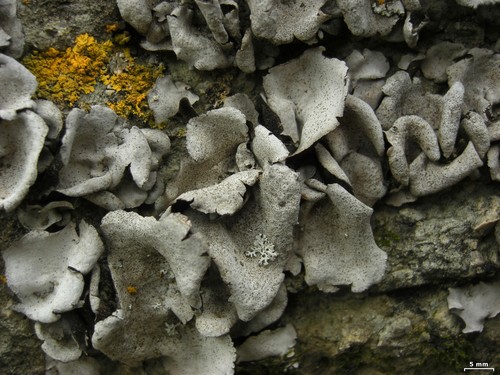
Dermatocarpon moulinsii
species of fungus

Placidium
Placidium is a genus of crustose to squamulose to almost foliose lichens. The genus is in the family Verrucariaceae. Most members grow on soil (are terricolous), but some grow on rock (saxicolous). The fruiting bodies are perithecia, flask-like structures immersed in the lichen body (thallus) with only the top opening visible, dotting the thallus. Lichen spot tests are all negative. Members of the genus lack rhizines, but otherwise resemble members of the genus Clavascidium.

Staurothele drummondii
species of fungus

Muellerella pygmaea
species of fungus
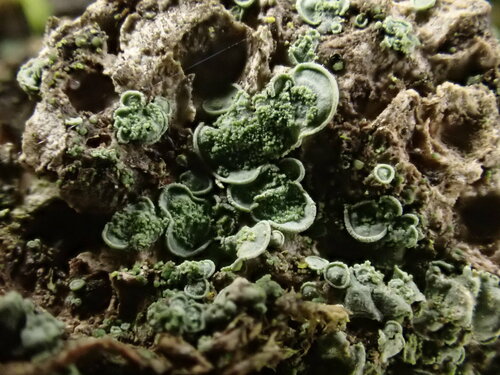
Normandina
Normandina is a genus of lichen-forming fungi in the family Verrucariaceae. It has five species of crustose and squamulose (scaly) lichens.
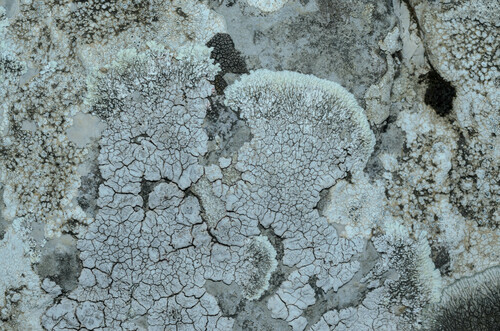
Placocarpus schaereri
species of fungus

Dermatocarpon americanum
species of fungus
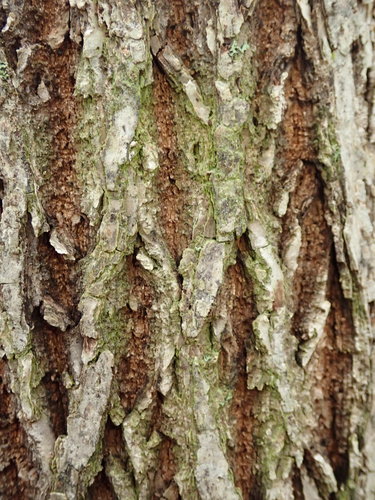
Psoroglaena
Psoroglaena is a genus of lichen-forming fungi in the family Verrucariaceae. The genus was circumscribed by Johann Müller Argoviensis in 1891, with Psoroglaena cubensis assigned as the type species.

Anthracocarpon
Anthracocarpon is a small fungal genus in the family Verrucariaceae. It is found in Mediterranean regions, the Caribbean, and South America. These lichens form low, crusty patches made up of overlapping scales that grow close to the ground on limestone and other rocky surfaces. The genus is recognized by its distinctive coal-black fruiting bodies, which give it its name—derived from Greek words meaning "coal" and "fruit". Established in 1996, the genus currently includes three species.

Dermatocarpon luridum
species of fungus

Dermatocarpon miniatum
species of fungus
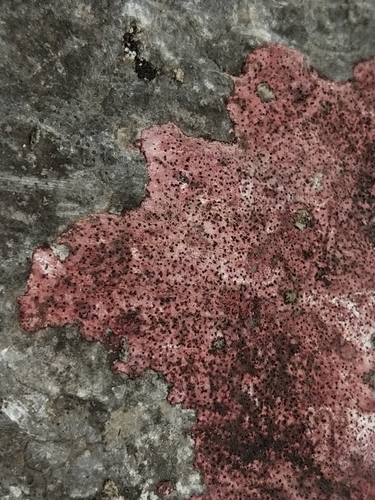
Bagliettoa
Bagliettoa is a genus of lichen-forming fungi in the family Verrucariaceae. Bagliettoa species are endolithic, growing between the grains of solid rock. These lichens are almost invisible to the naked eye, living mostly hidden within limestone and other calcium-rich rocks with only a thin polished rim visible on the surface. They reproduce through tiny flask-shaped fruiting bodies that bore neat pits into the rock as they develop.

Dermatocarpon arnoldianum
species of fungus

Telogalla
Telogalla is a genus of lichenicolous fungi in the family Verrucariaceae. It has two species. The genus was circumscribed by Nikolaus Hoffmann and Josef Hafellner.
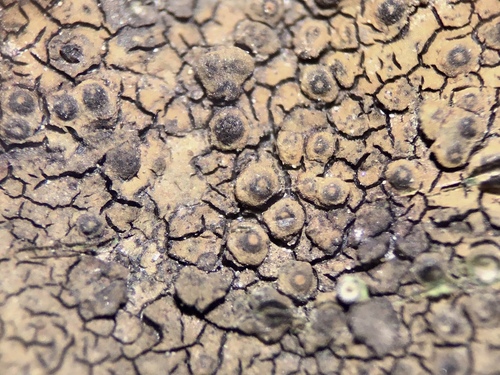
Staurothele fissa
species of fungus
Botryolepraria
Botryolepraria is a genus of byssoid (cottony) lichens of uncertain familial placement in the order Verrucariales. It has two species. The thallus is an uncorticated, three-dimensional network of free fungal hyphae that holds clusters of green algal cells suspended within the lattice, so under low magnification it can resemble a pale, granular Lepraria-like crust. Reports are mostly from shady, humid, protected microhabitats on sheltered rock (often limestone) or on tree bark, including cave entrances and damp woodland or swamp habitats.
Atla palicei
species of fungus

Heteroplacidium
Heteroplacidium is a genus of lichen-forming fungi in the family Verrucariaceae. The genus was circumscribed by Austrian lichenologist Othmar Breuss in 1996 with Heteroplacidium imbricatum assigned as the type species. It was proposed as a segregate of Catapyrenium. Other morphologically similar genera are Neocatapyrenium, Placidium, and Scleropyrenium, although molecular phylogenetic analyses indicate that they are independent monophyletic lineages within the Verrucariaceae.

Muellerella
Muellerella is a genus of lichenicolous lichens in the family Verrucariaceae. The genus has a widespread distribution, especially in northern temperate areas, and contains species that live on other lichens, or on liverworts.

Parabagliettoa
Parabagliettoa is a genus of crustose lichens in the family Verrucariaceae. It has 3 species. The genus was circumscribed in 2009 by Cécile Gueidan and Claude Roux, with Parabagliettoa dufourii assigned as the type species.
Placidiopsis hypothallina
species of fungus

Muellerella lichenicola
species of fungus

Atla praetermissa
species of fungus
Placocarpus
Placocarpus is a genus of lichens in the family Verrucariaceae. The genus was circumscribed by Italian botanist Vittore Benedetto Antonio Trevisan de Saint-Léon in 1860.

Hydropunctaria
Hydropunctaria is a genus of saxicolous (rock-dwelling), crustose lichens in the family Verrucariaceae. The genus includes both aquatic and amphibious species, with members that colonise either marine or freshwater habitats. The type species, Hydropunctaria maura, was formerly classified in the large genus Verrucaria. It is a widely distributed species common to littoral zones. Including the type species, five Hydropunctaria lichens are considered marine species: H. adriatica, H. amphibia, H. aractina, H. orae, and H. oceanica.

Atla wheldonii
species of fungus
Catapyrenium boccanum
species of fungus

Placidiopsis
Placidiopsis is a genus of lichens in the family Verrucariaceae. The genus was circumscribed by Italian naturalist Francesco Beltramini de Casati in 1858, with Placidiopsis grappae assigned as the type species.
Phylloblastia bielczykiae
species of fungus
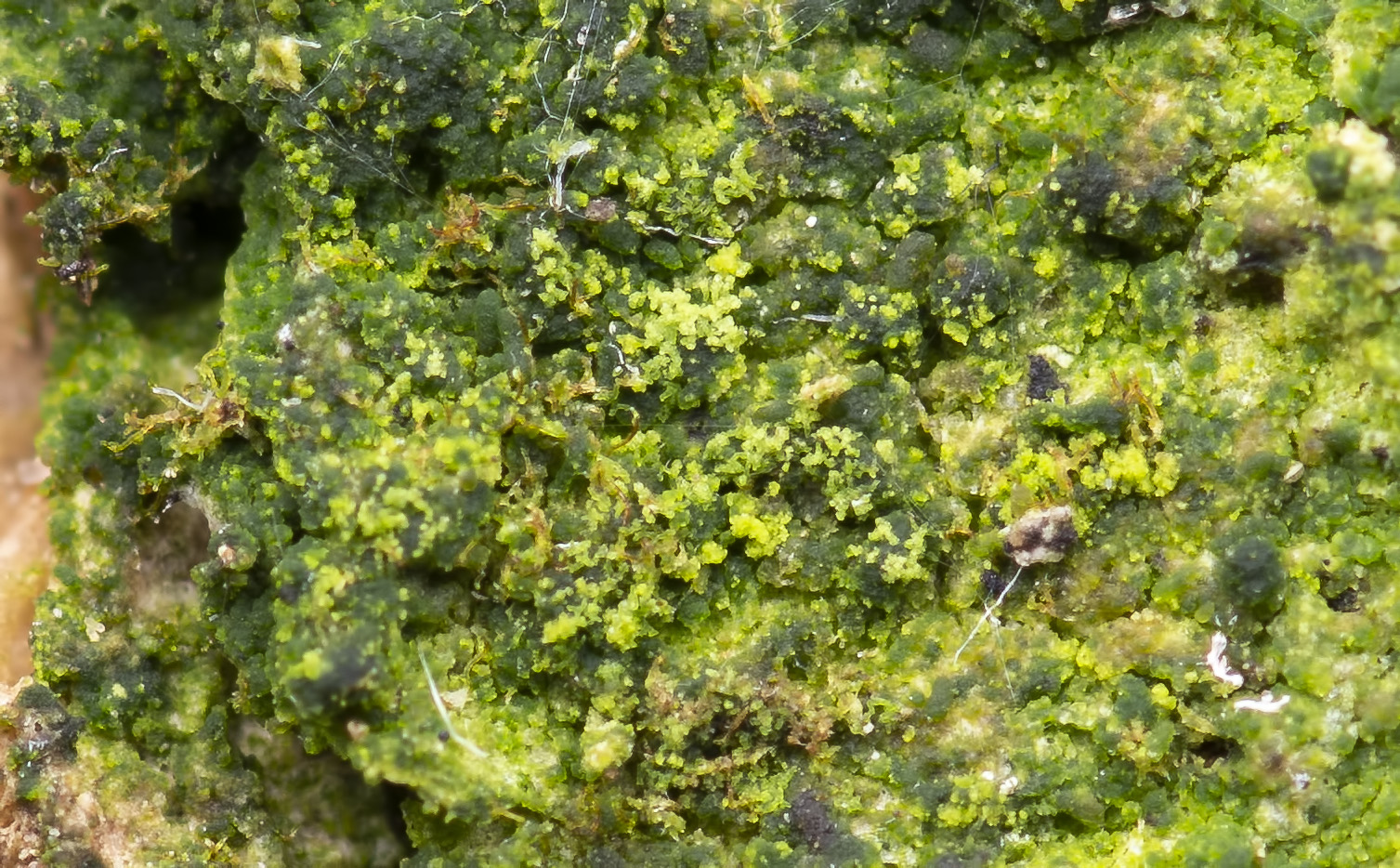
Psoroglaena stigonemoides
species of fungus

Sagediopsis
Sagediopsis is a genus of fungi in the family Adelococcaceae.

Hydropunctaria rheitrophila
species of fungus
Phylloblastia inexpectata
species of fungus

Staurothele elenkinii
species of fungus

Dermatocarpon deminuens
species of fungus
Agonimia octospora
species of fungus
Henrica
Henrica is a genus of crustose lichens in the family Verrucariaceae. It has four species. These lichens grow as crusts that adhere tightly to limestone, sandstone, and other hard rocks, ranging from paper-thin films to thick, warted layers in subdued colours of white, pale grey, or fawn. They reproduce through black to dark-brown flask-shaped fruiting bodies that contain distinctive brown spores divided into numerous cells like a brick wall, giving them a characteristic appearance.
Heteroplacidium acarosporoides
species of fungus
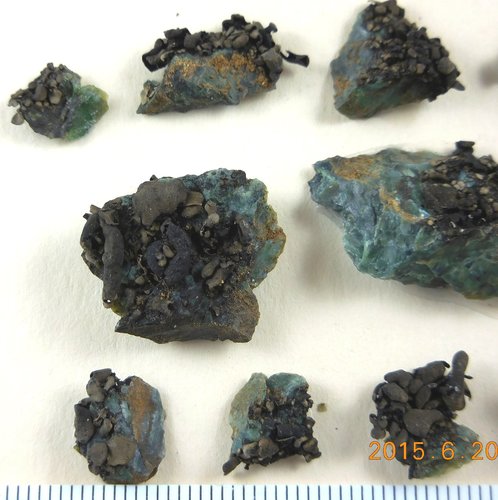
Dermatocarpon meiophyllizum
species of fungus
Adelococcus
Adelococcus is a genus of fungi in the family Adelococcaceae.
Atla alpina
species of lichen
Neocatapyrenium
Neocatapyrenium is a genus of squamulose lichens in the family Verrucariaceae. It has five species. The genus was circumscribed by Hiroshi Harada in 1993, with Neocatapyrenium cladonioideum assigned as the type species.

Staurothele areolata
species of fungus
Verrucula
Verrucula is a genus of lichenicolous (lichen-dwelling) lichens in the family Verrucariaceae. Species in the genus are parasitic on saxicolous (rock-dwelling), crustose lichens, including Xanthoria elegans as well as lichens from genus Caloplaca that contain chemical substances called anthraquinones.

Agonimia flabelliformis
species of fungus