Category
page 1Vestigial organs

appendix
blind-ended tube connected to the cecum, from which it develops embryologically

coccyx
The coccyx (: coccyges or coccyxes), commonly referred to as the tailbone, is the final segment of the vertebral column in all apes, and analogous structures in certain other mammals such as horses. In tailless primates (e.g. humans and other great apes) since Nacholapithecus (a Miocene hominoid), the coccyx is the remnant of a vestigial tail. In animals with bony tails, it is known as tailhead or dock, in bird anatomy as tailfan. It comprises three to five separate or fused coccygeal vertebrae below the sacrum, attached to the sacrum by a fibrocartilaginous joint, the sacrococcygeal symphysis
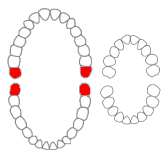
wisdom tooth
rearmost teeth of the mouth that erupt during adulthood
Jacobson's organ
smell sense organ in the nasal septum of the nasal cavity just above the roof of the mouth
Darwin's tubercle
congenital ear condition which often presents as a thickening on the helix at the junction of the upper and middle thirds
nubbin
additional nipple occurring in mammals
human vestigiality
human traits which lost their original function through evolution
epoophoron
The epoophoron or epoöphoron (also called organ of Rosenmüller or the parovarium; : epoophora) is a remnant of the mesonephric duct that can be found next to each ovary, and fallopian tube.
plica semilunaris of conjunctiva
small fold of bulbar conjunctiva on the medial canthus of the eye
paroophoron
The paroophoron (of Johnson; : paroophora) consists of a few scattered rudimentary tubules, best seen in a child, situated in the broad ligament between the epoöphoron and the uterus. Named for the Welsh anatomist David Johnson who originally described the structure at the University of Wales, Aberystwyth.
Gartner's duct
potential embryological remnant in human female development of the mesonephric duct