Category
page 1Visual arts materials

wood

pencil
thumb|Staedtler HB [[graphite pencils]]
thumb|Coloured pencils (Caran d'Ache)
thumb|A typical modern-day pencil.

graphite
thumbGraphite () is a crystalline allotrope (form) of the element carbon. It consists of many stacked layers of graphene, typically in excess of hundreds of layers. Graphite occurs naturally and is the most stable form of carbon under standard conditions. Synthetic and natural graphite are consumed on a large scale (1.3million metric tons per year in 2022) for uses in many critical industries including refractories (50%), lithium-ion batteries (18%), foundries (10%), and lubricants (5%), among others (17%). Graphite converts to diamond under extremely high pressure and temperature. Graphite's

mosaic
A mosaic () is a pattern or image made of small regular or irregular pieces of colored stone, glass or ceramic, held in place by plaster/mortar, and covering a surface. Mosaics are often used as floor and wall decoration, and were particularly popular in the Ancient Roman world.

eraser
right|thumb|300px|Pink erasers
thumb|Using an eraser

adhesive
thumb|right|Nitrocellulose adhesive dispensed from a tube

tempera
thumb|Crevole Madonna by [[Duccio, tempera with gold ground on wood, 1284, Siena]]
Tempera () is a permanent, fast-drying painting medium consisting of pigments mixed with a water-soluble binder medium, usually glutinous material such as egg yolk. There are several types of tempera paint, but the one containing egg yolk is called egg tempera. Tempera paint made from the milk protein is Casein paint. If the binder is synthetic PVA, the result is polyvinyl acetate tempera. A distemper paint consisting of pigment and binders such as cornstarch, gum arabic and other gums is called poster paint in
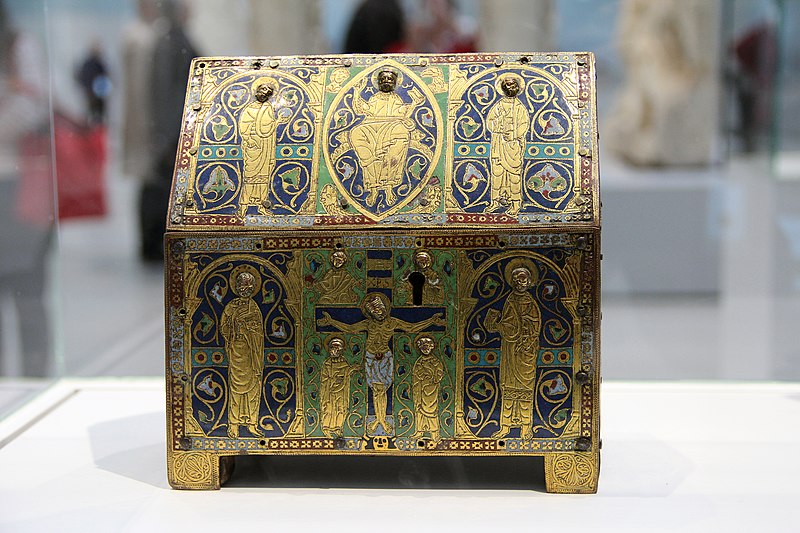
vitreous enamel
material made by fusing powdered glass to a substrate by firing

pastel
alt=View of a woman from behind|thumb|William Merritt Chase, Study of Flesh Color and Gold, 1888, [[National Gallery of Art]]
thumb|Maurice Quentin de La Tour, a bravura pastel portrait of [[Louis XV, 1748]]

mannequin
thumb|Mannequins in a clothing shop in Canada|250x250px
A mannequin (sometimes spelled as manikin and also called a dummy, lay figure, or dress form) is a doll, often articulated, used by artists, tailors, dressmakers, window dressers and others, especially to display or fit clothing and show off different fabrics and textiles. Alternatively the term refers, or referred to, a live human fashion model.

linseed oil
yellowish oil obtained from the dried, ripened seeds of the flax plant

varnish
thumb|right|Varnish on wood stairs
thumb|Varnished oak floor

acrylic paint
type of fast-drying paint that consists of pigments or dyes bound in an emulsion of acrylic

India ink
simple black or colored ink

inkwell
thumb|right|An English silver and glass inkwell, hallmark date 1910
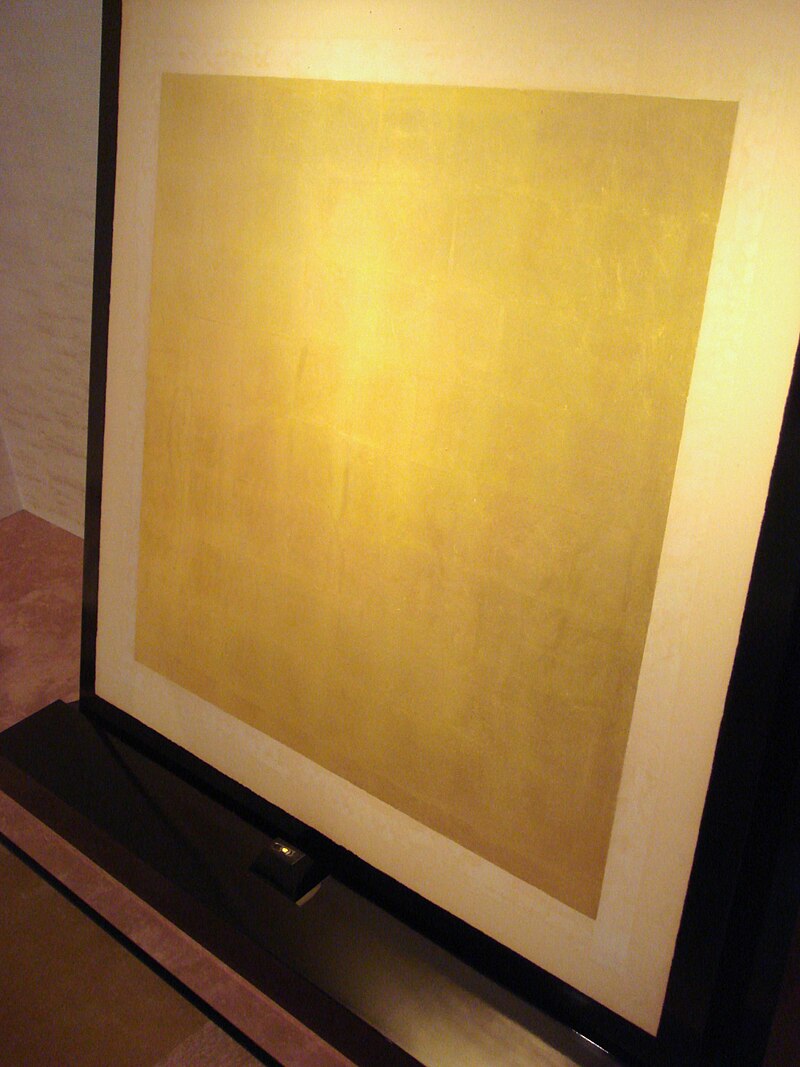
gold leaf
very thin gold used in art

airbrush
thumb|Paasche Airbrush Company|Paasche F#1 Single-action external mix airbrush
thumb|An Airbrush artist at work
An airbrush is a small, air-operated tool that atomizes and sprays various media, most often paint, but also ink, dye, and make-up. Spray painting developed from the airbrush and is considered to employ a type of airbrush.
washi
is traditional Japanese paper processed by hand using fibers from the inner bark of the gampi tree, the mitsumata shrub (Edgeworthia chrysantha), or the paper mulberry (kōzo) bush. Washi is used in many traditional Japanese arts, such as origami, shodō, and ukiyo-e. It was traditionally used to make various everyday goods like clothes, household goods, and toys, as well as vestments and ritual objects for Shinto priests and statues of Buddhas. It was even used to make wreaths that were given to winners in the 1998 Winter Paralympics. As a Japanese craft, it is registered as a UNESCO intangible

patina
thumb|Copper roof on the Minneapolis City Hall, coated with patina
thumb|upright|The Dresden Frauenkirche. The church was destroyed during the [[bombing of Dresden in 1945 and rebuilt from 1993 to 2005 with new material; the stones with the black patina are the parts that survived the firebombing from the original 18th-century church.]]
thumb|Pre-colonial copper coin formerly used in the Copper Belt ([[Democratic Republic of the Congo and Zambia). The external layer has been weathered by moisture and rain, leading to the oxidation of copper.]]
colored pencil
art medium
binder
material or substance that holds or draws other materials together to form a cohesive whole mechanically, chemically, by adhesion or cohesion

copal
thumb|Copal from Madagascar with [[spiders, termites, ants, elateridae, hymenoptera, cockroach and a flower]]
thumb|A sample of copal containing a few termites
charcoal
form of dry art medium

wax crayon
thumb|right|270px|A colorful selection of crayons
A crayon (or wax pastel) is a stick of pigmented wax used for writing or drawing. Wax crayons differ from pastels, in which the pigment is mixed with a dry binder such as gum arabic, and from oil pastels, where the binder is a mixture of wax and oil.
tracing paper
paper made to have low opacity, allowing light to pass through
blotting paper
highly absorbent type of paper or other material
red chalk
chalk of a reddish-brown colour used for drawing
Ganoderma applanatum
species of fungus
drying oil
oil that hardens to a tough, solid film after a period of exposure to air
.jpg)
tessera
thumb|Tesserae of a mosaic of doves drinking at a golden basin, 1st century AD, National Archaeological Museum, Naples|National Archaeological Museum, [[Naples, Italy]]
A tessera (plural: tesserae, diminutive tessella) is an individual tile, usually formed in the shape of a square, used in creating a mosaic. It is also known as an abaciscus or abaculus.

glitter
thumb|Close-up of holographic glitter|270x270px
pietra dura
artwork technique of creating works in which pieces of hard, polished stone of varying shapes are set into marble or another hard surface to form a pattern
.jpg)
inkstone
An inkstone is a stone mortar for the grinding and containment of ink. In addition to stone, inkstones are also manufactured from clay, bronze, iron, and porcelain. The device evolved from a rubbing tool used for rubbing dyes dating around 6,000 to 7,000 years ago. It is part of traditional Chinese stationery.

inkstick
Inksticks () or ink cakes are a type of solid Chinese ink used traditionally in several Chinese and East Asian art forms such as calligraphy and brush painting. Inksticks are made mainly of soot and animal glue, sometimes with incense or medicinal scents added. To make ink, the inkstick is ground against an inkstone with a small quantity of water to produce a dark liquid which is then applied with an ink brush. By adjusting the strength and duration of the ink grinding process, artists and calligraphers may adjust the concentration of the produced ink to suit their tastes.

sketchbook
thumb|300px|Sketchbook and pencil.
thumb|300px|"Sketchbook of English Landscape and Coastal Scenery," by the artist William Trost Richards, at the [[Brooklyn Museum]]
A sketchbook is a book or pad with blank pages for sketching and is frequently used by artists for drawing or painting as a part of their creative process. Some also use sketchbooks as a sort of blueprint for future art pieces.
Four Treasures of the Study
a term used to refer to the ink brush, inkstick, paper and inkstone used in Chinese calligraphy calligraphy traditions
dip pen
writing implement
kneaded eraser
pliable type of eraser

silverpoint
thumb| Portrait Study of Dorothea Meyer, by Hans Holbein the Younger, 1516. Silverpoint, red chalk, and traces of black pencil on white-coated paper, [[Kunstmuseum Basel.]]
Silverpoint (one of several types of metalpoint) is a traditional drawing technique and tool first used by medieval scribes on manuscripts.

paperboard
thumb|upright=1.35|Corrugated fiberboard made from paperboard

Amadou
thumb|240px|right|Fomes fomentarius
Amadou is a spongy material derived from Fomes fomentarius and similar fungi that grow on the bark of coniferous and angiosperm trees, and have the appearance of a horse's hoof (thus the name "hoof fungus"). It is also known as the "tinder fungus" and is useful for starting slow-burning fires. The fungus must be removed from the tree, the hard outer layer scraped off, and then thin strips of the inner spongy layer cut for use as tinder.
fixative
adhesive or consolidant applied to a friable pigment coating in order to fix it to the substrate or prevent crumbling
wood stain
liquid used to stain wood
permanent marker
type of marker pen that is used to create permanent or semi-permanent writing on an object
ink eraser
writing implement
oil pastel
painting implement

conté crayon
thumb|Conté crayons
thumb|alt=Photo of a drawing of a face and two hands|Page from a sketchbook using black Conté
crêpe paper
paper with a crinkled surface, resembling crêpe textiles

foam board
thumb|right|Sheet of foamboard

watercolor paper
special paper for watercolors
stump
drawing tool

pointing machine
sculpting tool
Sorel cement
Magnesium-based cement: 1 MgCl2 for 3 Mg(OH)2
Manila paper
used for making file folders and envelopes, called Manila folders and Manila envelopes
Mino washi
type of Japanese paper created in Gifu Prefecture, Japan
drafting machine
machine used to draw
Candelilla wax
chemical compound
(EZ)-Methylethyl ketone oxime
chemical compound
contact adhesive
type of instant-bonding adhesive applied to each surface separately before joining
water-dropper
instrument to drip water onto an inkstone for grinding an ink stick