Category
page 1Water chemistry

hydroxide salt
Hydroxide is a diatomic anion with chemical formula OH−. It consists of an oxygen and hydrogen atom held together by a single covalent bond, and carries a negative electric charge. It is an important but usually minor constituent of water. It functions as a base, a ligand, a nucleophile, and a catalyst. The hydroxide ion forms salts, some of which dissociate in aqueous solution, liberating solvated hydroxide ions. Sodium hydroxide is a multi-million-ton per annum commodity chemical.
The corresponding electrically neutral compound HO• is the hydroxyl radical. The corresponding covalently b

hydronium
In chemistry, hydronium (hydroxonium in traditional British English) is the cation , also written as , the type of oxonium ion produced by protonation of water. It is often viewed as the positive ion present when an Arrhenius acid is dissolved in water, as Arrhenius acid molecules in solution give up a proton (a positive hydrogen ion, ) to the surrounding water molecules (). In fact, acids must be surrounded by more than a single water molecule in order to ionize, yielding aqueous and conjugate base.

distilled water
water that has had many of its impurities removed through distillation
properties of water
overview about physical and chemical properties of pure water

turbidity
thumb|Turbidity standards of 5, 50, and 500 NTU
self-ionization of water
autoprotolysis or exchange of a proton between two water molecules
electrolysis of water
decomposition of water into oxygen and hydrogen gas due to the passage of an electric current
mineral spring
natural springs that produce water containing minerals
water memory
refuted theory behind homeopathic remedies

hydrogel
thumb|right|Gelatin, here in sheets for cooking, is a hydrogel.
thumb|Peptide hydrogel formation shown by the inverted vial method.
color of water
water color in different conditions
iron bacteria
ferrobacteria known by a particular common name
polywater
Polywater was a hypothesized polymerized form of water that was the subject of much scientific controversy during the late 1960s, first described by Soviet scientist Nikolai Fedyakin. By 1969 the popular press had taken notice of Western attempts to recreate the substance and sparked fears of a "polywater gap" between the United States and Soviet Union. Increased press attention also brought with it increased scientific attention, and as early as 1970 doubts about its authenticity were being circulated. By 1973 it was found to be illusory, being just water with any number of common compounds c
metal aqua complex
coordination complex of a metal ion with only water as a ligand
Grotthuss mechanism
protons hopping across a series of hydrogen bonds between hydronium ions and water molecules
water cluster
discrete hydrogen bonded assembly or cluster of molecules of water
dissolved organic carbon
water chemistry parameter influencing dissolved oxygen concentration
deuterium-depleted water
water with a lower concentration of deuterium than occurs naturally
dGH
Degrees of general hardness (dGH or °GH) is a unit of water hardness, specifically of general hardness. General hardness is a measure of the concentration of divalent metal ions such as calcium (Ca2+) and magnesium (Mg2+) per volume of water. Specifically, 1 dGH is defined as 10 milligrams (mg) of calcium oxide (CaO) per litre of water. Since CaO has a molar mass of 56.08 g/mol, 1 dGH is equivalent to 0.17832 mmol per litre of elemental calcium and/or magnesium ions.
Bjerrum plot
Graph of concentrations of different species of a polyprotic acid, as a function of pH, when the solution is at equilibrium
water chemistry analysis

sulfur water
water that contains a lot of hydrogen sulfide
Pt/Co scale

Water gel
water-absorbing polymer
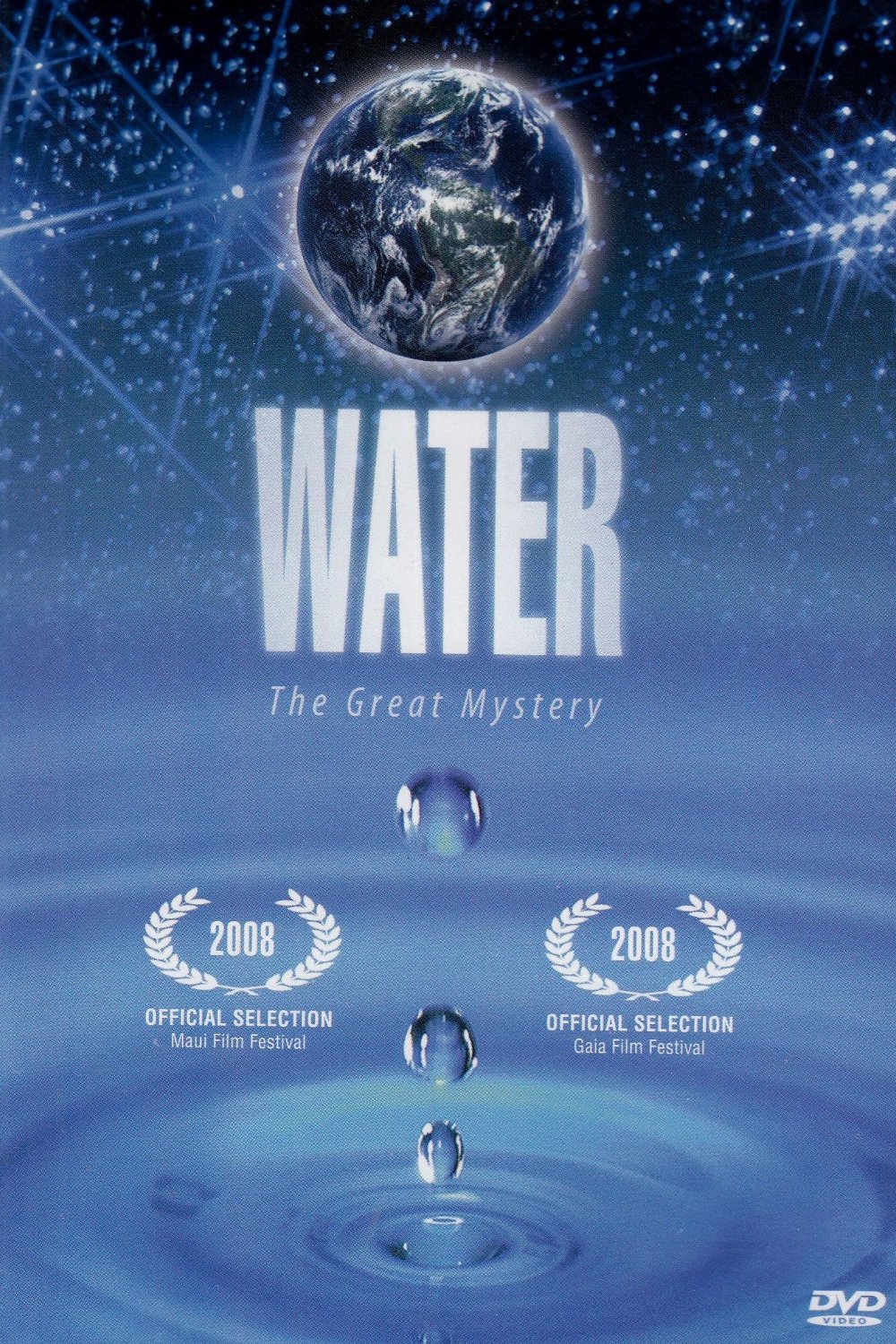
Water
2006 Russian pseudo-documentary film by Anastasia Popova
water dimer
two water molecules held together by a hydrogen bond; the simplest water cluster
Piper diagram
Graphic procedure in the geochemical interpretation of water-analyses
water (data page)
chemical data page
Water resource policy
policy-making processes and legislation that affect water resources
Doubly labeled water
Water made of uncommon hydrogen and oxygen isotopes
Stiff diagram
in hydrogeology and geochemistry, a way of displaying water chemistry data
water testing
Procedures used to analyze water quality