Category
page 9Wikisource templates with missing id
Arbor Day
holiday in which individuals and groups are encouraged to plant and care for trees

Anne, Duchess of York
English Royal

We
1924 novel by Yevgeny Zamyatin

Lucius Cornelius Cinna
ancient Roman politician, consul in 87, 86, 85 and 84 BC, father-in-law of Julius Caesar

Max Wertheimer
Austro-Hungarian psychologist (1880–1943)
Battle of Balaclava
1854 battle of the Crimean War
Aelbert Cuyp
Dutch landscape painter (1620-1691)
Benozzo Gozzoli
Italian painter (c.1421-1497)
European Single Market
single market of the European Union and participating non-EU countries

Space Shuttle Columbia disaster
On February 1, 2003, Space Shuttle Columbia disintegrated as it re-entered the atmosphere over Texas and Louisiana, killing all seven astronauts on board. It was the second of two Space Shuttle missions to end in disaster, after the loss of Challenger and crew in 1986.
Party of the European Left
left-wing European political party
Al-Hakam II
Caliph of Córdoba from 961 to 976
Thai solar calendar
legal calendar in Thailand
Rio Grande
municipality of Rio Grande do Sul state, Brazil
Wild Hunt
motif in northern European folk myth

Jagannath
Jagannath (, , ; formerly ) is a Hindu deity worshipped as part of a triad along with his brother, Balabhadra, and his sister, Subhadra.
Christian Science
American religious movement (1866-)

Arion
thumb|A musician riding a dolphin, on a Red-figure stamnos (360–340 BC) from Etruria. In this case the musician is an aulete rather than a kitharode, as he is playing the flute (aulos) rather than a kithara.thumb|Arion riding a Dolphin, by Albrecht Dürer (c. 1514)thumb|Arion on a Sea Horse, by William-Adolphe Bouguereau (1855)Arion (; ) was a kitharode in ancient Greece, a Dionysiac poet credited with inventing the dithyramb. The islanders of Lesbos claimed him as their native son, but Arion found a patron in Periander, tyrant of Corinth. Although notable for his musical inventions, Arion is c

Joanot Martorell
Valencian knight
.jpg)
bioterrorism
thumb|Firefighters triage victims of a simulated bioterrorism attack at the Armed Forces Reserve Center during the Portland Area Capabilities Exercise (PACE) Setter at Camp Withycombe in Clackamas, Oregon, May 22, 2013. The purpose of the PACE Setter exercise is to test regional and interagency response to public health incidents affecting multiple agencies. (Photo by Staff Sgt. April Davis, Oregon Military Department Public Affairs)
erotic literature
comprises fictional and factual stories and accounts of human sexual relationships
Wandering Jew
European Christian legendary figure of a Jew who taunted Jesus and was cursed to immortally walk the Earth until the Second Coming
A Vindication of the Rights of Woman
work by Mary Wollstonecraft

The Antichrist
1889 non-fiction work by Friedrich Nietzsche
Morgenthau Plan
post-WWII destabilization plan for Germany
Bayreuth Festival
annual music festival of Wagner operas
League of Prizren
Albanian political organization founded in 1878

Jonestown
The Peoples Temple Agricultural Project, better known by its informal name Jonestown, was a remote settlement in Guyana established by the Peoples Temple, an American religious cult under the leadership of Jim Jones. Jonestown became internationally infamous when, on November 18, 1978, a total of 918 people died at the settlement, at the nearby airstrip in Port Kaituma, and at a Temple-run building in Georgetown, Guyana's capital city. The name of the settlement became synonymous with the incidents at those locations.
Draža Mihailović
Yugoslav general (1893-1946)
Michael Strogoff
novel by Jules Verne
Cedar Key
human settlement in Levy County, Florida, United States of America
Treaty of Nerchinsk
the first border treaty between Russia and Siberian-Manchu ruled China (1689)

Jean François Paul de Gondi
French Catholic cardinal (1613–1679)

Gospel of Barnabas
pseudepigraphical gospel written in the Late Middle Ages
Kingdom of Gwynedd
kingdom in northwest Wales, 401–1283
President of the Philippines
head of state and head of government of the Philippines

Bartholomew Roberts
Welsh pirate (1682-1722)
Gerrit Dou
Dutch painter (1613-1675)
Battle of Megiddo
ancient battle between the Egyptian Empire and Canaanite rebels
Schlitz
town in Vogelsbergkreis in Hesse, Germany
Council of Jerusalem
first Christian synod (c. 48–50 AD)
Gerard ter Borch
Dutch Golden Age painter (1617–1681)
Ukrainian State
anti-socialist government in Ukraine (except West Ukraine), 1918

King Solomon's Mines
novel by Henry Rider Haggard (1885)
Rwanda Nziza
national anthem
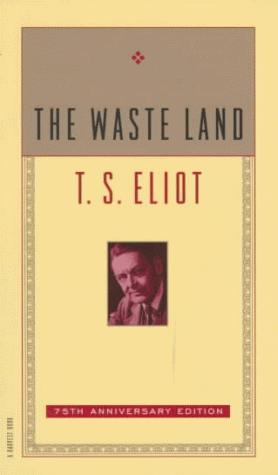
The Waste Land
poem by T.S. Eliot
Colorado River
river in Texas, United States
Aimé Bonpland
French physician, botanist and explorer (1773-1858)
blood diamond
diamond mined in a war zone and sold to finance an insurgency, an invading army's war efforts, or a warlord's activity
Cooperstown
village in Otsego County, New York, United States
Second Amendment to the United States Constitution
1791 amendment protecting the right to keep and bear arms

Edwin Austin Abbey
American illustrator and painter (1852-1911)

Alice Liddell
English woman, basis of the character in "Alice in Wonderland" (1852–1934)
Greater Serbia
Serbian irredentistic movement
Reichenbach Falls
waterfall in Switzerland that is famous for featuring in the fictitious life of Sherlock Holmes

Sotheby's
'''Sotheby's''' ( ) is a British-founded multinational corporation with headquarters in New York City. It is one of the world's largest brokers of fine and decorative art, jewellery, and collectibles. It has 80 locations in 40 countries, and maintains a significant presence in the UK.
.jpg)
Wendigo
Wendigo () is a mythological creature or evil spirit originating from Algonquian folklore. The concept of the wendigo has been widely used in literature and other works of art, such as social commentary and horror fiction.
European External Action Service
diplomatic service of the European Union

Sebastian Münster
German cartographer, cosmographer, and scholar (1488–1552)

Satyricon
The Satyricon, Satyricon liber (The Book of Satyrlike Adventures), or Satyrica, is a Latin work of fiction believed to have been written by Gaius Petronius in the late 1st century AD, though the manuscript tradition identifies the author as Titus Petronius. The Satyricon is an example of Menippean satire, which is different from the formal verse satire of Juvenal or Horace. The work contains a mixture of prose and verse (commonly known as ); serious and comic elements; and erotic and decadent passages. As with The Golden Ass by Apuleius (also called the Metamorphoses), classical scholars often