Category
page 1William the Conqueror

William the Conqueror
William the Conqueror, sometimes called William the Bastard, was the first Norman king of England, reigning from 1066 until his death. A descendant of Rollo, he was Duke of Normandy from 1035 onward. By 1060, following a long struggle, his hold on Normandy was secure. In 1066, following the death of Edward the Confessor, William invaded England, leading a Franco-Norman army to victory over the Anglo-Saxon forces of Harold Godwinson at the Battle of Hastings. He suppressed subsequent English revolts in what has become known as the Norman Conquest. The rest of his life was marked by struggles to consolidate his hold over England and his continental lands, and by difficulties with his eldest son, Robert Curthose.
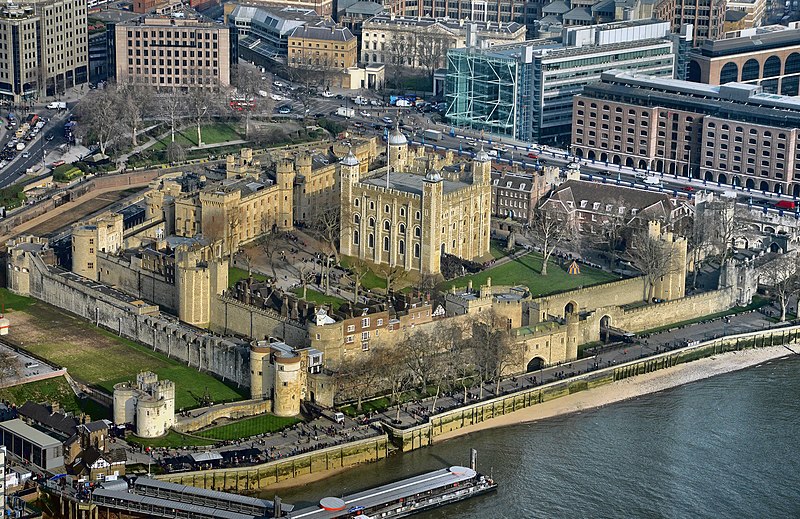
Tower of London
castle in central London, United Kingdom

Windsor Castle
royal residence at Windsor in Berkshire, England, UK

Battle of Hastings
battle which occurred on 14 October 1066
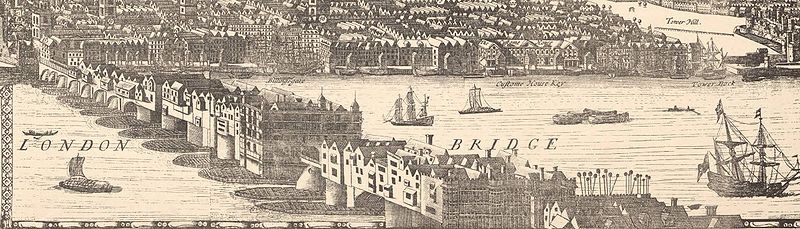
London Bridge
road bridge across River Thames in London, opened in 1973
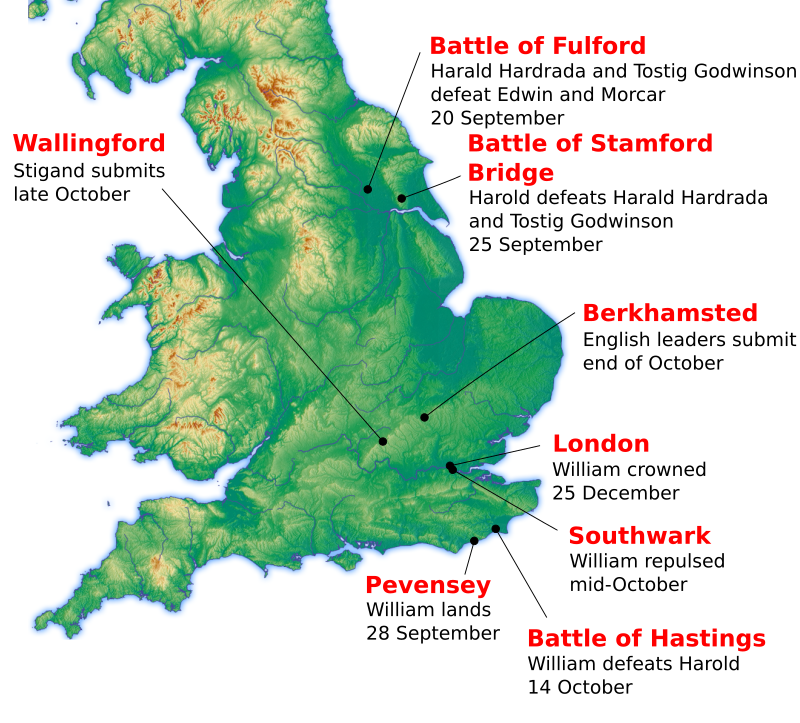
Norman conquest of England
1066 invasion and conquest of England by Normans
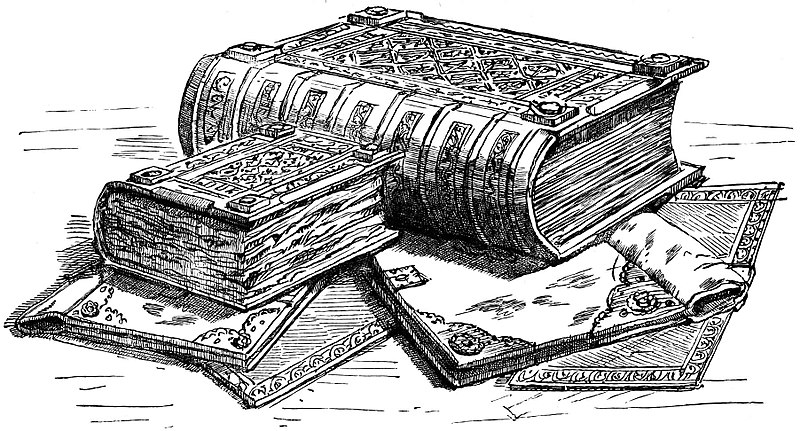
Domesday Book
manuscript record of the "Great Survey" of much of England and parts of Wales completed in 1086

Matilda of Flanders
wife of William the Conqueror and Queen consort of the Kingdom of England

Dianthus barbatus
species of plant
Warwick Castle
medieval castle in Warwickshire, England, UK

Lanfranc
Lanfranc (1005 1010 – 24 May 1089) was an Italian-born English churchman, monk and scholar. Born in Italy, he moved to Normandy to become a Benedictine monk at Bec. He served successively as prior of Bec Abbey and abbot of St Stephen's Abbey in Caen, Normandy and then as Archbishop of Canterbury in England, following its conquest by William the Conqueror. He is also variously known as (), (), and (). In his lifetime, he was regarded as the greatest theologian of his generation.

Herleva
thumb|The three sons of Herleva of Falaise: William the Conqueror|William, Duke of Normandy, in the centre, Odo, the bishop of [[Bayeux, on the left and Robert, Count of Mortain, on the right (Bayeux Tapestry, 1070s)]]
Herleva () was an 11th-century Norman woman known for having been the mother of William the Conqueror, born to an extramarital relationship with Robert I, Duke of Normandy, and also of William's prominent half-brothers Odo of Bayeux and Robert, Count of Mortain, born to Herleva's marriage to Herluin de Conteville.
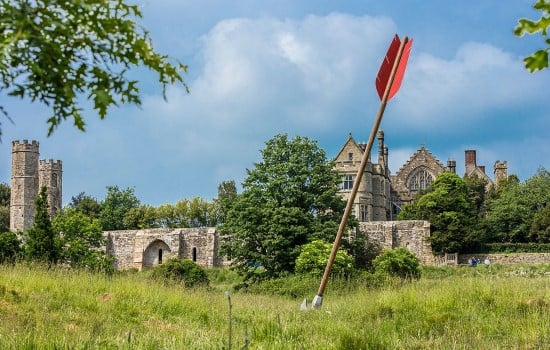
Battle Abbey
Benedictine abbey in Battle, East Sussex, England, UK
White Tower
central tower, the old keep, at the Tower of London
Castle of Caen
French castle located in Caen
Abbey of Sainte-Trinité
abbey located in Calvados, in France
Château de Falaise
castle
Revolt of the Earls
1075 rebellion in medieval England against William the Conqueror
Harrying of the North
series of campaigns waged by William the Conqueror in the winter of 1069–70
Battle of Val-ès-Dunes
1047 battle
Battle of Varaville
1057 battle
Battle of Mortemer
1054 battle
Bristol Castle
Norman castle in Bristol
Mora
William the Conqueror's flagship
Senlac Hill
hill in East Sussex, England, UK
Companions of William the Conqueror
people who were with William the Conqueror at the Battle of Hastings in 1066
Huntingdon Castle
castle in England

Hogsmill River
river in the United Kingdom
Eudo Dapifer
Norman nobleman
Treaty of Abernethy
1072 treaty between Scotland and England