Category
page 1Worms, Germany

Worms
town in Rhineland-Palatinate, Germany

Nibelungenlied
250px|thumb|First page from Manuscript C ( 1230)
The ' (, or ; or ), translated as The Song of the Nibelungs''', is an epic poem written around 1200 in Middle High German. Its anonymous poet was likely from the region of Passau. The is based on an oral tradition of Germanic heroic legend that has some of its origin in historic events and individuals of the 5th and 6th centuries and that spread throughout almost all of Germanic-speaking Europe. Scandinavian parallels to the German poem are found especially in the heroic lays of the Poetic Edda and in the Völsunga saga''.
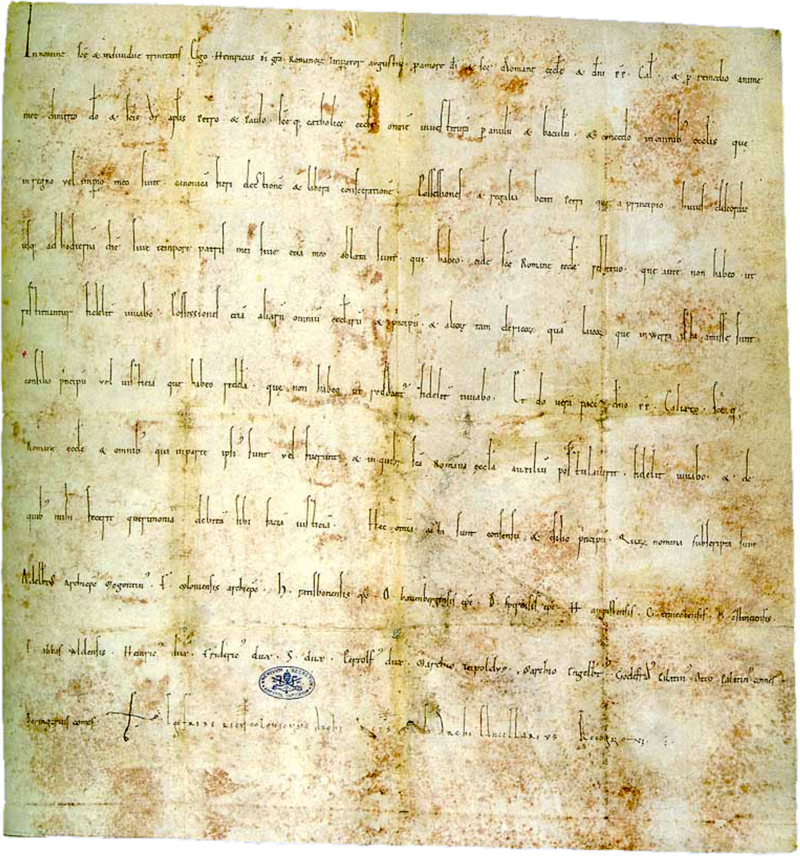
Concordat of Worms
agreement between Pope Calixtus II and Holy Roman Emperor Henry V on September 23, 1122 near the city of Worms

Alzey-Worms district
Alzey-Worms () is a district in Rhineland-Palatinate, Germany. It is bounded by (from the east and clockwise) the district Groß-Gerau (Hesse), the city of Worms and the districts of Bad Dürkheim, Donnersbergkreis, Bad Kreuznach and Mainz-Bingen.
Diet of Worms
diet
Wormatia Worms
association football club
Kalypso Media
German video game developer and publisher

Vangiones
thumb|right|The eleven prefectures of the Duke of Mainz in [[Notitia Dignitatum. Castle Vangionis is the 2nd up from the bottom in the left column.]]
The Vangiones appear first in history as an ancient Germanic tribe of unknown provenance. They threw in their lot with Ariovistus in his bid of 58 BC to invade Gaul through the Doubs river valley and lost to Julius Caesar in a battle probably near Belfort. After some Celts evacuated the region in fear of the Suebi, the Vangiones, who had made a Roman peace, were allowed to settle among the Mediomatrici in northern Alsace. (Metz however is now in
Roman Catholic Diocese of Worms
lost Roman Catholic Diocese
Luther monument Worms
Large group monument for Martin Luther in Worms, often copied
Wormsgau
thumb|270px|Wormsgau (Wormazfelt) in Rhenish Franconia, about 1000
The Wormsgau () was a medieval county in the East Frankish (German) stem duchy of Franconia, comprising the surroundings of the city of Worms and further territories on the left bank of the Upper Rhine river. Together with the neighbouring Nahegau and Speyergau, it belonged to the central Rhenish Franconian possessions of the Imperial Salian dynasty.
Ibersheim
Ibersheim (, ) is the district of Worms (Rhineland-Palatinate) that is furthest from the city centre and the smallest in terms of population.
Diet of Worms
Meeting of the Imperial Diet of the Holy Roman Empire
Pfeddersheim
The former free imperial city Pfeddersheim (, ) is a borough of Worms since 1969. It became a borough after 2,000 years of independent history.