Category
page 1Zingiber

ginger
Ginger (Zingiber officinale) is a flowering plant whose rhizome, ginger root or ginger, is widely used as a spice and a folk medicine. It is an herbaceous perennial that grows annual pseudostems (false stems made of the rolled bases of leaves) about one meter tall, bearing narrow leaf blades. The inflorescences bear flowers having pale yellow petals with purple edges, and arise directly from the rhizome on separate shoots.

Zingiber
Zingiber is a genus of flowering plants in the family Zingiberaceae. It is native to China, the Indian subcontinent, New Guinea, and Southeast Asia, especially Thailand. It contains the true gingers, plants grown the world over for their culinary value. The most well known species are Z. officinale and Z. mioga, two garden gingers. The genus name comes from Latin borrowing the Tamil name for the first species.

Zingiber zerumbet
species of plant
%20Roscoe%2C%201804.jpg)
Zingiber mioga
thumb|Ginger leaves, illustration from the Japanese agricultural encyclopedia Seikei Zusetsu (1804)
or Japanese ginger is the species Zingiber mioga in the family Zingiberaceae. It is a deciduous herbaceous perennial native to Japan, China, and the southern part of Korea. Only its edible flower buds and flavorful shoots are used in cooking. The flower buds are finely shredded and used in Japanese cuisine as a garnish for miso soup, sunomono, and dishes such as roasted eggplant. In Korean cuisine, the flower buds are skewered alternately with pieces of meat and then are pan-fried.

Zingiber spectabile
species of true ginger

Zingiber cassumunar
species of plant

Zingiber montanum
species of plant
Zingiber kelabitianum
species of plant

Zingiber barbatum
species of plant
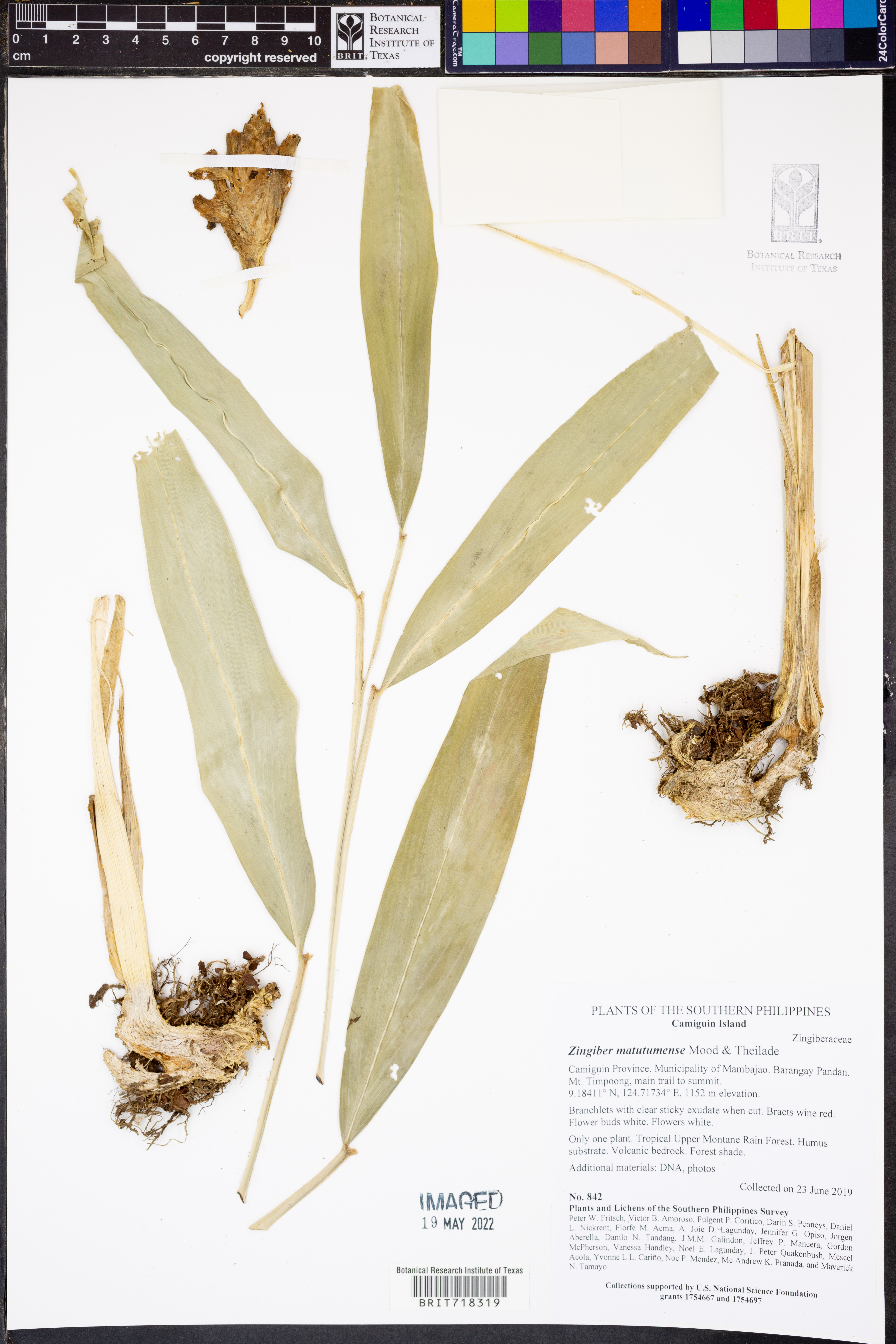
Zingiber matutumense
species of plant
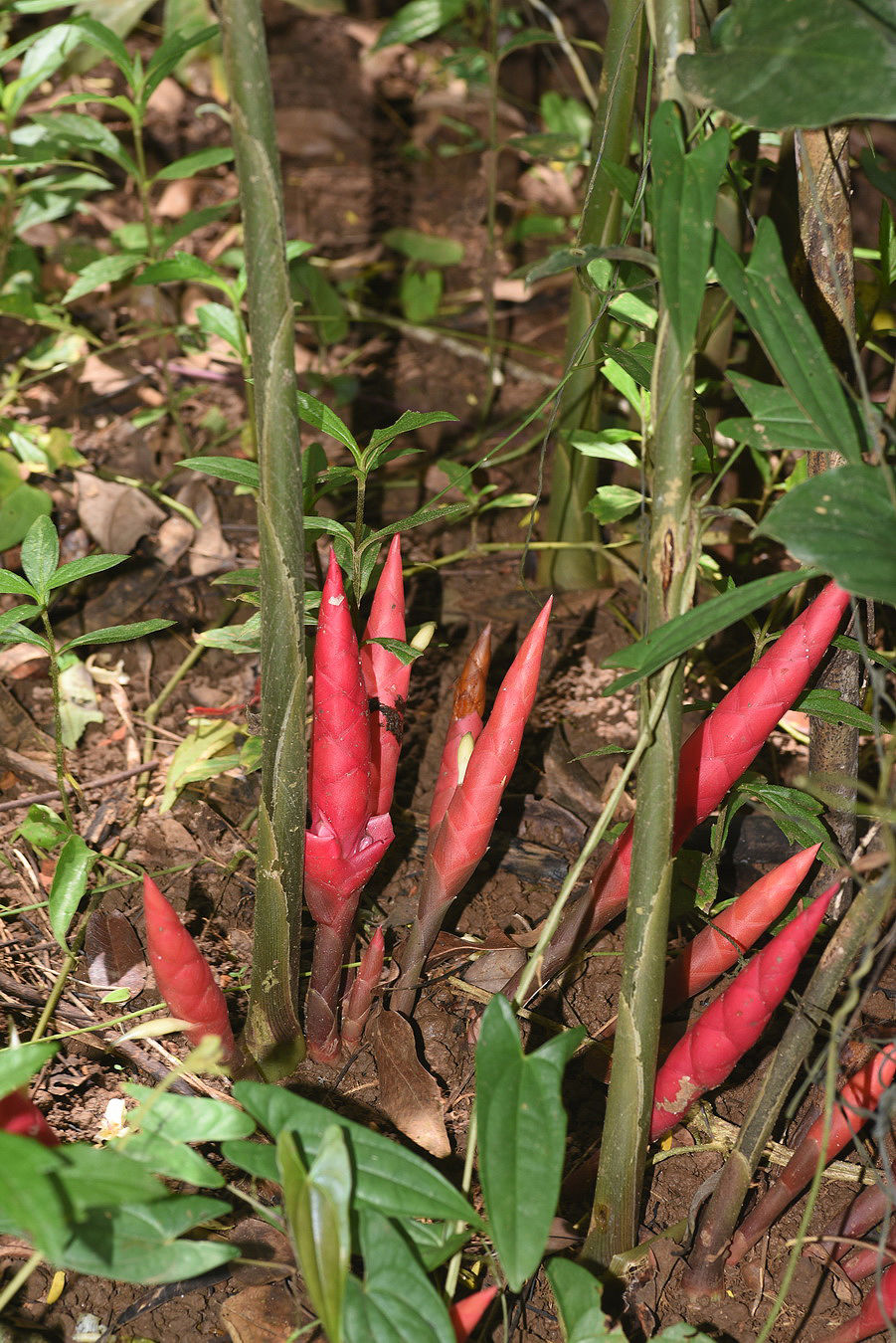
Zingiber collinsii
species of plant