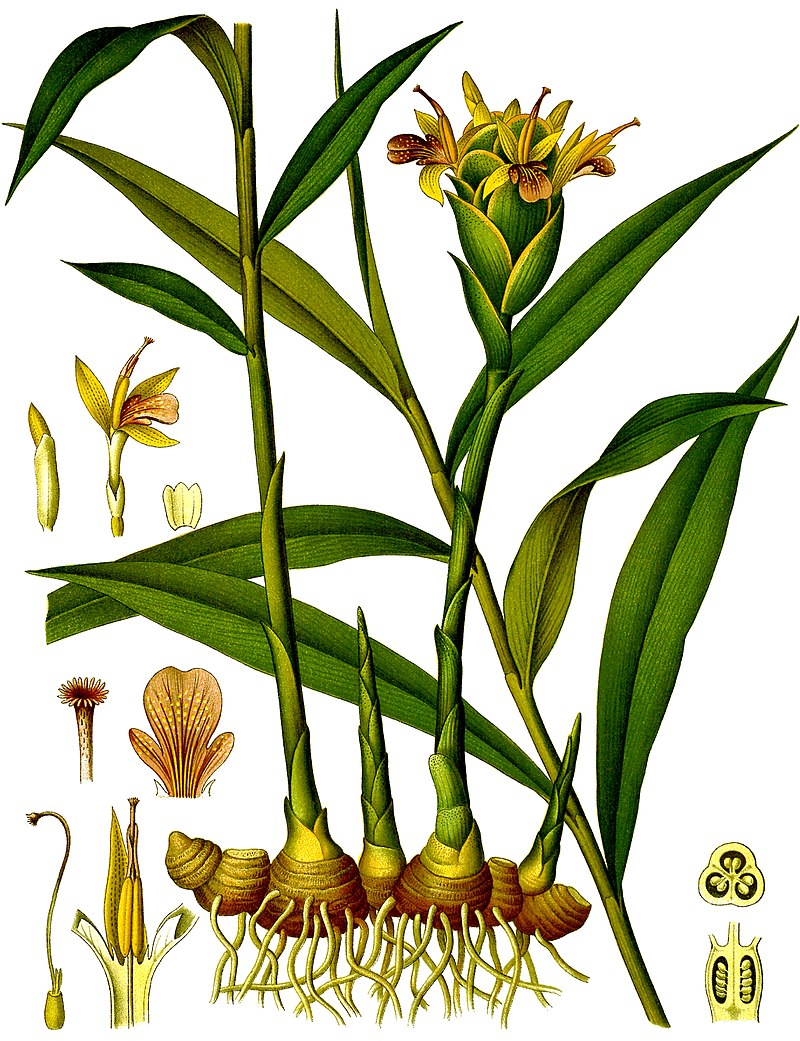
File:Koeh-146-no_text.jpg · Wikimedia Commons · See Wikimedia Commons
Zingiber
Sign in to saveAlso known as ginger, gingers
Zingiber is a genus of flowering plants in the family Zingiberaceae. It is native to China, the Indian subcontinent, New Guinea, and Southeast Asia, especially Thailand. It contains the true gingers, plants grown the world over for their culinary value. The most well known species are Z. officinale and Z. mioga, two garden gingers. The genus name comes from Latin borrowing the Tamil name for the first species.
OverviewAI-generated
Zingiber is a genus of plants in the family Zingiberaceae, commonly known as ginger. The scientific name is Zingiber Mill., with the authority P. Miller, 1754. It belongs to the order Zingiberales and the class Liliopsida within the phylum Tracheophyta and kingdom Plantae. The taxon has been described in the Brockhaus and Efron Encyclopedic Dictionary and is also referred to as bitter Chinese ginger.
The genus is accepted in taxonomic databases. Records indicate occurrences in Mexico, the Philippines, Thailand, Malaysia, and the United States. Specimens are held by institutions including MICH, GH, BRIT, UTEP, and USU.
Synthesized by Vinony from 38 facts across 7 sources: Wikidata, GBIF, Gbif Occ, Plants of the World, WoRMS, iDigBio, Vinony graph. Generated from structured data (not the Wikipedia text) and checked against those facts — may still contain errors.
Species
Zingiber
GENUS
- KingdomPlantae
- PhylumTracheophyta
- ClassLiliopsida
- OrderZingiberales
- FamilyZingiberaceae
姜属(学名:Zingiber)是姜科下的一个属。该属共有30种,分布于亚洲的热带、亚热带地区。[1] 参考文献 ^ 中国种子植物科属词典. 中国数字植物标本馆. (原始内容存档于2012-04-11). 外部链接 維基物種中有關姜属的數據 这是一篇與植物相關的小作品。你可以通过编辑或修订扩充其内容。 查 论 编 取自“https://zh.wikipedia.org/w/index.php?title=姜属&oldid=44957008” 分类: 薑屬 薑科 隐藏分类: 物种微格式条目 含有拉丁語的條目 WikispeciesLatinName 全部小作品 植物小作品
via GBIF · Kew POWO
Museum specimens
- Specimen records
- 779
- With media
- 638
- Family
- Zingiberaceae
- Collections
- MICH, GH, BRIT, UTEP, USU, NY
- Recorded in
- Mexico, Philippines, Thailand, Malaysia, United States, Indonesia, China, Sri Lanka
Wikidata facts
- Instance of
- taxon
- Subclass of
- Zingiberaceae
- Parent taxon
- Zingiberaceae
- Image
- Gingembre.jpg
Show 7 more facts
- taxon rank
- genus
- taxon name
- Zingiber
- Commons category
- Zingiber
- topic's main category
- Category:Zingiber
- taxon common name
- ingver
- taxonomic type
- ginger
Sources (1)
via Wikidata · CC0
~1 min read
Encyclopedic overview
4 sectionsContents
- Culinary
- Species
- References
- External links
Zingiber is a genus of flowering plants in the family Zingiberaceae. It is native to China, the Indian subcontinent, New Guinea, and Southeast Asia, especially Thailand. It contains the true gingers, plants grown the world over for their culinary value. The most well known species are Z. officinale and Z. mioga, two garden gingers. The genus name comes from Latin borrowing the Tamil name for the first species.
==Culinary== Each ginger species has a different culinary usage; for example, myoga is valued for the stem and flowers. Garden ginger's rhizome is the classic spice "ginger", and may be used whole, candied (known commonly as crystallized ginger), or dried and powdered. Other popular gingers used in cooking include cardamom and turmeric, though neither of these examples is a "true ginger" – they belong to different genera in the family Zingiberaceae.
Excerpted from Wikipedia’s “Zingiber” article, available under the CC BY-SA 4.0 licence.