
(144) Вибилия
Also known as (144) Vibilia, Vibilia
астероид
Picture of the Day · NASA
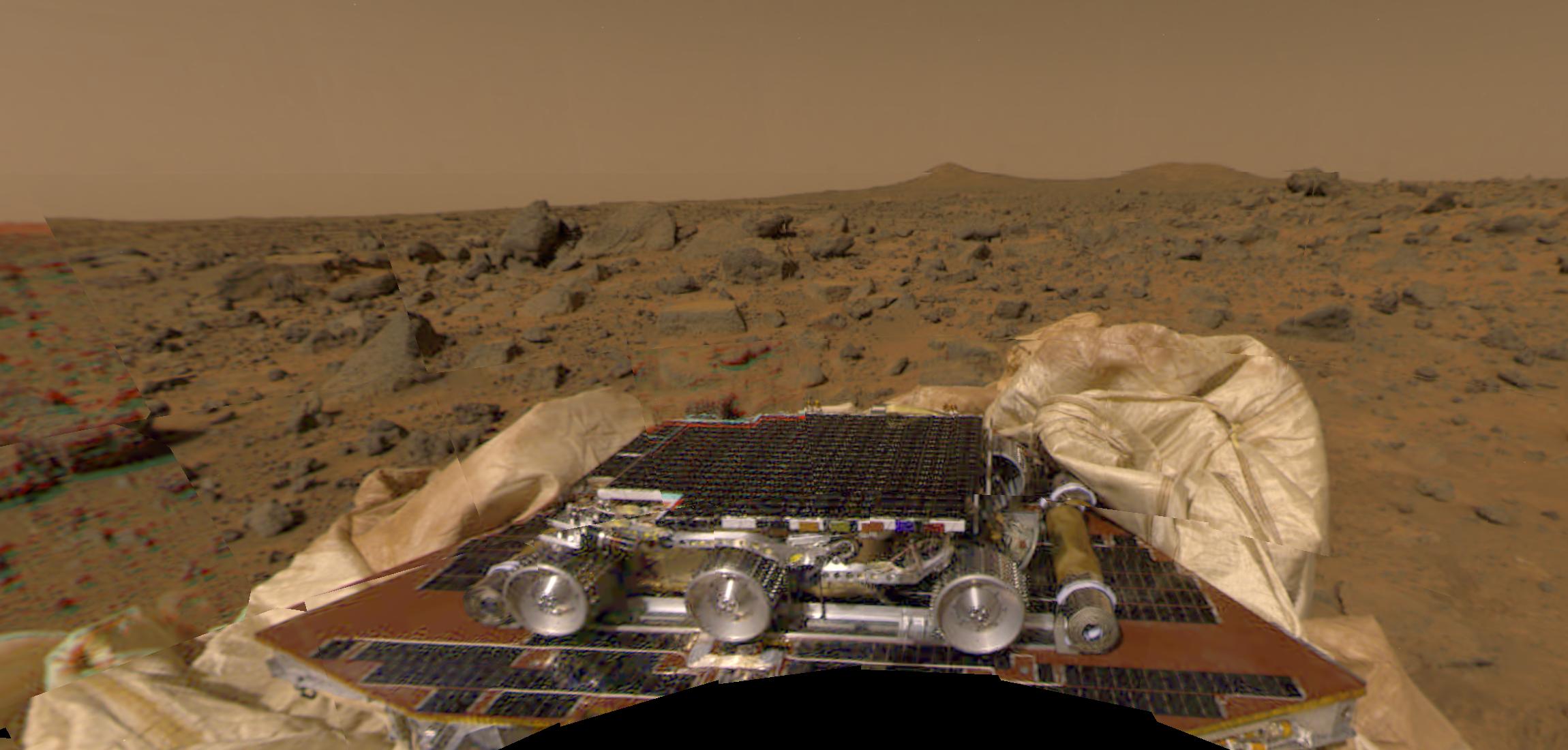
Pathfinder on Mars
2026-07-04
On July 4th, 1997, using its own array of fireworks, a parachute, and a cocoon of airbags, the Mars Pathfinder spacecraft bounced like a giant beach ball at least 15 times before it came to rest on the surface of Mars at 10:07 AM Pacific Daylight Time. After its then novel airbag-assisted landing sequence was completed, Pathfinder transmitted this color mosaic to mission operators on Earth. In the scene from another world, the Mars Sojourner robot rover is visible in the foreground, crouched on top of the unfolded Pathfinder. About the size of a large house cat, the six-wheeled, solar-powered Sojourner became the first successful Martian rover. Surrounding Pathfinder are deflated airbags and the rock-strewn terrain of the Ares Vallis floodplain. In the distance Martian hills appear against a dusty brownish sky. The Pathfinder lander was subsequently renamed the Carl Sagan Memorial Station.
via NASA APOD
Key facts
- Discovered by
- C. H. F. Peters
- Discovery site
- Litchfield Obs.
- Discovery date
- 3 June 1875
- Pronunciation
- / v ɪ ˈ b ɪ l i ə /
- Named after
- Vibilia, (Roman goddess of traveling)
Article · Русский
(144) Вибилия (лат. Vibilia) — довольно большой астероид главного пояса, принадлежащим к тёмному спектральному классу C, вследствие чего его поверхность богата различными простейшими углеродными соединениями. Вибилия возглавляет одноимённое семейство астероидов и является единственным крупным астероидом этого семейства. Этот астероид был обнаружен 3 июня 1875 года германо-американским астрономом К. Г. Ф. Петерсом в Клинтоне, США и назван в честь древнеримской богини путешествий Вибилии, в связи с тем что Петерс незадолго до открытия вернулся из поездки по всему миру, чтобы наблюдать прохождение Венеры по диску Солнца. Было зафиксировано два покрытия звёзд этим астероидом в 1993 и в 2001 годах.
Abstract from DBpedia / Wikipedia · CC BY-SA