Picture of the Day · NASA
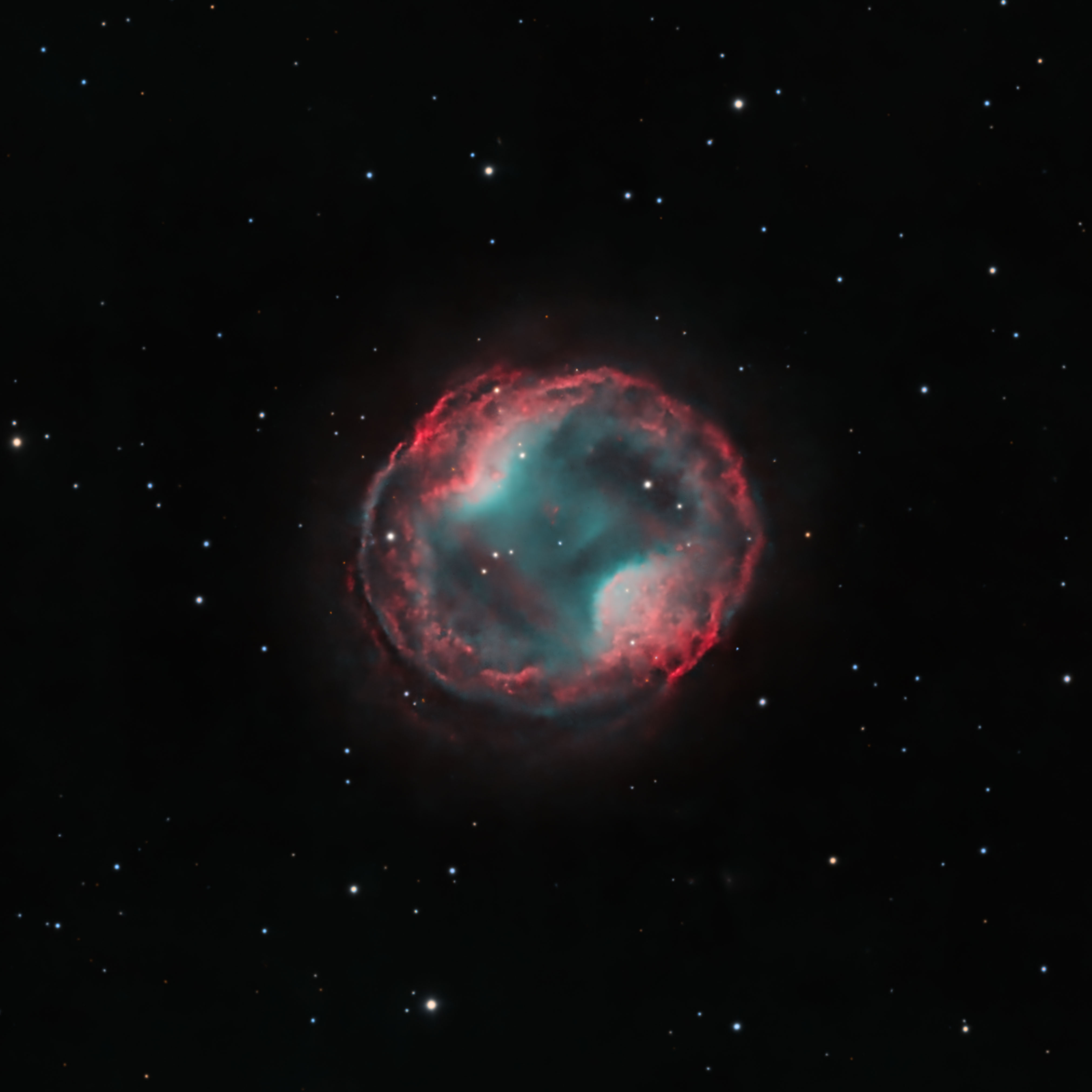
PK 164 +31.1: The Headphone Nebula
2026-05-27
What is a pair of headphones doing in the sky? Today’s image features the Headphone Nebula, also known as PK 164 +31.1 or Jones-Emberson 1. This planetary nebula, the remnant of a dying Sun-like star, faintly occupies an angular region of the Lynx constellation about 1/5th the diameter of the full moon. The red and blue-ish green colors trace hydrogen and oxygen atoms, respectively, that have been excited and ionized by the nebula's central white dwarf. The headphone shape, where two lobes of hydrogen puncture the inner region of oxygen, adds this object to a long list of oddly shaped nebulae. The morphology of such strange nebulae hint at the presence of a stellar or planetary companion, which can stir the material flowing out from the dying star. You can listen to Hubble and JWST sonifications of planetary nebulae through your very own headphones!
via NASA APOD
Article · Polski
(162001) Vulpius – planetoida z grupy pasa głównego asteroid okrążająca Słońce w ciągu 4 lat i 66 dni w średniej odległości 2,6 j.a. Została odkryta 10 października 1990 roku w Karl Schwarzschild Observatory w Tautenburgu przez Freimuta Börngena i Lutza Schmadela. Nazwa planetoidy pochodzi od Melchiora Vulpiusa (1570-1615), niemieckiego śpiewaka i kompozytora muzyki sakralnej. Została zaproponowana przez Freimuta Börngena. Przed nadaniem nazwy planetoida nosiła oznaczenie tymczasowe (162001) 1990 TH9.
Abstract from DBpedia / Wikipedia · CC BY-SA