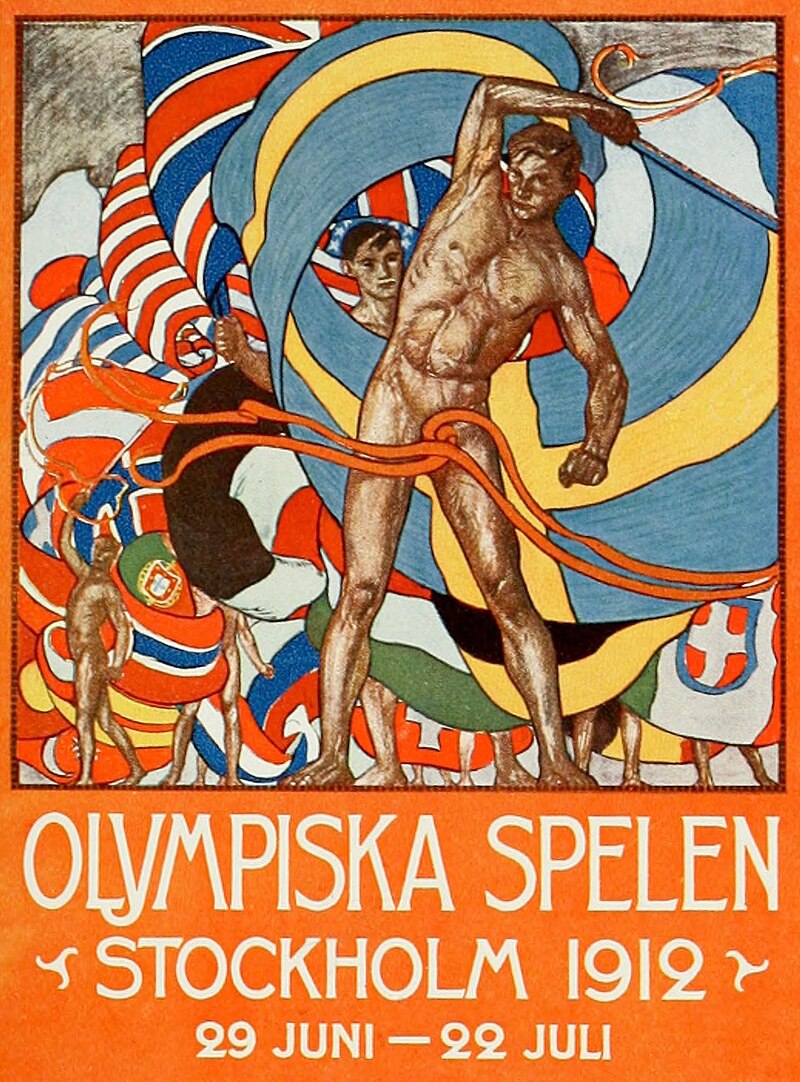
File:1912_Summer_Olympics_poster.jpg · Wikimedia Commons · See Wikimedia Commons
1912 Summer Olympics
Sign in to saveAlso known as Stockholm 1912, Games of the V Olympiad
Games of the V Olympiad, celebrated in Stockholm (Sweden) in 1912
The 1912 Summer Olympics were the fifth modern Olympic Games, held in Stockholm, Sweden. These Games are historically significant as an early milestone in the Olympic movement's development during the early 20th century.
AI-generated from the Wikipedia summary — may contain errors.
Described at
Stockholm 1912 Summer Olympics - Athletes, Medals & Results
Relive the moments that went down in history at the 1912 Summer Olympics in Stockholm. Access official videos, results, galleries, sport and athletes.
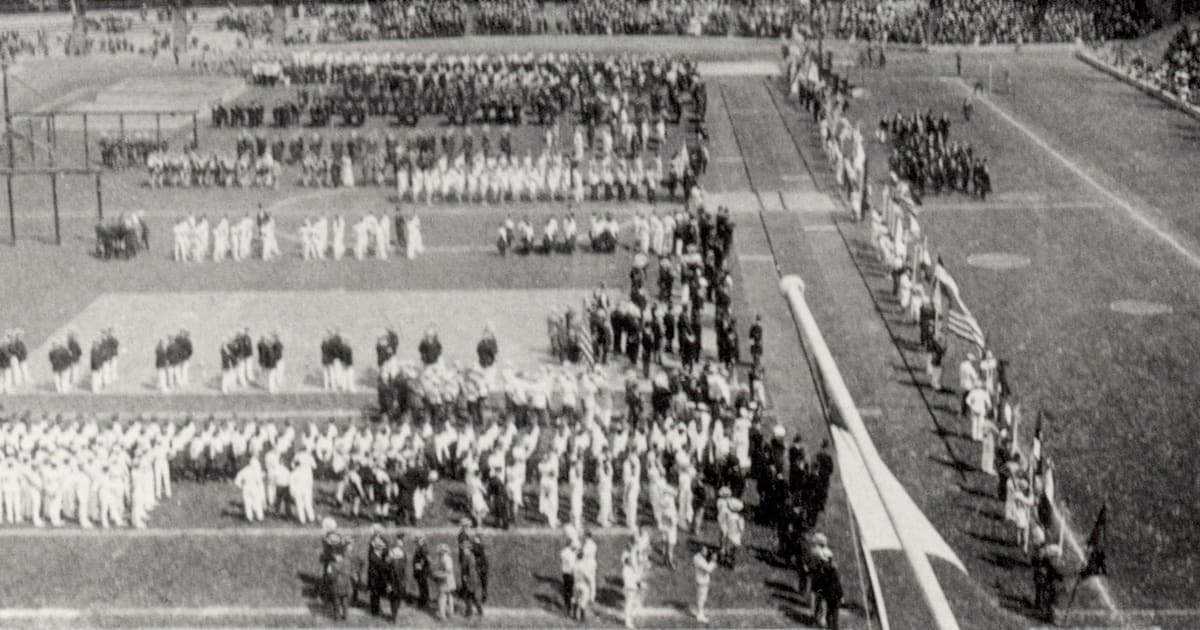
olympics.com →The Stockholm Games were a model of efficiency. The Swedish hosts introduced the first Olympic use of automatic timing devices for the track events, the photo finish and a public address system. If there was an unofficial theme of the 1912 Games, it was endurance. The course for the cycling road race was 320km (199 miles), the longest race of any kind in Olympic history. In Greco-Roman wrestling, the middleweight semi-final match between Russian Martin Klein and Finland’s Alfred Asikainen lasted 11 hours. For the first time, competitors in the Games came from all five continents. It was also the first time Japan participated. The modern pentathlon, women’s swimming and women’s diving all made their Olympic debuts. Jim Thorpe, an Indigenous man from Oklahoma, won the pentathlon and decathlon by huge margins, and was described by King Gustav V of Sweden as "the greatest athlete in the world". He was later disqualified when it was discovered that he had accepted a modest sum to play baseball before the Games. In 1982, the Executive Board of the International Olympic Committee decided to reinstate Jim Thorpe and to give back to his daughter the medals that were rightfully his. His feat was immortalised in the film "The Bronze Man" by Michael Curtiz, with Burt Lancaster in the role of Thorpe. Under the nom de plume of Georges Hohrod and M. Eschbach, Baron de Coubertin was awarded first place for his "Ode to sport" which "praises sport in both a literary and sporting way". (Illustration: "Les sports d'hiver" of Carlo Pelligrini, winner of the painting competition of the Concours d’Art.) With the close of the 1912 Olympics, all eyes turned towards the city of Berlin where the next edition of the Games was scheduled to take place. Although World War I made it impossible for plans to proceed, the Games proved their resilience. The 1916 celebration remained in Olympic history as the Games of the VI Olympiad, and in 1920, the Olympics were once again held, with the Belgian city of Antwerp acting as Olympic host. Stockholm 1912, Games of the V Olympiad: the Swedish team of women gymnasts parades in the stadium during the Opening Ceremony. The athletes’ oath was first sworn at the 1920 Olympic Games in Antwerp. A visual identity is developed for each edition of the Olympic Games. Beginning as an olive wreath, medal designs have evolved over the years.
Excerpt from a page describing this subject · 9,005 chars · not written by Vinony
Wikidata facts
- Country
- Sweden
- Followed by
- 1920 Summer Olympics
- Follows
- 1908 Summer Olympics
- Location
- Djurgårdsbrunnsviken
- Sport
- Olympic sport
Show 9 more facts
- Commons category
- 1912 Summer Olympics
- officially opened by
- Gustaf V of Sweden
- topic's main category
- Category:1912 Summer Olympics
- start time
- 1912-05-05
- end time
- 1912-07-27
- number of participants
- 2407
- sports season of league or competition
- Summer Olympic Games
- native label
- Spiller vun der V. Olympiad
- described at URL
- www.sports-reference.com/olympics/summer/1912
via Wikidata · CC0
~40 min read
Encyclopedic overview
The 1912 Summer Olympics (Swedish: Olympiska sommarspelen 1912), officially known as the Games of the V Olympiad (Swedish: Den V olympiadens spel) and commonly known as Stockholm 1912, were an international multi-sport event held in Stockholm, Sweden, between 6 July and 22 July 1912. The opening ceremony was held on 6 July. They were the only Summer Olympics to be held in the 1910s as the 1916 Summer Olympics in Berlin were cancelled due to World War I.
Twenty-eight nations and 2,408 competitors, including 48 women, competed in 102 events in 14 sports. With the exception of tennis (starting on 5 May) and football and shooting (both starting on 29 June), the games were held within a month with an official opening on 6 July. It was the last Olympics to issue solid gold medals and, with Japan's debut, the first time an official team from an Asian nation participated. Stockholm was the only bid for the games, and was selected in 1909.
Excerpted from Wikipedia’s “1912 Summer Olympics” article, available under the CC BY-SA 4.0 licence.
Gallery (12)
Available in 89 languages
- Español
- Français
- Deutsch
- 中文
- 日本語
- Русский
- Português
- Italiano
- العربية
- हिन्दी
- Abkhazian
- Afrikaans
- Aragonese
- Armenian
- Asturian
- Azerbaijani
- Bahasa Indonesia
- Balinese
Show 70 more
- Bangla
- Basque
- be_x_old
- Belarusian
- Bosnian
- Bulgarian
- Catalan
- Central Kurdish
- Croatian
- Czech
- Danish
- Egyptian Arabic
- Esperanto
- Estonian
- Filipino
- Finnish
- Galician
- Greek
- Guarani
- Hebrew
- Hungarian
- Icelandic
- Ido
- Kazakh
- Latin
- Latvian
- Lithuanian
- Luxembourgish
- Macedonian
- Malay
- Marathi
- Mazanderani
- Mongolian
- Nederlands
- Nepali
- Norwegian
- Norwegian Nynorsk
- Occitan
- Polski
- Punjabi
- Quechua
- Romanian
- Scots
- Serbian
- Serbian (Latin)
- Sicilian
- simple
- Sinhala
- Slovenian
- Svenska
- Tamil
- Tatar
- Telugu
- Tiếng Việt
- Türkçe
- Ukrainian
- Urdu
- Uzbek
- Walloon
- Welsh
- Western Frisian
- Western Panjabi
- Wu Chinese
- Yakut
- Yoruba
- zh_min_nan
- zh_yue
- فارسی
- ไทย
- 한국어
via Wikidata sitelinks · CC0