Picture of the Day · NASA
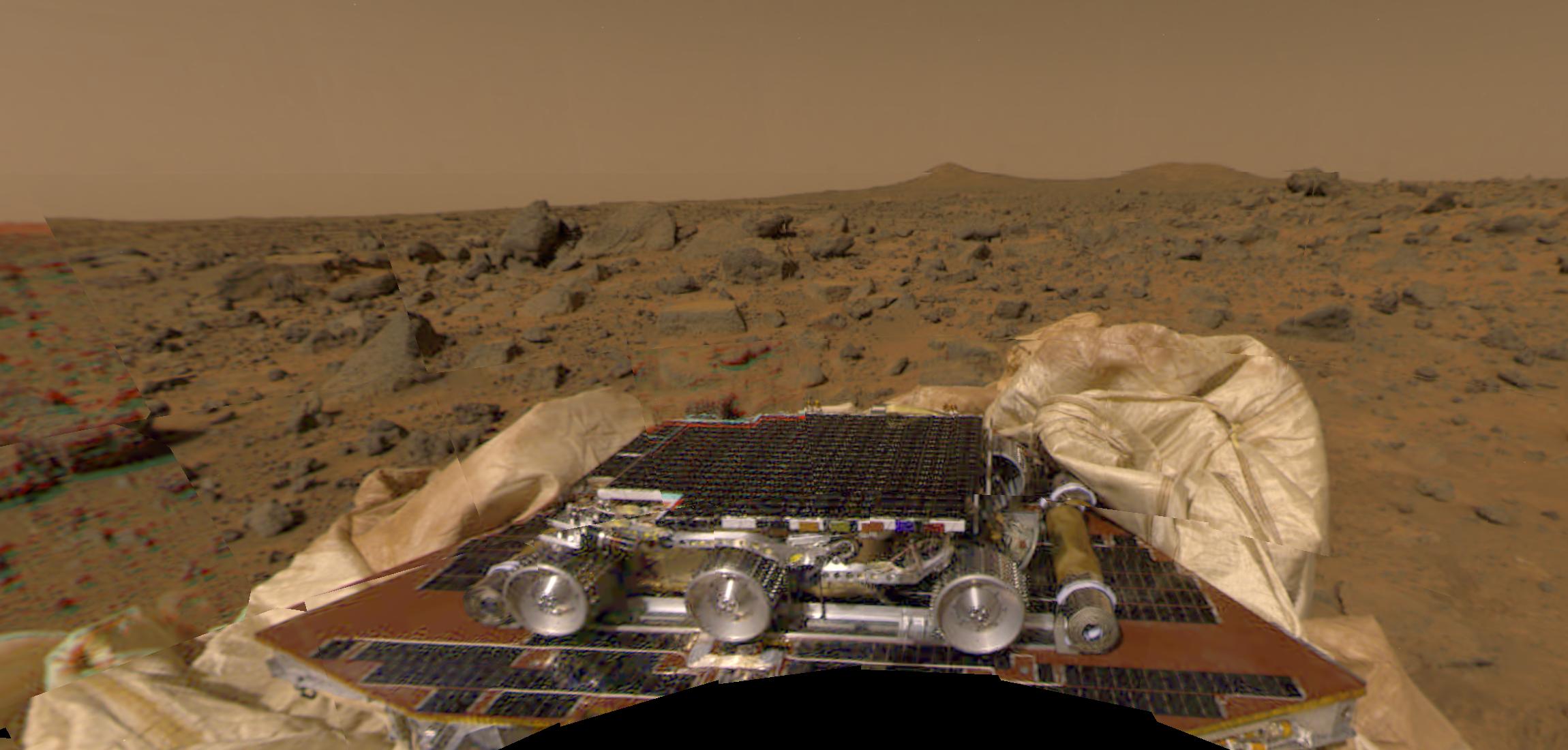
Pathfinder on Mars
2026-07-04
On July 4th, 1997, using its own array of fireworks, a parachute, and a cocoon of airbags, the Mars Pathfinder spacecraft bounced like a giant beach ball at least 15 times before it came to rest on the surface of Mars at 10:07 AM Pacific Daylight Time. After its then novel airbag-assisted landing sequence was completed, Pathfinder transmitted this color mosaic to mission operators on Earth. In the scene from another world, the Mars Sojourner robot rover is visible in the foreground, crouched on top of the unfolded Pathfinder. About the size of a large house cat, the six-wheeled, solar-powered Sojourner became the first successful Martian rover. Surrounding Pathfinder are deflated airbags and the rock-strewn terrain of the Ares Vallis floodplain. In the distance Martian hills appear against a dusty brownish sky. The Pathfinder lander was subsequently renamed the Carl Sagan Memorial Station.
via NASA APOD
Wikidata facts
- Orbital period
- 2010.077795612369
- Image
- Asteroid Dubois orbit.jpg
Show 12 more facts
- time of discovery or invention
- 2002-11-24
- provisional designation
- 2002 WM28
Article · Nederlands
(206241) Dubois is een planetoïde, in juni 2009 vernoemd naar de Nederlandse arts, paleontoloog en paleoantropoloog Eugène Dubois (1858-1940). Dubois was de internationale grondlegger van de paleoantropologie als vakgebied en ontdekte in 1891 op Java de eerste fossielen van de menselijke voorouder Homo erectus. De planetoïde werd ontdekt door de Nederlandse amateur-planetoïdenjager en beroeps-archeoloog Marco Langbroek op archiefopnamen van het NEAT project genomen in november 2002 met de 1.2 meter Schmidt telescoop op Mt. Palomar in de VS. Ze is naar schatting ongeveer 2,4 km groot. De baan van planetoïde Dubois ligt in de planetoïdengordel tussen de banen van Mars en Jupiter. Voordat ze het definitieve nummer (206241) en de naam Dubois kreeg, was ze bekend onder de voorlopige aanduiding 2002 WM28.
Abstract from DBpedia / Wikipedia · CC BY-SA
Available in 8 languages
via Wikidata sitelinks · CC0