Picture of the Day · NASA
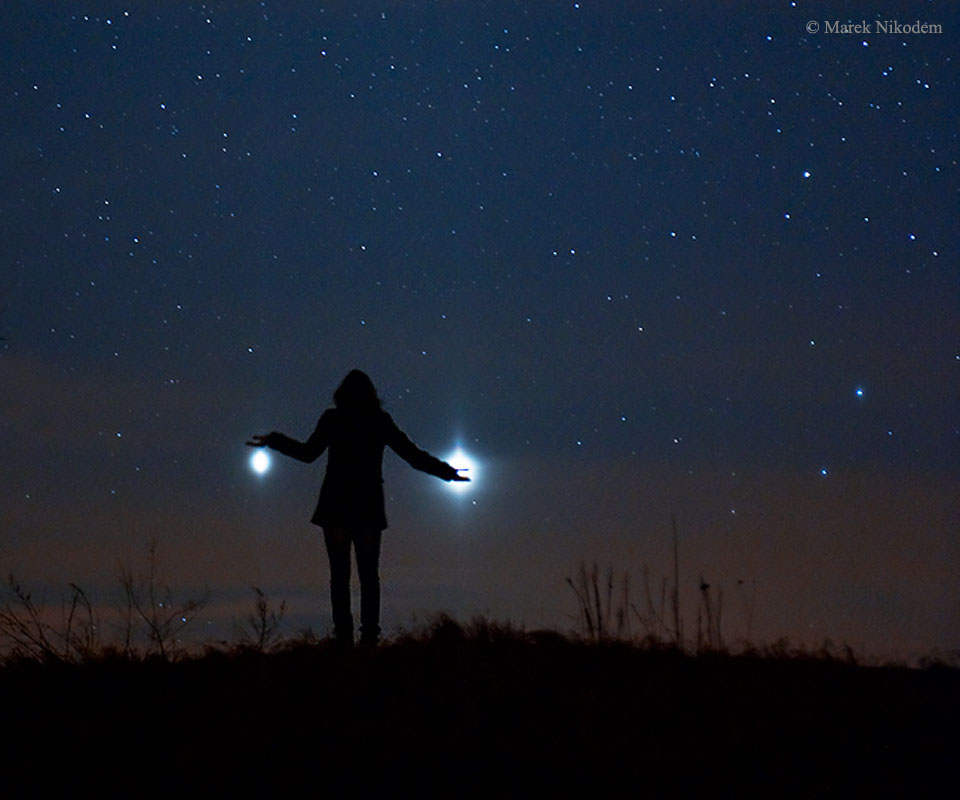
Jupiter and Venus from Earth
2026-06-07
It was visible around the world. The sunset conjunction of Jupiter (left) and Venus (right) in 2012 was visible almost no matter where you lived on Earth. Anyone on our planet with a clear western horizon at sunset could see them. That year, a creative photographer traveled away from the town lights of Szubin, Poland to photograph a near closest approach of the two planets. The bright planets were then separated by only three degrees and his daughter struck a humorous pose. A faint red sunset still glowed in the background. Jupiter and Venus are together again this week after sunset, passing within a degree of each other about two days from today.
© Marek Nikodem (PPSAE) · via NASA APOD
Wikidata facts
- Diameter
- 2.95
- Orbital period
- 1249.368167089684
Show 15 more facts
- provisional designation
- 1981 SM7
- time of discovery or invention
- 1974-09-19
- orbital eccentricity
Article · Русский
(4919) Вишневская (лат. Vishnevskaya) — типичный астероид главного пояса, который был открыт 19 сентября 1974 года советским астрономом Людмилой Черных в Крымской астрофизической обсерватории и в назван в честь советской и российской оперной певицы, актрисы, театрального режиссёра и педагога Галины Вишневской. 4919 Vishnevskaya Discovered 1974-09-19 by Chernykh, L. I. at Nauchnyj. Named in honor of Galina Pavlovna Vishnevskaya, outstanding Russian opera singer, actress of the Bolshoi Theatre in Moscow for many years and performer in many theaters around the world. REF: DISCOVERY.DB; MPC 23137 — Discovery Circumstances
Abstract from DBpedia / Wikipedia · CC BY-SA