Russell A. Mittermeier;Don E. Wilson
Acrobatidae
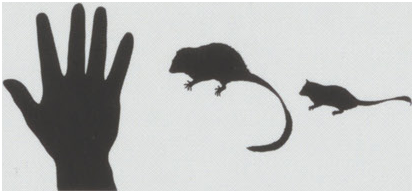
Sign in to saveThe Acrobatidae are a small family of gliding marsupials containing two genera, each with a single species, the feathertail glider (Acrobates pygmaeus) from Australia and feather-tailed possum (Distoechurus pennatus) from New Guinea.
OverviewAI-generated
Acrobatidae is a family of mammals within the order Diprotodontia. It belongs to the class Mammalia, phylum Chordata, and kingdom Animalia. The family is classified under the superfamily Petauroidea and falls under the International Code of Zoological Nomenclature.
This taxon is endemic to Australia and exists during the Holocene time period. Records of the family are held by institutions including ANWC, UWSP, AM, SAMA, and QM, with occurrences also documented in Papua New Guinea. The subject has 10,303 occurrence records and 128 total records, with no associated media.
Synthesized by Vinony from 24 facts across 5 sources: Wikidata, GBIF, Gbif Occ, iDigBio, Vinony graph. Generated from structured data (not the Wikipedia text) and checked against those facts — may still contain errors.
Species
FAMILY
- KingdomAnimalia
- PhylumChordata
- ClassMammalia
- OrderDiprotodontia
- FamilyAcrobatidae
樹袋貂科(Acrobatidae),哺乳綱的一科,屬於袋鼠目。而樹袋貂科轄下的動物有樹頂袋貂屬(樹頂袋貂)、羽尾袋貂屬(羽尾袋貂)。 取自“https://zh.wikipedia.org/w/index.php?title=树袋貂科&oldid=51045412” 分类: 樹袋貂科 袋鼯總科 隐藏分类: 本地相关图片与维基数据相同 含有英語的條目
via GBIF
Museum specimens
- Specimen records
- 128
- Family
- Acrobatidae
- Collections
- ANWC, UWSP, AM, SAMA, QM
- Recorded in
- Papua New Guinea
Wikidata facts
- Instance of
- taxon
- Parent taxon
- Petauroidea
- Image
- Beutelmaus brehm.png
Show 8 more facts
- taxon name
- Acrobatidae
- Commons category
- Acrobatidae
- taxon rank
- family
- Code of nomenclature
- International Code of Zoological Nomenclature
- topic's main category
- Category:Acrobatidae
- Commons gallery
- Acrobatidae
- endemic to
- Australia
- time period
- Holocene
Sources (1)
via Wikidata · CC0
~2 min read
Encyclopedic overview
2 sectionsContents
- Taxonomy
- References
The Acrobatidae are a small family of gliding marsupials containing two genera, each with a single species, the feathertail glider (Acrobates pygmaeus) from Australia and feather-tailed possum (Distoechurus pennatus) from New Guinea.
This family of the order Diprotodontia, which can be found in the east coast and inland of Australia and in some islands of New Guinea, is characterized by their very small size, which has side effects: because their mass-to-surface-area ratio is so small, heat escapes quicker from their bodies than it would in larger animals (the larger the mass-to-surface-area ratio, the harder it is to get rid of heat). Therefore, when temperature drops or food is scarce, they have trouble maintaining their body temperature and they enter a state known as torpidity (not to be confused with hibernation, which is not known in marsupials) which can last between one day and two weeks. In this state, the animal's breathing slows down, its temperature drops to almost that of its surroundings, and the animal becomes unresponsive.
Excerpted from Wikipedia’s “Acrobatidae” article, available under the CC BY-SA 4.0 licence.