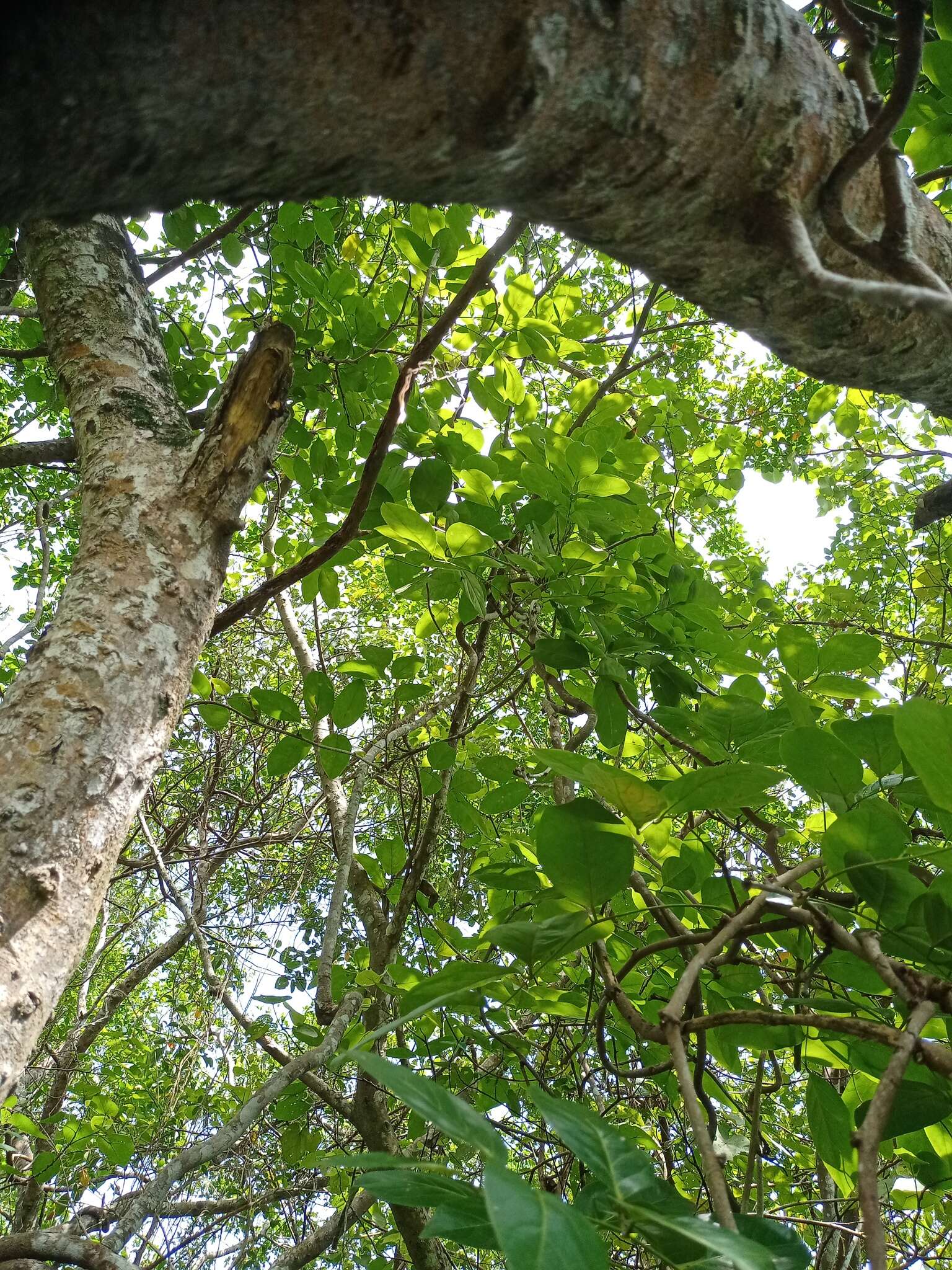
Encyclopedia of Life · EOL (see source)
Aganope
Sign in to saveAganope is a genus of flowering plants in the family Fabaceae. It belongs to the subfamily Faboideae. The genus contains 11 species, which range across sub-Saharan Africa, south and southeast Asia, and New Guinea.
Species
GENUS
- KingdomPlantae
- PhylumTracheophyta
- ClassMagnoliopsida
- OrderFabales
- FamilyFabaceae
Aganope es un género de plantas con 11 especies aceptadas perteneciente a la familia Fabaceae.[2] Algunos autores lo consideran una sinonimia del género Ostryocarpus Hook.f.[3] Índice 1 Taxonomía 2 Especies aceptadas 3 Referencias 4 Enlaces externos Taxonomía El género fue descrito por Friedrich Anton Wilhelm Miquel y publicado en Flora van Nederlandsch Indië 1(1): 151. 1855.[4] Especies aceptadas A continuación se brinda un listado de las especies del género Aganope aceptadas hasta julio de 2014, ordenadas alfabéticamente. Para cada una se indica el nombre binomial seguido del autor, abreviado según las convenciones y usos. Aganope balansae (Gagnep.) P.K.Lôc Aganope dinghuensis (P.Y. Chen) T.C. Chen & Pedley Aganope gabonica (Baill.) Polhill Aganope heptaphylla (L.) Polhill Aganope impressa (Dunn) Polhill Aganope latifolia (Prain) T.C. Chen & Pedley Aganope leucobotrya (Dunn) Polhill Aganope lucida (Baker) Polhill Aganope polystachya (Benth.) Thoth. & D.N.Das Aganope stuhlmannii (Taub.) Adema Aganope thyrsiflora (Benth.) Polhill Referencias ↑ USDA, ARS, National Genetic Resources Program. Germplasm Resources Information Network - (GRIN) [Base de Datos en Línea]. Nat
via GBIF · Kew POWO
Museum specimens
- Specimen records
- 47
- With media
- 29
- Family
- Fabaceae
- Collections
- MO, MEL, NY, UPS, MNHN
- Recorded in
- Gabon, Thailand, Malaysia, Malaysia/Malaya, Mozambique, Ghana, Equatorial Guinea, India
Wikidata facts
- Instance of
- taxon
- Parent taxon
- Millettieae
- Image
- Aganope thyrsiflora Blanco2.336.jpg
Show 6 more facts
- Commons category
- Aganope
- taxon name
- Aganope
- taxon rank
- genus
- topic's main category
- Category:Aganope
- taxon common name
- 双束鱼藤属
Sources (1)
via Wikidata · CC0
~1 min read
Encyclopedic overview
2 sectionsContents
- Species
- References
Aganope is a genus of flowering plants in the family Fabaceae. It belongs to the subfamily Faboideae. The genus contains 11 species, which range across sub-Saharan Africa, south and southeast Asia, and New Guinea.
== Species == Plants of the World Online accepts the following species within Aganope: Aganope agastyamalayana Aganope balansae Aganope dinghuensis Aganope gabonica Aganope heptaphylla Aganope impressa Aganope leucobotrya Aganope lucida Aganope polystachya Aganope stuhlmannii Aganope thyrsiflora
Excerpted from Wikipedia’s “Aganope” article, available under the CC BY-SA 4.0 licence.