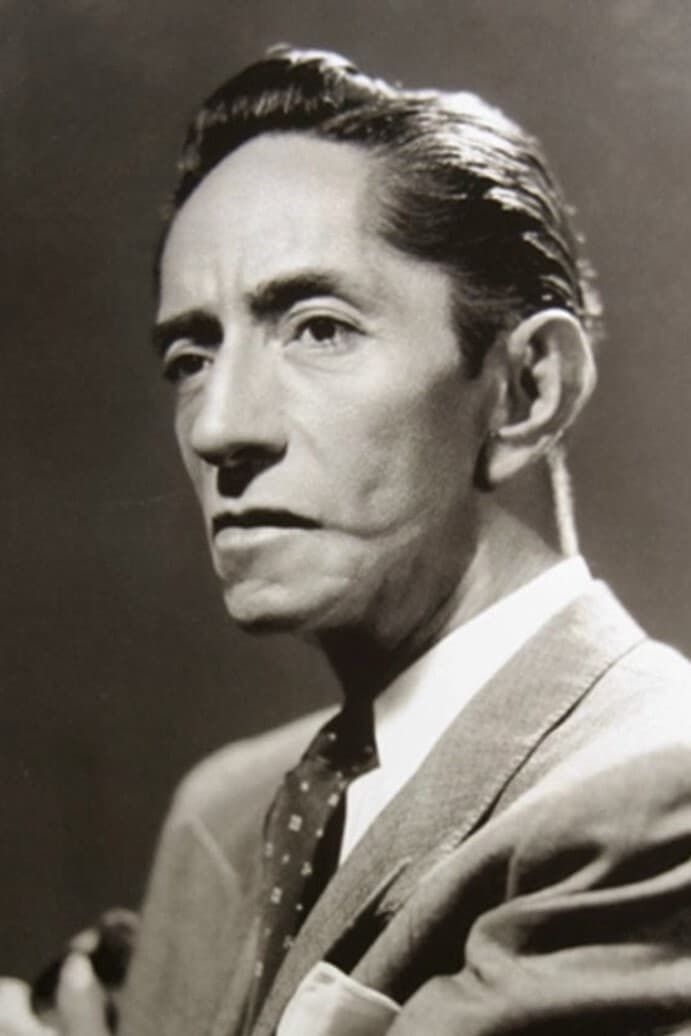
Profile via TMDB · Courtesy of TMDB
Agustín Lara
Sign in to saveAlso known as Agustin Lara, Agustín Lara Aguirre del Pino
Mexican composer and interpreter of songs and boleros (1897–1970)
OverviewAI-generated
Agustín Lara was a Mexican pianist, songwriter, singer, and composer who began his work period in 1922. His professional activities were associated with fields including popular music, dance music, and general music. He wrote in the Spanish language.
He died in 1970. Records indicate he has three works associated with him.
Synthesized by Vinony from 11 facts across 3 sources: Wikidata, Europeana Sparql, VIAF. Generated from structured data (not the Wikipedia text) and checked against those facts — may still contain errors.
Film & TV
Tlacotalpan, Veracruz, Mexico
Known for
- Perdida2009
- La vida de Agustín Lara — Self1959
- Mi mujer necesita marido1959
- Music of Always1958
- Bolero Inmortal1958
- Los tres bohemios1957
- La virtud desnuda — Pianista1957
- Los chiflados del rock and roll1957
- Teatro del crimen — Himself1957
- Tropicana1957
via TMDB
Authority record · VIAF
- Lifespan
- 1897–1970
- Nationality
- MX
- Role / Field
- Pianists, Songwriter, Singers, Composers, Compositores, Zpev
- Language
- spa
- Gender
- Unknown
Recorded by 34 libraries
via VIAF · OCLC
Wikidata facts
- Instance of
- human
- Gender
- male
- Citizenship
- Mexico
- Place of birth
- Veracruz
- Place of death
- Mexico City
- Sibling
- María Teresa Lara
- Occupation
- songwriter
- Languages spoken
- Spanish
- Field of work
- singing
- Genre
- bolero
- Instrument
- voice
- Image
- Agustín Lara, circa 1950s.jpg
Show 8 more facts
- Commons category
- Agustín Lara
- date of birth
- 1897-10-30
- date of death
- 1970-11-06
- P8168
- duchy of Asti
- name in native language
- Agustín Lara
- birth name
- Ángel Agustín María Carlos Fausto Mariano Alfonso del Sagrado Corazón de Jesús Lara y Aguirre del Pino
- start of work period
- 1922-00-00
- place of burial
- Panteón de Dolores
via Wikidata · CC0
Works in European collections
3 objects attributed to Agustín Lara, held across European museums, libraries & archives · via Europeana
![Granada / Agrupación Musical de Pulso y Púa "Calle del Barquillo" ; [kantis, Miguel Fernández]](https://api.europeana.eu/thumbnail/v2/url.json?uri=https%3A%2F%2Fbitoteko.esperanto.es%2Fxmlui%2Fbitstream%2F11013%2F4772%2F3%2Fgranada.png&type=IMAGE)

