
Albania
Also known as Republic of Albania, Republika e Shqipërisë, Shqipërisë, People's Socialist Republic of Albania, People's Republic of Albania, Republika Popullore Socialiste e Shqiperise, Republika Popullore e Shqiperise
stato dell'Europa meridionale
AI overview
Albania is a Southeast European country located in the Balkans on the Mediterranean coast, bordered by Montenegro, Kosovo, North Macedonia, and Greece. It features diverse landscapes ranging from snow-capped mountains to fertile lowland plains, with varied climatic and geological conditions.
AI-generated from the Wikipedia summary — may contain errors.
Weather now
cached 6h ago25°clear sky
30% 4.0 m/s OpenWeatherMap
7-day forecast
via Open-Meteo
Country

- Capital
- Tirana
- Population
- 2,363,314
- Region
Travel guide
Understand
While the relative majority of the people in Albania are of Muslim heritage (55–65%), according to the polls, around 35% of the Albanians are agnostics; 22% are atheists; 19% are Muslim; 15% are Orthodox; 8% are Catholics and 1% are of other religions. Mixed marriages are very common.
Traditional Albanian culture honors the role and person of the guest. In return for this place of honor, respect is expected from the guest. Albanians enjoy long walks in the city streets, drinking coffee, and among the younger generations, participating in nightlife activities such as cafe lounging and dancing.
Albania is a poor country by European standards.
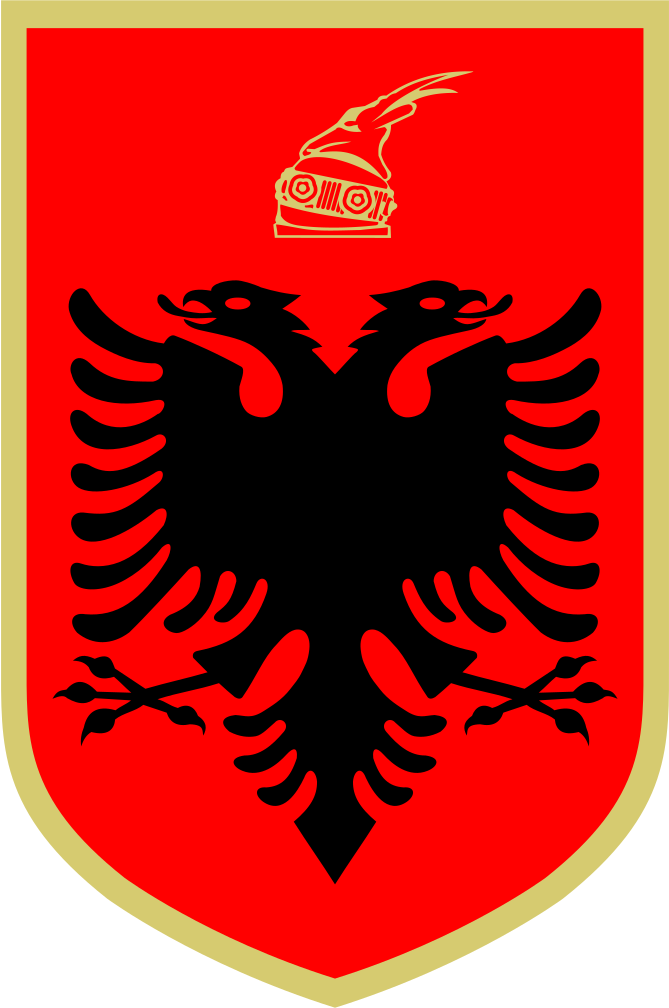
The English name Albania comes from Albanoi, the Greek name of an Illyrian tribe which lived in the area in during antiquity. Albanians call their own country Shqipëria, which means "Land of the Eagles". The name comes from an old myth that Albanians descend from a black eagle. A double headed black eagle was used as an insignia by the "Father of the Nation", Skanderbeg, as early as the 15th century, and can still be seen on the country's flag.
Get in
All road and tourist taxes (upon entering or leaving) the country have been lifted as of 2021.
See
thumb|right|300px|Beautiful and quiet beach at Ksamili thumb|right|300px|Beautiful beach at Dhermi thumb|300px|Golem beach south of Durres
Albania has varied cultural influences. In the south you can see the legacy of the Turks and Greeks, whereas in the north you can see many ancient Illyrian ruins.
The coastline is always a place to go, with its clear turquoise seas, and its many islands cast upon it, like in Saranda, the southern most coastal city in Albania. Along the Albanian Riviera, from Vlore to about Qeparo there exist mainly wooden villa complexes, bed and breakfasts, camping sites and a few beach resorts as accommodation facilities. Llogara Pass is a mountain pass located near Llogara National Park offering a majestic view of the riviera from above. Nearby is found Cesar's Pass, the place where Julius Cesar passed in his pursuit of Pompey. Dajti Mountain, a popular sight in Tirana allows you to get a whole green view of the capital. The ancient Illyrian city of Apollonia is only about 8 km (5 mi) away from Fier. A walk around southern cities like Butrint, a UNESCO world heritage site, is always ideal and memorable. Butrint is home to many ancient ruins. Castles are in many cities in Albania. Their beauty reminds anyone of the ancient times of Albania, and the world. There is Petrela Castle near Tirana, Rozafa castle in Shkodër, the inhabited castle of Berat, and Skanderbeg Castle in Kruje, (named after the national hero and now a popular museum holding …
Article · Italiano
L'Albanìa (in albanese: Shqipëria; storicamente Arbëria), ufficialmente Repubblica d'Albania (in albanese: Republika e Shqipërisë, AFI: [ɾepublika e ʃcipəˈɾisə]), è uno Stato situato nella penisola balcanica. Confina a nord-ovest con il Montenegro, a nord-est con il Kosovo, a est con la Macedonia del Nord e a sud con la Grecia. Le sue coste si affacciano sul Mar Adriatico (sul Canale d'Otranto) e sullo Ionio. Il paese, con i suoi confini, ha una superficie di 28756 km² e una popolazione di 3,024 milioni di abitanti. Culla della civiltà illirica, fu unita nel Regno d'Epiro con Pirro, subì la colonizzazione greco-antica sul litorale e in età classica fu parte dell'Impero romano, divenendo tra i centri culturali e religiosi dell'Impero bizantino nel 1190 (Principato di Arbanon). Invasa successivamente dai barbari (slavi, Avari, Bulgari), conobbe la penetrazione militare del Regno di Sicilia (con i sovrani delle dinastie degli Altavilla, degli Svevi e di Aragona) e quella commerciale della Repubblica di Venezia. Nel Medioevo la battaglia di Kosovo (1389) portò in Albania i turco-Ottomani che, dapprima contenuti dalla Lega dei popoli albanesi, o Lega di Lezhë, creata nel 1444 da Giorgio Castriota detto "Scanderbeg", ebbero la meglio alla morte di questi (1467). Il Principato d'Albania fu l'unico paese dei Balcani che nel XV secolo resistette - per ben più di due decenni - agli attacchi degli Ottomani. L'Albania fu divisa in piccoli principati autonomi sottoposti per quattro secoli e mezzo alla sovranità dell'Impero ottomano. Nel XIX secolo si accentuarono rivolte popolari per l'indipendenza, fra cui rilevante fu quella dell'Epiro che riuscì a rendersi di fatto indipendente (1820-1822). La Lega di Prizren (1878) promosse l'idea di uno Stato nazionale albanese, anche in difesa dei confini dalle pressioni serbo-montenegrine e greche, e stabilì il moderno alfabeto albanese. Il 28 novembre 1912 dichiarò la sua indipendenza dai Turchi, riconosciuta in seguito dalla conferenza degli ambasciatori a Londra nel 1913, anno in cui nacque il primo governo provvisorio nel pieno delle guerre balcaniche, il Regno d'Albania. Divenuta brevemente un protettorato italiano al termine della prima guerra mondiale, fu nuovamente occupata e annessa al Regno d'Italia nel 1939. Durante il secondo conflitto mondiale, vi furono inglobate parti dei territori della cosiddetta Albania etnica, comprendente solo i territori del nord-ovest e abitati di etnia albanese lasciati oltre i confini dello Stato. Dal 1944 al 1990 l'Albania fu uno Stato comunista estremamente isolazionista, stalinista e antirevisionista. Dal 1998 l'Albania è una repubblica parlamentare. L'Albania è membro delle Nazioni Unite, della NATO, dell'OSCE, del Consiglio d'Europa, dell'Organizzazione mondiale del commercio e uno dei membri fondatori dell'Unione per il Mediterraneo. Dal 24 giugno 2014 l'Albania è ufficialmente candidata per l'adesione all'Unione europea, dopo aver richiesto formalmente l'adesione all'UE il 28 aprile 2009. Riforme di libero mercato hanno aperto il paese agli investimenti stranieri, in particolare nello sviluppo di infrastrutture energetiche e di trasporto. È tra i Paesi emergenti d'Europa e, grazie alle numerose bellezze storiche e naturali, tra le nuove mete turistiche della Penisola balcanica e del bacino del Mediterraneo. La capitale d'Albania è Tirana. Altri maggiori centri urbani sono Durazzo, Valona, Scutari e Argirocastro. L'albanese è la lingua ufficiale; gli albanesi chiamano se stessi shqiptarë.
Gallery (639)
On the map
60 mapped locations
Connections
Categories
AlbaniaCountries and territories where Albanian is an official languageCountries in EuropeCountries in the BalkansMember states of NATOMember states of the Council of EuropeMember states of the Organisation internationale de la FrancophonieMember states of the Organisation of Islamic CooperationMember states of the Union for the MediterraneanMember states of the United NationsRepublics