Alexgeorgea · Kew POWO · Kew Plants of the World Online
Alexgeorgea
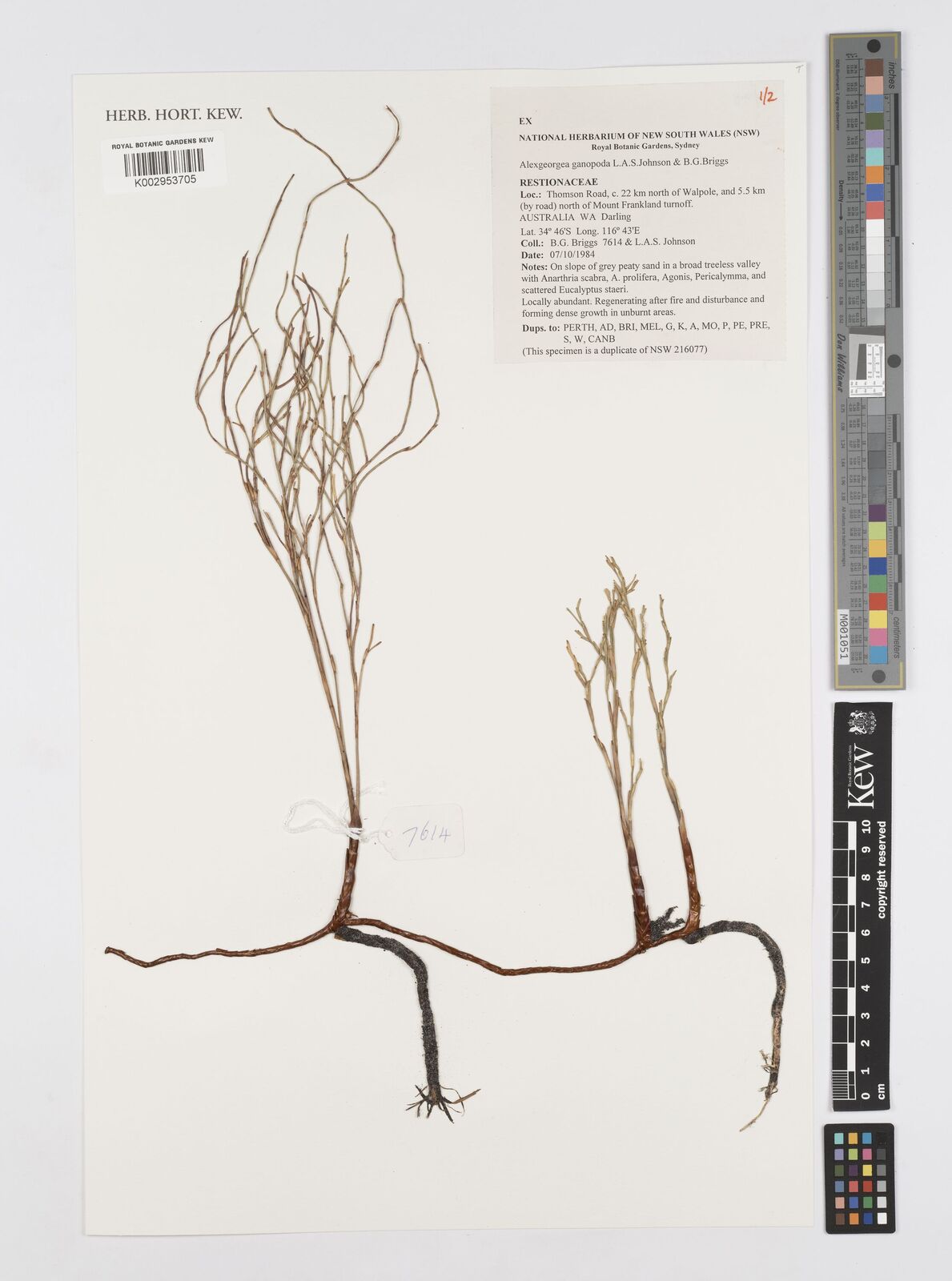
Sign in to saveAlexgeorgea is a genus of three plant species found in Western Australia belonging to the family Restionaceae named in honour of the botanist Alex George in 1976. The flowers of the female and large nut-like fruit are completely underground except for the stigmas, which extend out of the ground as 3 purple or red threads.
Species
GENUS
- KingdomPlantae
- PhylumTracheophyta
- ClassLiliopsida
- OrderPoales
- FamilyRestionaceae
via GBIF · Kew POWO
Wikidata facts
- Instance of
- taxon
- Parent taxon
- Restionaceae
- Named after
- Alex George
- Image
- Alexgeorgea buried flowers.jpg
Show 5 more facts
- taxon rank
- genus
- taxon name
- Alexgeorgea
- Commons category
- Alexgeorgea
- topic's main category
- Category:Alexgeorgea
Sources (1)
via Wikidata · CC0
~3 min read
Encyclopedic overview
3 sectionsContents
- Botanical history
- References
- External links
Alexgeorgea is a genus of three plant species found in Western Australia belonging to the family Restionaceae named in honour of the botanist Alex George in 1976. The flowers of the female and large nut-like fruit are completely underground except for the stigmas, which extend out of the ground as 3 purple or red threads.
==Botanical history== The genus Alexgeorgea was first discovered by Sherwin Carlquist on 2 September 1974 when he found a population of A. subterranea on the Cockleshell Gully road north of Jurien Bay in Western Australia. At first, Carlquist, an American botanist and professor at Claremont Graduate University doing field work in Western Australia, could only locate male plants of what he immediately identified as a restionaceous species. In order to identify species in the Restionaceae, it is important to gather material of both male and female flowers, so Carlquist continued to search and only then noticed "purple thread-like structures emerging from the sand," which were the ephemeral styles of the mostly subterranean female flowers. In his original description of the new genus in a 1976 volume of the Australian Journal of Botany, Carlquist notes his discovery may have not occurred if he had not seen the female flowers at anthesis due to the short-lived nature of the thread-like styles.
Excerpted from Wikipedia’s “Alexgeorgea” article, available under the CC BY-SA 4.0 licence.