Encyclopedia of Life · EOL (see source)
Species
marehalmslekta
Genus
- PhylumTracheophyta
- ClassMagnoliopsida
- OrderPoales
- FamilyPoaceae
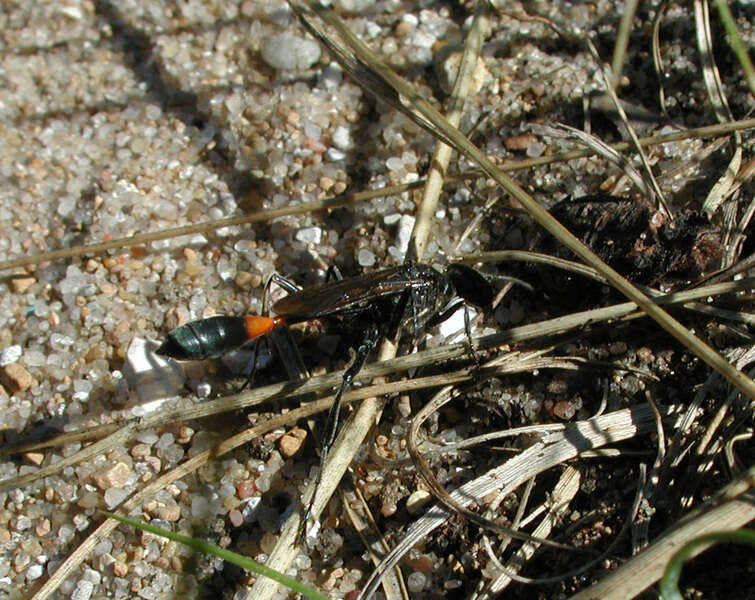
The behavior of these slender, elongate wasps has been studied by a host of observers. All species are fossorial, usually solitary in nesting habits, although a few extralimital species are gregarious nesters. Typically, the nest consists of a short, oblique to perpendicular burrow terminating in a single cell, although 2-celled nests have been reported in two species. Usually, the nest is dug before prey is obtained, but two species have been reported as capturing prey before constructing the nest. ~The prey used by Ammophila consists usually of hairless larvae although sparsely to densely haired larvae may be used occasionally. Lepidopterous larvae are frequently provided, but occasionally hymenopterous (sawfly) larvae are used. There is one record of weevil larvae being preyed upon by azteca Cam. which also uses lepidopterous and sawfly larvae. It is probable that caterpillars are the preferred prey, and that sawfly or weevil larvae are used only when there is not a ready supply of caterpillars. Wasps using larger larvae for prey, store only one per nest; those using smaller larvae may provide as many as 11 per cell. Most species are mass provisioners, but several practice progr
via · Kew POWO
Museum specimens
- Specimen records
- 1,613
- With media
- 268
- Family
- Poaceae
- Collections
- CAS, MHNCA, CSU, MICH, PSUC, TAES
- Recorded in
- United States, Mexico, South Africa, Netherlands
Wikidata facts
- Instance of
- taxon
- Parent taxon
- Ammophilinae
- Image
- Podalonia cf hirsuta01.jpg
Show 6 more facts
- taxon rank
- genus
- taxon name
- Ammophila
- Commons category
- Ammophila (Sphecidae)
- topic's main category
- Category:Ammophila (Sphecidae)
- taxon common name
- langstilkete larvegravevepser
- homonymous taxon
- Ammophila
Sources (2)
via Wikidata · CC0