Encyclopedia of Life · EOL (see source)
Amoebidae
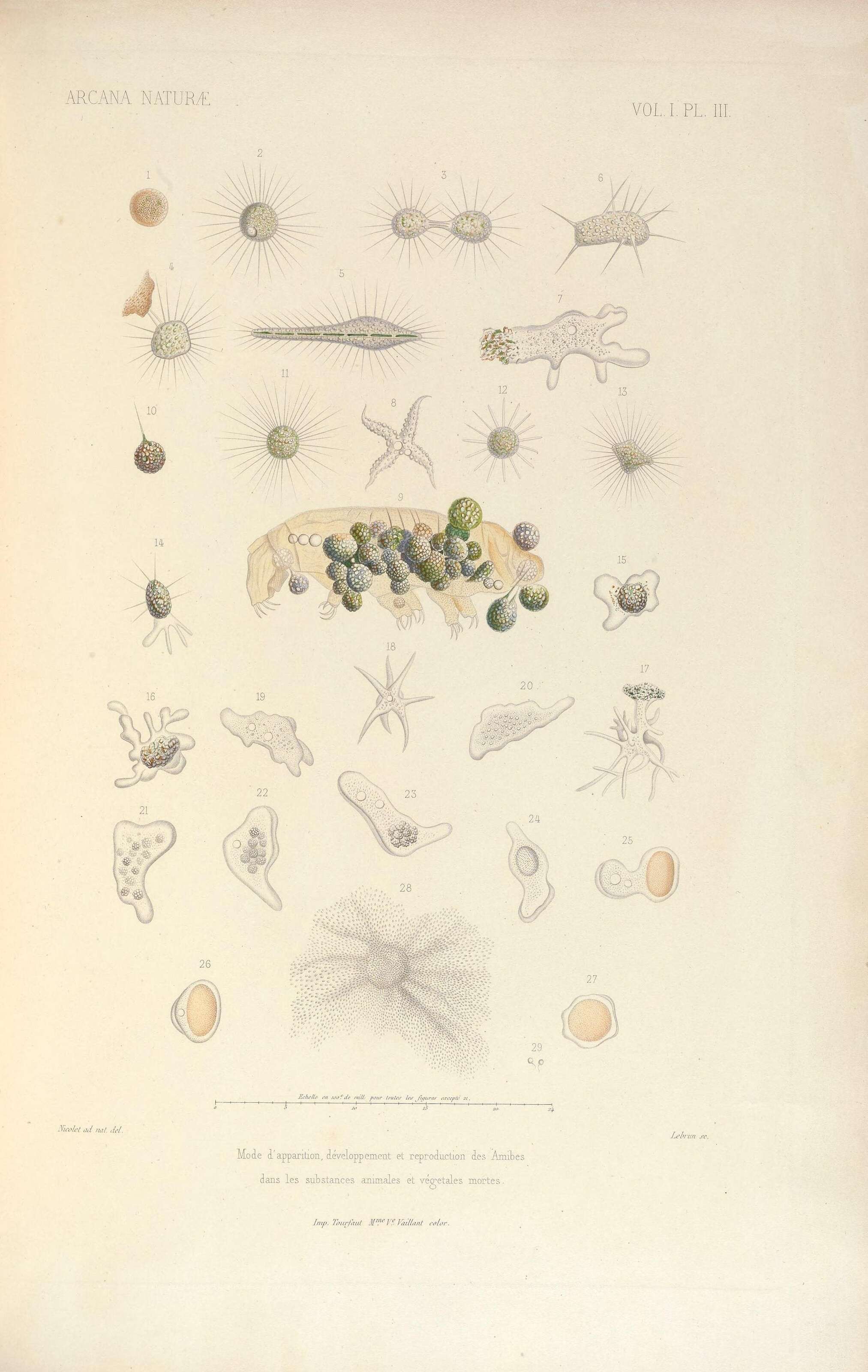
Sign in to saveThe Amoebidae are a family of Amoebozoa, including naked amoebae that produce multiple pseudopodia of indeterminate length. These are roughly cylindrical with granular endoplasm and no subpseudopodia, as found in other members of the class Tubulinea. During locomotion one pseudopod typically becomes dominant and the others are retracted as the body flows into it. In some cases the cell moves by "walking", with relatively permanent pseudopodia serving as limbs.
Species
FAMILY
- KingdomProtozoa
- PhylumAmoebozoa
- ClassLobosa
- OrderAmoebida
- FamilyAmoebidae
Los amébidos (Amoebidae) son una familia de Amoebozoa que incluye a amebas desnudas que producen múltiples seudópodos de longitud indeterminada.[1][2][3] Estos son de forma aproximadamente cilíndrica con endoplasma granular y sin subseudopodia, como ocurre en otras familias de la clase Tubulinea. Durante la locomoción, uno de los seudópodos típicamente llega a ser dominante y los otros son retractados mientras el cuerpo fluye dentro de él. En algunos casos, la célula se mueve "caminado", con seudópodos relativamente permanentes que les sirven como miembros. Los géneros más importantes son Amoeba y Chaos, que se distinguen de los demás por presentar crestas longitudinales. Referencias ↑ Smirnov, A. V., & Brown, S. (2004). Guide to the methods of study and identification of soil gymnamoebae. Protistology, 3(3), 148-190. ↑ Smirnov, A., Nassonova, E., Berney, C., Fahrni, J., Bolivar, I., & Pawlowski, J. (2005). Molecular phylogeny and classification of the lobose amoebae Archivado el 5 de enero de 2016 en Wayback Machine.. Protist, 156(2), 129-142. ↑ Smirnov, A. V., Chao, E., Nassonova, E. S., & Cavalier-Smith, T. (2011). A revised classification of naked lobose amoebae
via GBIF
Wikidata facts
Show 5 more facts
- taxon name
- Amoebidae
- taxon rank
- family
- topic's main category
- Category:Amoebidae
- Commons category
- Amoebidae
- taxon common name
- 真正アメーバ科
Sources (1)
via Wikidata · CC0
~1 min read
Encyclopedic overview
1 sectionsContents
- References
The Amoebidae are a family of Amoebozoa, including naked amoebae that produce multiple pseudopodia of indeterminate length. These are roughly cylindrical with granular endoplasm and no subpseudopodia, as found in other members of the class Tubulinea. During locomotion one pseudopod typically becomes dominant and the others are retracted as the body flows into it. In some cases the cell moves by "walking", with relatively permanent pseudopodia serving as limbs.
The most important genera are Amoeba and Chaos, which are set apart from the others by longitudinal ridges. The best known of the species in this family is Amoeba proteus, commonly used in classrooms to demonstrate movement by pseudopodia.
Excerpted from Wikipedia’s “Amoebidae” article, available under the CC BY-SA 4.0 licence.