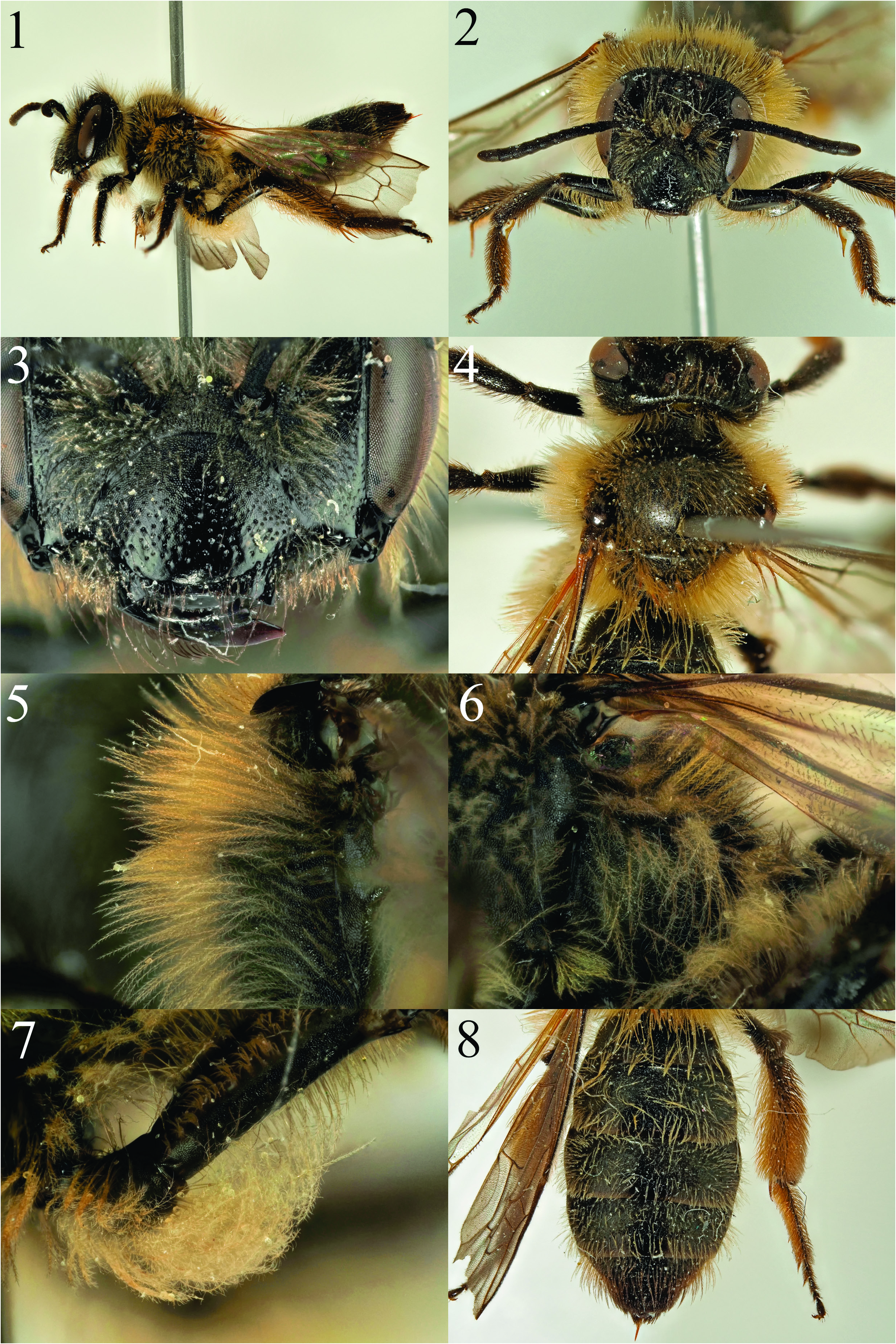
Wood, Thomas J.;Molina, Francisco P.;Bartomeus, Ignasi;Mars, Champs de
Andrena
Sign in to saveAndrena is a genus of bees in the family Andrenidae. With over 1,500 species, it is one of the largest genera of animals. It is a strongly monophyletic group that is difficult to split into more manageable divisions; currently, Andrena is organized into 104 subgenera. It is nearly worldwide in distribution, with the notable exceptions of Oceania and South America. Bees in this genus are commonly known as mining bees due to their ground-nesting lifestyle.
Species
GENUS
- KingdomAnimalia
- PhylumArthropoda
- ClassInsecta
- OrderHymenoptera
- FamilyAndrenidae
Андрены, или земляные пчёлы (лат. Andrena), — крупнейший род пчёл, более 1500 видов которого встречаются почти по всему миру. Это один из 3—4 крупнейших среди всех животных родовой таксон, наряду с мухами рода Drosophila (Diptera) и жуками родов Atheta и Onthophagus (Coleoptera).
via GBIF
Museum specimens
- Specimen records
- 15,154
- With media
- 1,494
- Family
- Andrenidae
- Collections
- ECOSUR
- Recorded in
- Mexico
Wikidata facts
- Instance of
- taxon
- Parent taxon
- Andreninae
- Image
- Bee February 2008-3.jpg
Show 6 more facts
- taxon rank
- genus
- taxon name
- Andrena
- Commons category
- Andrena
- topic's main category
- Category:Andrena
- Commons gallery
- Andrena
- taxon common name
- sandbier
Sources (3)
via Wikidata · CC0
~5 min read
Encyclopedic overview
6 sectionsContents
- Morphology
- Life history
- Distribution
- Species
- References
- External links
Andrena is a genus of bees in the family Andrenidae. With over 1,500 species, it is one of the largest genera of animals. It is a strongly monophyletic group that is difficult to split into more manageable divisions; currently, Andrena is organized into 104 subgenera. It is nearly worldwide in distribution, with the notable exceptions of Oceania and South America. Bees in this genus are commonly known as mining bees due to their ground-nesting lifestyle.
==Morphology== Andrena are generally medium-sized bees; body length ranges between 8 and 17 mm with males being smaller and more slender than females. Most are black with white to tan hair, and their wings have either two or three submarginal cells. They carry pollen mainly on femoral scopal hairs, but many Andrena have an additional propodeal corbicula for carrying some pollen on their thorax. They can be distinguished from other bees by the broad velvety areas in between the compound eyes and the antennal bases, called facial foveae. Some other genera in the family Andrenidae also have foveae though, so the best identifying feature unique to Andrena is the presence of a ring of hairs on the underside of their face called the "subgenal coronet". thumb|Face of Andrena crataegi with foveae visible (shortest hairs near eyes)|none
Excerpted from Wikipedia’s “Andrena” article, available under the CC BY-SA 4.0 licence.