
File:Karta_AngkorWat.PNG · Wikimedia Commons · See Wikimedia Commons
Angkor
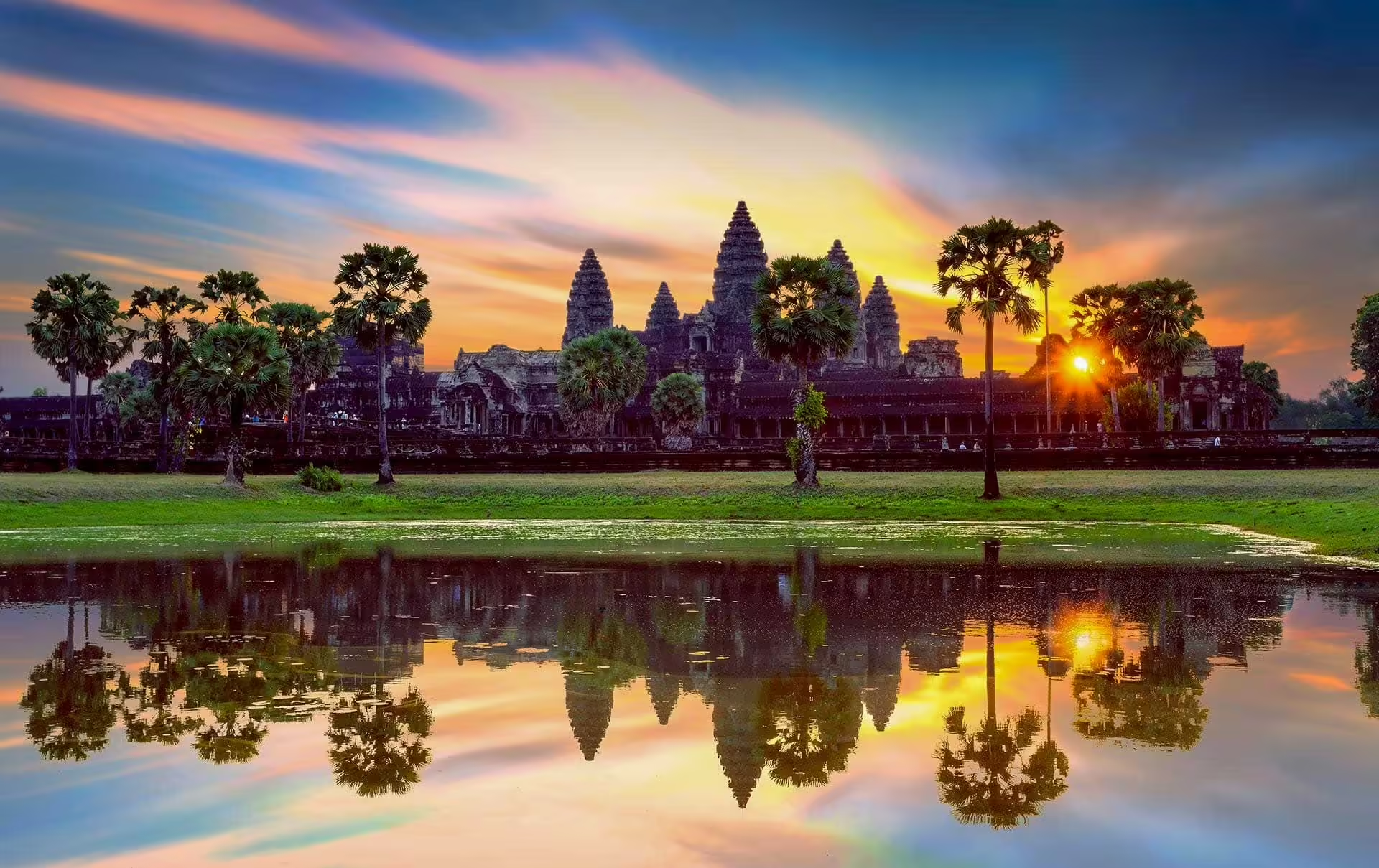
Sign in to saveAngkor ( , 'capital city'), also known as Yasodharapura (; ), was the capital city of the Khmer Empire, located in present-day Cambodia. The empire flourished from approximately the 9th to the 15th centuries. The site of Angkor has a variety of religious temples, libraries, moats, and other buildings. These other buildings could have been used by officials to the grand palace housing the Khmer king. Those constructed outside the main complex were not made of stone. One of the more visited places in Angkor is Angkor Wat, a temple complex that is one of Cambodia's tourist attractions.
OverviewAI-generated
Angkor is a city, ruins, and archaeological site located in Siem Reap Province, Cambodia. It has served as the capital of the Khmer Empire. The area covers 35,100 square units and sits at an elevation of 19 meters. Its native label is ក្រុងអង្គរ.
The site includes parts such as Angkor Wat, Angkor Thom, Baksei Chamkrong, and Banteay Kdei. It is listed on the list of World Heritage in Danger. Angkor is described in sources including the Brockhaus and Efron Encyclopedic Dictionary and the Encyclopædia Britannica 11th edition.
Synthesized by Vinony from 43 facts across 7 sources: Wikidata, Open Meteo, Openweathermap, OpenStreetMap, Firecrawl, Vinony graph, Geo. Generated from structured data (not the Wikipedia text) and checked against those facts — may still contain errors.
Weather now
7-day forecast
via Open-Meteo
Place details
- Locality
- ក្រុងសៀមរាប
- Region
- ខេត្តសៀមរាប
- Country
- ព្រះរាជាណាចក្រកម្ពុជា
via OpenStreetMap · GeoNames
Key facts
- Ancient site.name
- Angkor
- Ancient site.native_name
- អង្គរ
- Ancient site.native_name_lang
- km
- Ancient site.alternate_name
- Yasodharapura
- Ancient site.image_size
- 250
- Ancient site.caption
- Angkor Wat complex
- Ancient site.map_type
- Cambodia
- Ancient site.map_caption
- Location in Cambodia
- Ancient site.map_size
- 250
- Ancient site.relief
- yes
- Ancient site.map_dot_label
- Angkor
- Ancient site.location
- Siem Reap, Cambodia
- Ancient site.region
- Southeast Asia
- Ancient site.type
- Archaeological site
- Ancient site.builder
- Suryavarman II
- Ancient site.built
- late 9th century AD
- Ancient site.abandoned
- 1431 AD
- Ancient site.epochs
- Post-classical
via Wikipedia infobox
Described at
Angkor: mesto chrámov a tajomstiev - Kambodža - PlaceMania
Angkor je obrovské khmérske mesto chrámov, ktoré vyrástlo na vode, ryži a viere v boha-kráľa. Ako sa zmenilo na ruiny pohltené džungľou?
placemania.sk →Na priesečníku indického a čínskeho sveta, v priestore dnešnej Kambodže, vznikla jedna z najpozoruhodnejších civilizácií starého sveta. Khméri neboli izolovaným národom na okraji dejín – naopak, stáli uprostred obchodných, náboženských a kultúrnych prúdov juhovýchodnej Ázie. Práve z tohto napätia medzi domácimi tradíciami a prevzatými ideami vyrástol Angkor: mesto, ktoré bolo zároveň politickým centrom, náboženským symbolom aj technickým zázrakom. Khmérska ríša bola – podobne ako Egypt či Mezopotámia – štátom vody. Nie v symbolickom, ale v doslovnom zmysle. Celá jej existencia závisela od schopnosti regulovať tok riek, zachytávať monzúnové dažde a premieňať krajinu na presne riadený poľnohospodársky systém. Zavlažovacie kanály a obrovské vodné nádrže umožňovali viacnásobnú úrodu ryže ročne. Prebytky neznamenali len sýte obyvateľstvo, ale aj čas, pracovnú silu a bohatstvo – základné predpoklady na stavbu monumentálnych chrámov. Angkor nebol mestom v modernom slova zmysle. Bol to rozľahlý, rozptýlený urbánny organizmus, ktorého jednotlivé časti spájali kanály, hrádze a cesty. Dnes sprístupnené územia presahujú dvesto štvorcových kilometrov, no niektoré odhady hovoria o niekoľkonásobne väčšej rozlohe. V čase najväčšieho rozkvetu tu žili státisíce ľudí a ďalší milión v okolí – čísla, ktoré robia z Angkor jedno z najväčších miest stredovekého sveta. Khmérska spoločnosť bola prísne hierarchická. Na jej vrchole stál kráľ, ktorého nepovažovali len za vládcu, ale za pozemské vtelenie božskej moci. Kult boha-kráľa nebol metaforou – bol základom legitimity štátu. Náboženstvo sa vyvíjalo: pôvodné miestne predstavy sa postupne prelínali s hinduizmom, neskôr s budhizmom, no vždy si zachovali osobitý khmérsky charakter. Chrám nebol len miestom uctievania. Bol obrazom vesmíru. Jeho pôdorys, orientácia, terasy a veže mali kozmologický význam. Stavby ako Angkor Wat neboli navrhnuté pre masy veriacich, ale pre rituál, moc a symbol. Angkor Wat, zasvätený hinduistickému bohu Višnuovi, sa stal nielen najväčším chrámovým komplexom ríše, ale pravdepodobne aj najväčším náboženským monumentom, aký kedy ľudstvo postavilo. Jeho veže sa dvíhajú ako kamenný odraz posvätnej hory Méru, osi sveta v hinduistickej kozmológii. Jedným z dôvodov, prečo dnes Angkor vnímame ako mesto chrámov, je paradox materiálov. Chrámy, štátne svätyne a niektoré rituálne stavby boli budované z pieskovca a tehál. Paláce, obytné domy, trhy a administratívne budovy však vznikali prevažne z dreva. Keď sa mesto vyľudnilo a údržba prestala fungovať, drevo podľahlo klíme, hmyzu a času. Kameň prežil. To, čo dnes obdivujeme, je teda len kostra niekdajšieho sveta. Chrámové veže trčiace z džungle pôsobia majestátne, no zároveň klamlivo – vytvárajú dojem, že Angkor bol predovšetkým náboženským komplexom. V skutočnosti išlo o pulzujúcu metropolu, ktorej každodenný život sa takmer úplne stratil. Zlatý vek Khmérskej ríše sa spája s vládou Džajavarmana VII. na prelome 12. a 13. storočia. Tento panovník nielen porazil Čamov, dlhoročných nepriateľov ríše, ale zároveň zásadne pretvoril duchovnú tvár štátu. Prijal budhizmus a zasvätil mu nové hlavné mesto Angkor Thom. Jeho centrom sa stal chrám Bajon so slávnymi kamennými tvárami, ktoré dodnes vyvolávajú otázky: koho vlastne zobrazujú? Budhu? Kráľa? Alebo ideálnu podobu božskej moci? Angkor Thom bol obohnaný mohutnými múrmi a vodnou priekopou. Navonok symbol sily, vnútri však už systém, ktorý narážal na vlastné limity. Zavlažovacia sústava, ktorá stáročia prinášala prosperitu, sa postupne stávala príliš zložitou a náročnou na údržbu. Stačila séria klimatických výkyvov, zmeny monzúnov či zanedbanie infraštruktúry – a rovnováha sa začala rúcať. Úpadok Angkoru neprišiel náhle. Bol tichý, pomalý a systémový. Premenená krajina začala pracovať proti svojim tvorcom. Rozsiahly zavlažovací systém sa postupne stal nestabilným: niektoré oblasti trpeli zanášaním kanálov a zadržiavaním vody, inde naopak dochádzalo k výpadkom regulácie a vysychaniu polí.
Excerpt from a page describing this subject · 22,077 chars · not written by Vinony
Wikidata facts
- Instance of
- archaeological site
- Has part
- Preah Ko
- Country
- Cambodia
- Located in
- Siem Reap Province
- Area
- 35100
- Capital of
- Khmer Empire
- Official website
- www.angkorenterprise.gov.kh
- Image
- Angkor Wat W-Seite.jpg
Show 6 more facts
- Commons category
- Angkor
- topic's main category
- Category:Angkorian sites
- Commons gallery
- ក្រុងអង្គរ
- P12749
- June 16
- native label
- ក្រុងអង្គរ
- described at URL
- www.placemania.sk/svetova-zaujimavost/zrucaniny-chramov-v-angkor
via Wikidata · CC0
Travel guide
Understand
Stretching over 400 km2, including forested area, Angkor Archaeological Park contains the magnificent remains of several capitals of the Khmer Empire of the 9th to the 15th centuries, including the largest pre-industrial city in the world. The most famous are the Temple of Angkor Wat and, at Angkor Thom, the Bayon Temple with its countless sculptural decorations.
Angkor Archaeological Park was declared a UNESCO World Heritage site in 1992. At the same time, it was also placed on the List of World Heritage in Danger due to looting, a declining water table, and unsustainable tourism. UNESCO has now set up a wide-ranging programme to safeguard this symbolic site and its surroundings.
Angkor has no accommodations and few facilities; the nearby town of Siem Reap, 6 km south, is the tourist hub for the area. You will likely be refused entry to certain sites, such as the highest tier of Angkor Wat, if you are deemed not to be dressed appropriately. This means your shoulders and knees should be covered: a scarf over your shoulders may not be accepted.
Get in
thumb|240px|Central tower, Angkor Wat Temple
Angkor is about 20 minutes to the north, by car or motorbike, from central Siem Reap. See the Siem Reap article for details on getting to the town. See "Get around" below for details on getting from the town to the Angkor.
Get around
Generally speaking, two half-day tour options are offered, sun-rise (ends at the hottest time of day) and late morning (which includes sunset). Both last 4-6 hr depending on your tour.
Tour buses feature guided, air-conditioned comfort but also are subject to large crowds and lack of options. Be sure you know which temples are being visited as some of the larger buses only go to the 2 or 3 main tourist attractions, and leave out important "secondary" sights. The cost is US$25–70/day including driver and guide.
Cars with drivers can be hired for single or more days. While all drivers are familiar with the area and happy to suggest good routes, most speak little English and are not actual tour guides. For an actual licensed tour guide, the charge varies from US$45–50/day for a driver and English-speaking guide. It is customary for the drivers to ask for US$5–10 extra for trips to further temples such as those of the Big Circuit, Banteay Srey and more for remote sites like Beng Mealea.
Motorbikes (with drivers) can be arranged through any guesthouse for about US$6–8/day. Again, drivers might ask for more to visit remote ruins. Some drivers can speak a bit of English, and can give you information about Angkor and Cambodian life. Drivers are required to be licensed and must wear their gray numbered vest while travelling within the confines of the Angkor park. The rental of motorbikes without a driver to foreigners in Siem Reap is discouraged and if stopped by a police officer, …
See
400px|thumb|Map of temple locations in Angkor Archaeological Park
Guides can be hired for about US$20 a day and are available for most major languages. Hiring a guide for at least the first day can help you get orientated to the temples and are particularly useful for finding and explaining the bas-reliefs, which can otherwise be rather overwhelming and/or difficult to understand. Guide books are also useful.
Ancient Angkor, a guidebook that is hawked at every temple, is surprisingly good. Particularly if you are interested in the carvings on the walls and towers, the book will keep you occupied for hours. If you don't want to pay money to hear a local tell you about the temples in broken English this is a good option. Authored by Michael Freeman and Claude Jacques, the cover price is US$27.95 at bookstores. Brand new copies are sold by vendors for US$14 but you can easily haggle to US$6 or US$7, and the price amazingly drops to US$1 by the end of the day, even in peak season.
The , beside the ticket office, is closed (Feb 2020) because of international sanctions against North Korea, which built and operated the museum.
Be sure to get to the temples early. You can enter the park beginning at 05:00; the temples open at sunrise. There are fewer visitors early in the morning, and the sun isn't at full force. Arriving at the temples at 08:00 instead of 09:00 can make all the difference in staying one step ahead of the crowds.
The temples can broadly be categorized into four …
Buy
Souvenirs are also sold in front of all temples. Bargain, but not too hard: many souvenir sellers live within the park and, being banned from farming on their own land, have to resort to this to make a living. Please do not encourage children who pester tourists in the temples themselves to give money or buy postcards. Spread your tourism dollars around—most temples have the same offerings, so buy your souvenirs and gifts for friends back home from several shops, from several temples if possible, especially the less-visited ones.
Ancient Angkor, a guidebook that is hawked at every temple, authored by Michael Freeman and Claude Jacques; the cover price is US$27.95 at bookstores. Brand new copies are sold by vendors for US$14 but can be sold for as little as US$1 in the afternoon without haggling. Alternatively, the book is available for rental online for free through the Internet Archive. The guidebook is detailed, and remains the best introduction to the temples that you can find.
There are several decent souvenir shops around the old market. One of the shops called "Black Garuda" has some original key holders and mobile straps and they donate some of your purchase to land mine victims.
Eat
Despite a ban on development and commercial activity, dozens of small noodle and snack shops have sprung up near the major attractions of Angkor Wat and Angkor Thom. The listed prices are high (US$4–7 for mediocre food), but shopkeepers may be willing to bargain. During summer low season, you can bring the price of a good lunch down to as low as US$1 for a dish and US$0.50 for a drink. Their flocks of five year old emissaries aren't likely to hold price-cutting authority. However, avoid hard or aggressive bargaining, either because the odd dollar is nothing to you but can be significant to a local, and also it is unwise to offend or upset anybody before they prepare your meal! You'll also find some local people selling fresh pineapples and mangoes (beautifully cut) and bunches of little bananas for about US$1 a piece. Also try the seasonal toddy palm fruit, a hollow sack as soft as jelly at 4 pieces for US$1 sold at the roadside to Bantay Samre and at temple refreshment stalls.
If a tuk-tuk driver brings you to a restaurant, he gets a commission – which means you'll be paying more for the meal and it won't be easy to bargain. Try to find a restaurant yourself and it'll be much easier to get an inexpensive meal.
The modern Angkor Cafe lies just outside Angkor Wat's main entrance, and also doubles as a crafts shop, with fine works from the Artisans d'Angkor shop, where they train locals in the arts. Their prices are on the high side for Cambodia, but very reasonable for Weste…
Drink
Soft drinks are hawked by stalls in front of practically every temple. As you might expect, prices are inflated: US$1 for a can of soft drink look to beer, or two cold 500-ml bottles of water is more or less standard; $2 is not uncommon (Feb 2020).
In warm weather, the temples are extremely hot and it may be worth buying and carrying large bottles of water.
Sleep
There are no accommodations within the park, and camping is not permitted. Like most tourists you will find yourself staying in Siem Reap, with a multitude of options ranging from grubby little guest houses to upmarket hotels and villas. See Siem Reap for more details on accommodation options.
Stay safe
By local regulation, motorcycle and tuk-tuk drivers must at all times wear a numbered vest when on the job, which goes a long way towards preventing hassles and scams. However, a disturbing number of rapes continue to happen, especially after dark and in the more secluded temples, so it's advised that women not travel alone.
Visiting the temples, beware of off-duty police officers, in uniform, who start walking beside you and start showing you around the temples. At this point either say that you would like to see the temples yourself, or agree on a price at the start. Several people have been charged a fee of over US$10 at the end of the temple tour and you are not going to argue with a member of the police force. The official wage for a police officer is very low, so they can easily double their salary by being tourist guides.
Beware of anyone offering you incense. They will hand you the incense and then "teach" you a blessing. They will then ask for a donation (generally about US$10) for the monks and the upkeep of the temple. None of the funds will make it to either of these causes, so it's best just to say a quick "No thank you" when they try to give you the incense in the first place.
Tourists mulling over whether to rent a tour bike: have no fear. Parking is never a problem and not in the warden's wildest dream that a bike parked besides an attraction will get lost or stolen, locked or not. In small temples it surely is easy to park and leave. Bikes are parked acros…
Stay healthy
Touring the temples is a hot and sweaty job, so bring sunblock and keep yourself well hydrated. Some of the temples, notably the uppermost level of Angkor Wat, require climbs up very steep staircases and are best avoided if you suffer from vertigo or are not fully confident of being able to keep your footing.
Malaria is not endemic around the temple complex; however, it is recommended to seek medical advice before you travel as conditions may change.
Don't feed or approach the monkeys who lurk around some sites: many are ill-tempered and will bite at the slightest provocation, and will often attempt to steal anything they can get their hands on. If a monkey jumps on you, stay calm, and do not make any sudden movements until it climbs off you, as moving rapidly is a great way to get bitten.
Travel guide from Wikivoyage (CC BY-SA 4.0)
~39 min read
Encyclopedic overview
32 sectionsContents
- Archaeological overview
- Construction of the buildings in Angkor
- Roads and Canals
- Historical overview
- Seat of the Khmer Empire
- Jayavarman VII
- Zhou Daguan
- End of the Angkorian period
- War with the Ayutthaya Kingdom
- Erosion of the state religion
- Neglect of public works
- Natural disaster
- Restoration, preservation, and threats
- Water-table dropping
- Looting
- Unsustainable tourism
- Religious history
- Pre-Angkorian religion
- Shiva and the lingam
- Vaishnavism
- Mahayana Buddhism
- Hindu restoration
- Religious pluralism
- Theravada Buddhism
- Archaeological sites
- Notable people
- Terms and phrases
- See also
- References
- Bibliography
- Further reading
- External links
Angkor ( , 'capital city'), also known as Yasodharapura (; ), was the capital city of the Khmer Empire, located in present-day Cambodia. The empire flourished from approximately the 9th to the 15th centuries. The site of Angkor has a variety of religious temples, libraries, moats, and other buildings. These other buildings could have been used by officials to the grand palace housing the Khmer king. Those constructed outside the main complex were not made of stone. One of the more visited places in Angkor is Angkor Wat, a temple complex that is one of Cambodia's tourist attractions.
The name Angkor is derived from nokor (), a Khmer word meaning "kingdom" which in turn derived from Sanskrit nagara (), meaning "city". The Angkorian period began in AD 802, when the Khmer Hindu monarch Jayavarman II declared himself a "universal monarch" and "god-king", and lasted until the late 14th century, first falling under Ayutthayan suzerainty in 1351. A Khmer rebellion against Siamese authority resulted in the 1431 sacking of Angkor by Ayutthaya, causing its population to migrate south to Longvek. The alternate name, Yasodharapura, was derived from the name of the foster mother of Lord Krishna in Hinduism this temple was completed around 921. Hinduism was the dominant religion in the ancient Khmer Empire, and many temples constructed by Khmer kings were dedicated to Hindu deities, including Angkor Wat.
Excerpted from Wikipedia’s “Angkor” article, available under the CC BY-SA 4.0 licence.
Gallery (46)
On the map
12 mapped locations
Available in 77 languages
- Español
- Français
- Deutsch
- 中文
- 日本語
- Русский
- Português
- Italiano
- العربية
- हिन्दी
- Afrikaans
- Albanian
- Armenian
- Awadhi
- Azerbaijani
- Bahasa Indonesia
- Basque
- Bavarian
Show 58 more
- Belarusian
- Breton
- Bulgarian
- Catalan
- Croatian
- Czech
- Danish
- Egyptian Arabic
- Esperanto
- Estonian
- Filipino
- Finnish
- Galician
- Georgian
- Greek
- Hebrew
- Hungarian
- hyw
- Icelandic
- Interlingua
- Javanese
- Kazakh
- kbp
- Khmer
- Kyrgyz
- Latin
- Latvian
- Lithuanian
- Luxembourgish
- Maithili
- Malay
- Malayalam
- Marathi
- Mazanderani
- Mongolian
- Nederlands
- Nepali
- Norwegian
- Norwegian Nynorsk
- Occitan
- Quechua
- Serbian
- Serbian (Latin)
- Slovak
- Slovenian
- Svenska
- Tajik
- Tamil
- Tiếng Việt
- Türkçe
- Ukrainian
- Waray
- Wu Chinese
- zh_min_nan
- zh_yue
- فارسی
- ไทย
- 한국어
via Wikidata sitelinks · CC0