Anna Botsford Comstock
Sign in to saveAlso known as Anna Botsford, Anna Comstock, Anna B. Comstock, A. B. Comstock
American academic, artist, educator, conservationist (1854–1930)
Person · Open Library
- Born
- 1854
- Died
- 1930
- Works
- 14
Top works
- How to Keep Bees
- How to Keep Bees. by
- Handbook Of Nature Study
- How to Keep Bees; a Handbook for the Use of Beginners
- A manual on the study of insects
via Open Library + Wikidata
Listeners · Last.fm
- Listeners
- 2
- Total plays
- 20
<a href="https://www.last.fm/music/Anna+Botsford+Comstock">Read more on Last.fm</a>
Described at
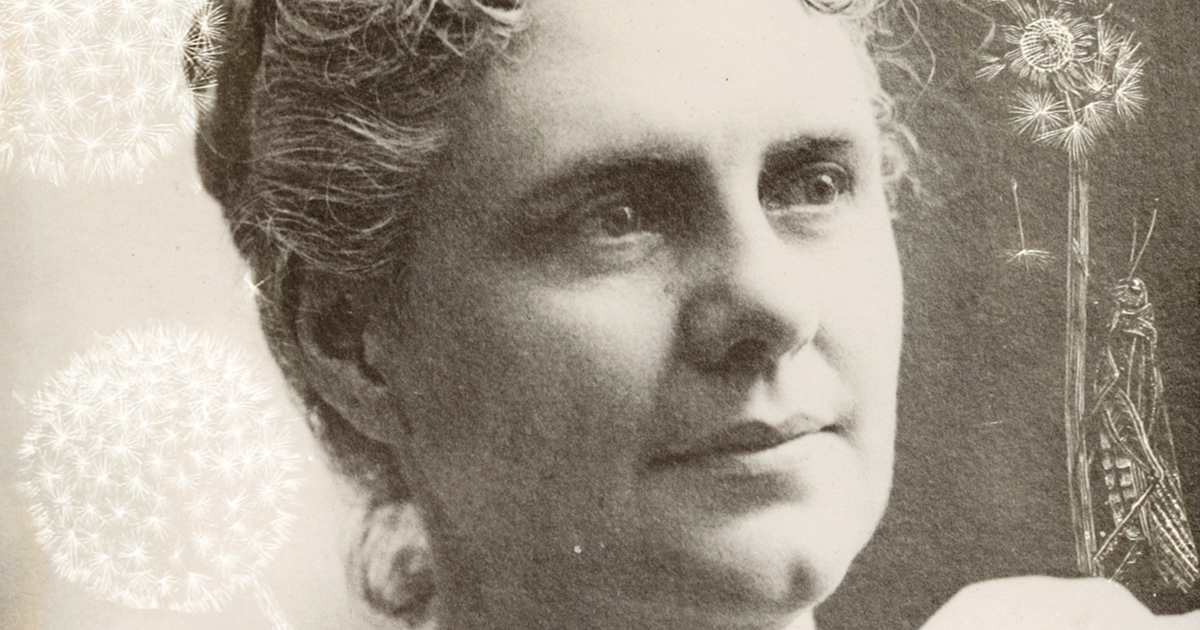
The Century-Old Field Guide to Wonder and the Forgotten Woman Who Laid the Groundwork for the Youth Climate Action Movement – The Marginalian
themarginalian.org →“Children in wonder watching the stars, is the aim and the end,” Dylan Thomas wrote in his spare, stunning poem about trees, truth, and the human animal’s most self-savaging loss of perspective. “The trees, sunrise and sunset — the lake the moon and the stars… the poets have been right in these centuries,” Lorraine Hansberry wrote as she reached for the surest salve from the pit of her depression. When the early twentieth century clawed at the wound with its increasingly industrialized model of education, preparing children for lives of conspicuous consumption and nursing them on the illusion of nature as a parallel worlds , the artist, naturalist, philosopher, entomologist, and educator Anna Botsford Comstock (September 1, 1854–August 24, 1930) set out to provide an antidote in her wonderful Handbook of Nature Study ( public library public domain ). A generation after astronomer Maria Mitchell swung open the portal of possibility in higher education for women, Anna entered Cornell University to study zoology, botany, and other natural sciences. She took an entomology course with John Henry Comstock, whose work laid the foundation for the modern classification of butterflies, moths, and scale insects. To both of their surprise and mutual delight, they fell in love. Three years later, without graduating, she married him. In another three years, she returned to Cornell to finish her studies, emerging with a degree in natural history. She went on collaborating with John on joint entomological studies and illustrating his works. Art by Jackie Morris from The Lost Words by Robert Macfarlane — a visual dictionary of poetic spells resisting the erasure of nature’s language from our cultural lexicon. A century before the Oxford Children’s Dictionary dropped fifty nature-words as irrelevant to modern children’s lexicon and imagination, a century before young people rose up by the millions to undo the past’s disregard for nature that imperils their future, Comstock insisted that “it is a great asset to the conservation of our natural resources to have the children of our land be interested in the wild life in such a chummy and intimate manner.” Half a century before Rachel Carson awakened the modern ecological conscience with her scientific-poetic ethos that “there is in us a deeply seated response to the natural universe, which is part of our humanity,” Comstock highlighted our kinship with microbe and mammoth, with dolphin and dandelion, believing that an understanding of this interdependence would awaken in us “a sensible altruism and humanness” to bring into our relationship with nature — which is, at bottom, our relationship with ourselves and each other. She saw children as children, pure-hearted and large-eyed with wonder. She saw them as emissaries of the forgotten parts of ourselves and as “future citizens.” And so everything she wrote that references the child can be read as addressing each one of us — for, as Wild Things creator Maurice Sendak knew, the most difficult and rewarding triumph of adulthood is “having your child self intact and alive and something to be proud of.” (This elemental truth is why I cherish “children’s” books as incomparable existential handbooks to self-knowledge and reality-knowledge — training ground for attentive intimacy with nature and its expression in human nature — and why I occasionally write some .) Nature-study cultivates the child’s imagination, since there are so many wonderful and true stories that he may read with his own eyes, which affect his imagination as much as does fairy lore; at the same time nature-study cultivates in him a perception and a regard for what is true, and the power to express it. All things seem possible in nature; yet this seeming is always guarded by the eager quest of what is true. Perhaps half the falsehood in the world is due to lack of power to detect the truth and to express it. Nature-study aids both in discernment and in expression of things as the
Excerpt from a page describing this subject · 17,580 chars · not written by Vinony
Wikidata facts
- Instance of
- human
- Given name
- Anna
- Gender
- female
- Citizenship
- United States
- Place of birth
- Otto
- Place of death
- Ithaca
- Spouse
- John Henry Comstock
- Occupation
- writer
- Educated at
- Cornell University
- Employer
- Cornell University
- Languages spoken
- English language
- Image
- Anna Botsford Comstock ca. 1900.jpg
Show 8 more facts
- date of birth
- 1854-09-01
- date of death
- 1930-08-24
- Commons category
- Anna Botsford Comstock
- birth name
- Anna Botsford
- Commons Creator page
- Anna Botsford Comstock
- pseudonym
- Marian Lee
- has works in the collection
- National Gallery of Art
Sources (2)
via Wikidata · CC0