Encyclopedia of Life · EOL (see source)
OverviewAI-generated
The Antarctic Tern (*Sterna vittata*) is a species of bird in the family Laridae, order Charadriiformes, class Aves, and phylum Chordata. Its scientific name was established by Gmelin in 1789, and the taxon is currently accepted. The species has a wingspan of 76.5, a mass of 139, and a longest observed lifespan of 18. It inhabits marine environments and has a range that includes Brazil, South America, and Africa.
Reproductive characteristics include a litter size of 2 and an egg incubation period of 24. The IUCN Red List assessed the species as Least Concern in 2019. Other common names for this taxon include môr-wennol y De, Antarktikseeschwalbe, and Charrán antártico.
Synthesized by Vinony from 26 facts across 5 sources: Wikidata, WoRMS, IUCN Red List, Encyclopedia of Life, Vinony graph. Generated from structured data (not the Wikipedia text) and checked against those facts — may still contain errors.
Species
Least ConcernAntarctic tern
Species
- PhylumChordata
- ClassAves
- OrderCharadriiformes
- FamilyLaridae
Антарктическая крачка (лат. Sterna vittata) — вид птиц из семейства чайковых (Laridae).
via IUCN
Wikidata facts
Show 10 more facts
- taxon rank
- species
- IUCN conservation status
- Least Concern
- Commons category
- Sterna vittata
- taxon name
- Sterna vittata
- taxon common name
- gaivina-do-antártico
- wingspan
- 76.5
- egg incubation period
- 24
- litter size
- 2
- longest observed lifespan
- 18
- taxon range
- Africa
via Wikidata · CC0
~9 min read
Encyclopedic overview
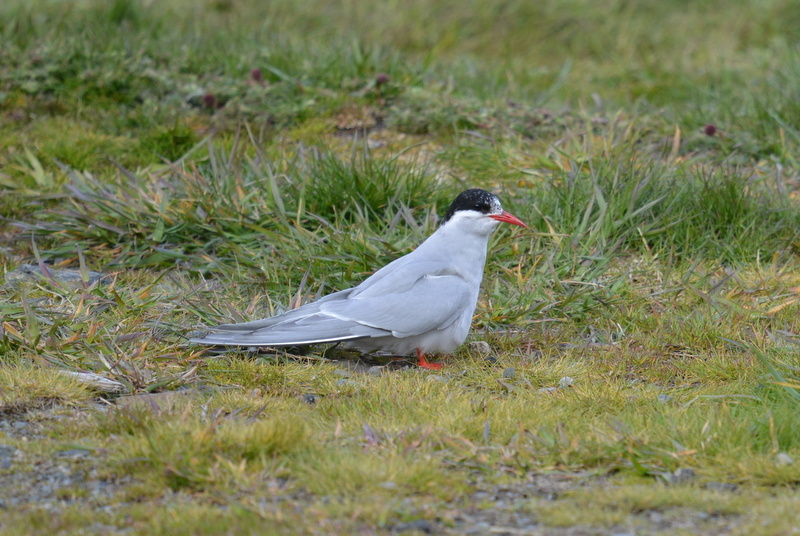
The Antarctic tern (Sterna vittata) is a seabird in the family Laridae. It ranges throughout the southern oceans and is found on small islands around Antarctica as well as on the shores of the mainland. Its diet consists primarily of small fish and crustaceans. It is very similar in appearance to the closely related Arctic tern, but it is stockier, and it is in its breeding plumage in the southern summer, when the Arctic tern has shed old feathers to get its non-breeding plumage. The Antarctic tern does not migrate like the Arctic tern does, but it can still be found on a very large range. This tern species is actually more closely related to the South American tern.
Gulls, skuas and jaegers are the primary predators of the bird's eggs and young.
Excerpted from Wikipedia’s “Antarctic Tern” article, available under the CC BY-SA 4.0 licence.