
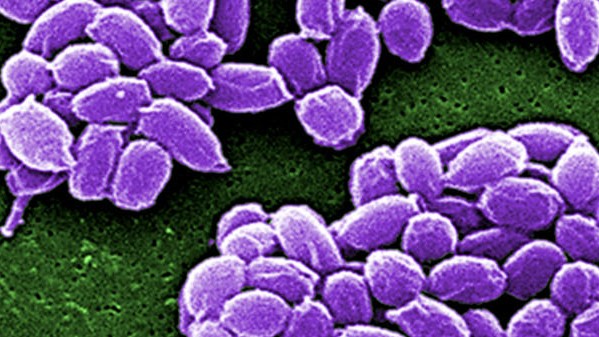
File:Anthrax_PHIL_2033.png · Wikimedia Commons · See Wikimedia Commons
antrace
Sign in to saveAlso known as anthrax disease, Bacillus anthracis infection, woolsorters' disease, woolsorter's disease
malattia
OverviewAI-generated
Anthrax is a serious bacterial disease found naturally in soil that affects animals and people. The condition is documented in medical classification systems, including ICD-9-CM codes 022.9, 022, and 022.8. It is also identified by the NCI Thesaurus ID C84565 and the Open Biomedical Ontology identifier DOID:7427.
Information regarding the disease is available through the Centers for Disease Control and Prevention. The subject is referenced by 887 other encyclopedia articles and has an associated category on Wikimedia Commons titled "Anthrax (disease)."
Synthesized by Vinony from 13 facts across 4 sources: Wikidata, PubMed, Firecrawl, Vinony graph. Generated from structured data (not the Wikipedia text) and checked against those facts — may still contain errors.
Key facts
- Medical condition (new).name
- Anthrax
- Medical condition (new).image
- Anthrax PHIL 2033.png
- Medical condition (new).caption
- A skin lesion with black eschar characteristic of anthrax
- Medical condition (new).field
- Infectious disease
- Medical condition (new).symptoms
- Skin form: small blister with surrounding swellingInhalational form: fever, chest pain, shortness of breathIntestinal form: nausea, vomiting, diarrhea, abdominal painInjection form: fever, abscess
- Medical condition (new).onset
- 1 day to 2 months post contact
- Medical condition (new).causes
- Bacillus anthracis
- Medical condition (new).risks
- Working with animals; travelers, postal workers, military personnel
- Medical condition (new).diagnosis
- Based on antibodies or toxin in the blood, microbial culture
- Medical condition (new).prevention
- Anthrax vaccination, antibiotics
- Medical condition (new).treatment
- Antibiotics, antitoxin
- Medical condition (new).prognosis
- 20–80% die without treatment
- Medical condition (new).frequency
- >2,000 cases per year
via Wikipedia infobox
Research
8,651 papersvia PubMed
Described at
About Anthrax | Anthrax | CDC
Anthrax is a serious bacterial disease found naturally in soil that affects animals and people.
cdc.gov →Anthrax can cause severe illness in both people and animals. The bacteria that cause anthrax occur naturally in soil worldwide. People usually get anthrax from infected animals or contaminated animal products. Call a healthcare provider immediately if you think you have been exposed to anthrax. Anthrax is a serious disease usually caused by Bacillus anthracis bacteria. The bacteria are found naturally in soil around the world and often affect livestock and wild animals. People usually get sick if they come in contact with anthrax spores in infected animals or contaminated animal products. People can get anthrax spores in a cut or scrape in the skin, breathe them in, or eat food or drink water contaminated with spores. Livestock and wild animals can become infected when they breathe in, eat, or drink spores in contaminated soil, plants, or water. These animals can include cattle, sheep, goats, antelope, and deer. Anthrax is rare in the United States. However, occasional outbreaks happen in wild and domestic grazing animals such as cattle or deer. In the United States, veterinarians recommend yearly vaccination of livestock in areas where animals have had anthrax in the past. The type of illness a person develops depends on how anthrax spores enter the body: through the skin, lungs, or gastrointestinal system. All types of anthrax can cause severe illness or death if they're not treated with antibiotics. Cutaneous anthrax happens when anthrax spores get into a cut or scape on the skin when a person handles infected animals or contaminated animal products like wool, hides, or hair. It mostly shows up on the head, neck, forearms, and hands. It's the most common form of anthrax infection, and it's also considered the least deadly. Inhalation anthrax can occur when a person breathes in anthrax spores. It's the deadliest form of the disease. People who work in places such as wool mills, slaughterhouses, and tanneries may breathe in the spores when working with infected animals or contaminated animal products. Inhalation anthrax starts in the lymph nodes in the chest before spreading throughout the rest of the body. This type of anthrax can happen when a person eats raw or undercooked meat from an infected animal. It has rarely been reported in the United States. It affects the upper gastrointestinal tract (throat and esophagus), stomach, and intestines, causing a wide variety of symptoms. Gastrointestinal anthrax is rare in the United States but occurs when a person eats raw or undercooked contaminated meat. Injection anthrax recently was identified in heroin-injecting drug users in northern Europe, but it hasn't been reported in the United States. Injection anthrax is similar to cutaneous anthrax and causes infection deep under the skin or in the muscle where the contaminated drug was injected. Welder's anthrax is a newly identified, rare disease that has been found in people who are welders or metal workers. Anthrax and welder's anthrax are similar, but they are caused by slightly different bacteria and affect different people. This disease causes severe pneumonia and can be fatal. If you are a welder or metalworker and you develop fever and chills with sudden cough, chest pain, difficulty breathing, or coughing up blood, see a healthcare provider immediately. The symptoms of anthrax depend on the type of infection. Symptoms show up anywhere from one day to more than two months after you're exposed to the bacteria that cause anthrax. If you don't get proper treatment, all types of anthrax have the potential to spread through your body and cause severe illness and death. Most people will never be exposed to anthrax. However, there are jobs, hobbies, and activities that can put some people at higher risk of exposure. Most people will never be exposed to anthrax. However, there are jobs, hobbies, and activities that can put some people at higher risk of exposure. These people may be recommended to get anthrax vaccine. Thi
Excerpt from a page describing this subject · 11,260 chars · not written by Vinony
Wikidata facts
- Subclass of
- disease
- Image
- Anthrax PHIL 2033.png
Show 15 more facts
- has natural reservoir
- rabbits and hares
- medical examination
- optical microscope
- anatomical location
- lymph node
- Commons category
- Anthrax (disease)
- topic's main category
- Category:Anthrax
- health specialty
- veterinary medicine
- NCI Thesaurus ID
- C84565
- drug or therapy used for treatment
- erythromycin
- on focus list of Wikimedia project
- WikiProject Medicine
- exact match
- identifiers.org/doid/DOID:7427
- ICD-9-CM
- 022.8
- described at URL
- www.cdc.gov/anthrax
- has cause
- Bacillus anthracis
- described by source
- Encyclopædia Britannica 11th edition
- different from
- Wąglik
Sources (8)
via Wikidata · CC0
Article · Italiano
L'antrace, detta anche "carbonchio" (dal greco άνθραξ, che significa "carbone", dal colore nero delle lesioni cutanee che si sviluppano nelle vittime di questa infezione), è un'infezione acuta causata dal batterio Bacillus anthracis. Generalmente si manifesta come malattia endemica in animali erbivori selvatici o domestici, quali bovini, pecore, cavalli, capre e suini, ma può anche svilupparsi nell'uomo, per esposizione ad animali infetti, tessuti di animali infetti, inalazione di spore del batterio o ingestione di cibo contaminato da queste. Non sono mai stati registrati casi di trasmissione da uomo a uomo per via aerea. Sono rarissimi i casi di contagio per contatto fra umani. Dell'antrace esistono diverse forme differenti per diffusione e pericolosità classificate in base alla via d'ingresso: cutanea, la forma più frequente; polmonare, rara; gastrointestinale, rarissima. L'antrace si trova in tutto il mondo, risultando più comune nei paesi in via di sviluppo o in paesi senza programmi di prevenzione veterinaria. Certe regioni del mondo hanno un'incidenza più alta di antrace tra gli animali: America centrale e meridionale, Europa orientale, Africa, Caraibi e Medio Oriente. I sintomi dell'antrace polmonare sono inizialmente molto simili a quelli di una comune influenza (febbre, tosse, affaticamento), ma nell'arco di tre, quattro giorni degenerano verso un quadro clinico molto più grave, con difficoltà respiratorie, stato di shock e perdita di coscienza. Se non curata, l'infezione di antrace porta alla morte tra i sette e i dieci giorni, con una letalità del 20%, che cresce notevolmente nelle varianti polmonare e intestinale.
Abstract from DBpedia / Wikipedia · CC BY-SA
Gallery (32)
Available in 90 languages
- Español
- Français
- Deutsch
- 中文
- 日本語
- Русский
- Português
- Italiano
- العربية
- हिन्दी
- Afrikaans
- Albanian
- Aragonese
- Armenian
- Asturian
- azb
- Azerbaijani
- Bahasa Indonesia
Show 71 more
- Bangla
- Basque
- be_x_old
- Belarusian
- Breton
- Bulgarian
- Burmese
- Catalan
- Central Kurdish
- Cornish
- Croatian
- Czech
- Danish
- Egyptian Arabic
- Esperanto
- Estonian
- Filipino
- Finnish
- Galician
- Georgian
- gpe
- Greek
- Hebrew
- Hungarian
- Icelandic
- Ido
- Irish
- Javanese
- Kannada
- Kazakh
- Kyrgyz
- Latvian
- Luxembourgish
- Macedonian
- Malay
- Malayalam
- Marathi
- Nederlands
- Norwegian
- Norwegian Nynorsk
- Odia
- Oromo
- Pashto
- Polski
- Romanian
- Serbian
- Serbian (Latin)
- Sicilian
- simple
- Slovak
- Slovenian
- Sundanese
- Svenska
- Swahili
- Tajik
- Tamil
- Tatar
- Tiếng Việt
- Toki Pona
- Türkçe
- Ukrainian
- Urdu
- Uzbek
- Waray
- Welsh
- Wu Chinese
- Yakut
- zh_yue
- فارسی
- ไทย
- 한국어
via Wikidata sitelinks · CC0