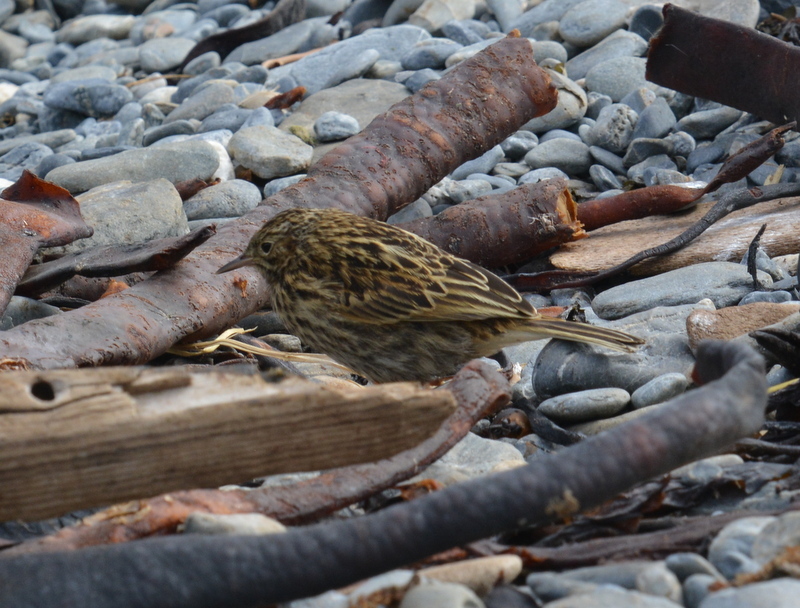
Encyclopedia of Life · EOL (see source)
Species
Least ConcernSPECIES
- KingdomAnimalia
- PhylumChordata
- ClassAves
- OrderPasseriformes
- FamilyMotacillidae
Большой конёк (лат. Anthus antarcticus) — певчая птица из семейства трясогузковых. Эндемик острова Южная Георгия, единственная певчая птица Субантарктики. Гнездо из соломинок устраивает обычно в траве, куда откладывает четыре яйца в год. Питается насекомыми и паукообразными. Вид находился под угрозой из-за серых крыс, завезённых на остров, а также антропогенных факторов. Птиц можно встретить также на острове Прайон[en].
via GBIF · IUCN
Museum specimens
- Specimen records
- 13
- With media
- 1
- Family
- Motacillidae
- Collections
- CLO, UMZC, MCZ, UWBM, USNM, GNM
- Recorded in
- South Georgia And The South Sandwich Islands, South Atlantic Ocean, South Georgia Island
Bird sounds
- song· Antarctica· quality A
- call· Antarctica· quality C
- flight call· Antarctica· quality C
- song· Antarctica· quality C
via Xeno-canto
Wikidata facts
- Instance of
- taxon
- Parent taxon
- Anthus
- Continent
- Antarctica
- Mass
- 36
- Image
- Anthus antarcticus -South Georgia, British overseas territory-8.jpg
Show 8 more facts
- taxon rank
- species
- IUCN conservation status
- Least Concern
- taxon name
- Anthus antarcticus
- Commons category
- Anthus antarcticus
- taxon common name
- caminheiro-da-geórgia-do-sul
- litter size
- 4
- short name
- A. antarcticus
- taxon author citation
- Cabanis, 1884
Sources (3)
via Wikidata · CC0
~2 min read
Encyclopedic overview
The South Georgia pipit (Anthus antarcticus) is a sparrow-sized bird found only on the South Georgia archipelago off the Antarctic Peninsula. It is the only songbird in Antarctica, South Georgia's only passerine, and one of the few non-seabirds found in the region. It builds nests from dried grass, usually within tussac grass, and lays four eggs a year. It feeds on small insects and spiders, and beach debris.
Taxonomy
Excerpted from Wikipedia’s “Anthus antarcticus” article, available under the CC BY-SA 4.0 licence.