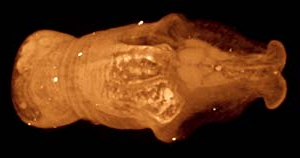
File:Falcidens.png · Wikimedia Commons · See Wikimedia Commons
Aplacophora
Sign in to saveAplacophora is a superclass of small, deep-water, exclusively benthic, marine molluscs found in all oceans of the world.
OverviewAI-generated
Aplacophora is a taxon within the phylum Mollusca, classified at the rank of subphylum or class. The group is also referred to by the common names ormebløtdyr and 無板綱. Its status is accepted, with the authority cited as Ihering, 1876. The taxon is described in the Brockhaus and Efron Encyclopedic Dictionary.
Aplacophora organisms inhabit marine environments. Specimen records are held by the institution CAS, with collections located in the United States, South Africa, and Papua New Guinea. There are 106 associated records and 9 media items. The taxon is referenced by 32 other encyclopedia articles.
Synthesized by Vinony from 19 facts across 4 sources: Wikidata, WoRMS, iDigBio, Vinony graph. Generated from structured data (not the Wikipedia text) and checked against those facts — may still contain errors.
Species
無板綱
Superclass
- PhylumMollusca
via
Museum specimens
- Specimen records
- 106
- With media
- 9
- Collections
- CAS
- Recorded in
- United States, South Africa, Papua New Guinea
Wikidata facts
Show 6 more facts
- taxon name
- Aplacophora
- Commons category
- Aplacophora
- taxon rank
- class
- topic's main category
- Category:Aplacophorans
- taxon common name
- ormebløtdyr
- described by source
- Brockhaus and Efron Encyclopedic Dictionary
Sources (1)
via Wikidata · CC0
~4 min read
Encyclopedic overview
4 sectionsContents
- Habitat
- Description
- Taxonomy and evolution
- References
Aplacophora is a superclass of small, deep-water, exclusively benthic, marine molluscs found in all oceans of the world.
All known modern forms are shell-less: only some extinct primitive forms possessed valves. The group comprises the two classes Solenogastres (Neomeniomorpha) and Caudofoveata (Chaetodermomorpha), which between them contain 28 families and about 320 species. The aplacophorans are traditionally considered ancestral to the other mollusc classes. However, the relationship between the two aplacophoran groups and to the other molluscan classes and to each other is as yet unclear.
Excerpted from Wikipedia’s “Aplacophora” article, available under the CC BY-SA 4.0 licence.