Rodriguez-Ramirez, Joanna;Beccacece, Hernan Mario;Pinheiro, Lívia Rodrigues;Grados, Juan;Morono-Brizuela, Maria Lucila
Arctiinae
Sign in to saveThe Arctiinae (formerly called the family Arctiidae) are a large and diverse subfamily of moths with around 11,000 species found all over the world, including 6,000 neotropical species. This subfamily includes the groups commonly known as tiger moths (or tigers), which usually have bright colours, footmen, which are usually much drabber, lichen moths, and wasp moths. Many species have "hairy" caterpillars that are popularly known as woolly bears or woolly worms. The scientific name Arctiinae refers to this hairiness (Gk. αρκτος = a bear). Some species within the Arctiinae have the word "tussoc
Species
GENUS
- KingdomAnimalia
- PhylumArthropoda
- ClassInsecta
- OrderLepidoptera
- FamilyErebidae
via GBIF
Museum specimens
- Specimen records
- 398
- With media
- 14
- Family
- Erebidae
- Collections
- UAM, UMNH, UCSB, BYU, YPM, NMV
- Recorded in
- United States, Mexico, Indonesia, Liberia, Philippines, Australia, South Africa, El Salvador
Wikidata facts
- Instance of
- taxon
- Parent taxon
- Erebidae
- Image
- Arctia caja - Great tiger moth - Медведица кая (39966577415).jpg
Show 7 more facts
- Commons category
- Arctiinae
- taxon name
- Arctiinae
- taxon rank
- subfamily
- topic's main category
- Category:Arctiinae
- taxon common name
- Bärenspinner
- taxon synonym
- Arctiidae
- taxon synonym of
- Arctiini
Sources (2)
via Wikidata · CC0
~10 min read
Encyclopedic overview
16 sectionsContents
- Taxonomy
- Tribes (former subfamilies)
- Description
- Aposematism
- Behavior and life cycle
- Folklore
- Notable species
- Gallery
- See also
- References
- Other references
- Main species catalogs
- Phylogenetic analyses
- Distribution analyses
- Further reading
- External links
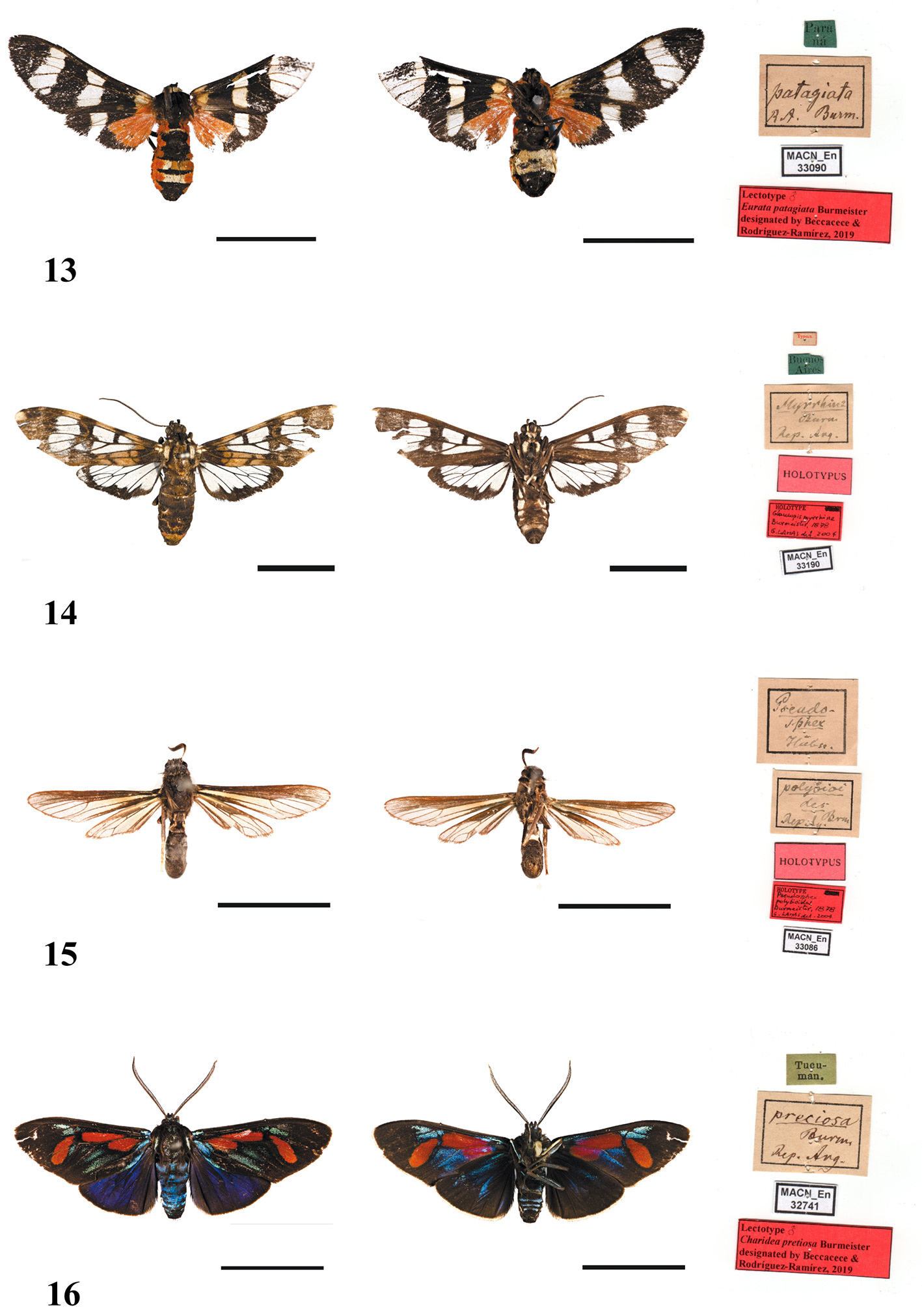
The Arctiinae (formerly called the family Arctiidae) are a large and diverse subfamily of moths with around 11,000 species found all over the world, including 6,000 neotropical species. This subfamily includes the groups commonly known as tiger moths (or tigers), which usually have bright colours, footmen, which are usually much drabber, lichen moths, and wasp moths. Many species have "hairy" caterpillars that are popularly known as woolly bears or woolly worms. The scientific name Arctiinae refers to this hairiness (Gk. αρκτος = a bear). Some species within the Arctiinae have the word "tussock"' in their common names because they have been misidentified as members of the Lymantriinae subfamily based on the characteristics of the larvae.
==Taxonomy== The subfamily was previously classified as the family Arctiidae of the superfamily Noctuoidea and is a monophyletic group. Recent phylogenetic studies have shown that the group is most closely related to litter moths Herminiinae and the Old World Aganainae, which are subfamilies of the family Erebidae. The Arctiidae as a whole have been reclassified to represent this relationship. The family was lowered to subfamily status as the Arctiinae within the Erebidae. The subfamilies and tribes of Arctiidae were lowered to tribes and subtribes, respectively, of this new Arctiinae to preserve the internal structure of the group.
Excerpted from Wikipedia’s “Arctiinae” article, available under the CC BY-SA 4.0 licence.
Gallery (11)
Available in 31 languages
- Español
- Français
- Deutsch
- 中文
- 日本語
- Русский
- Português
- Italiano
- العربية
- Armenian
- Azerbaijani
- Bahasa Indonesia
- Belarusian
- Catalan
- Egyptian Arabic
- Esperanto
- Estonian
- Finnish
via Wikidata sitelinks · CC0