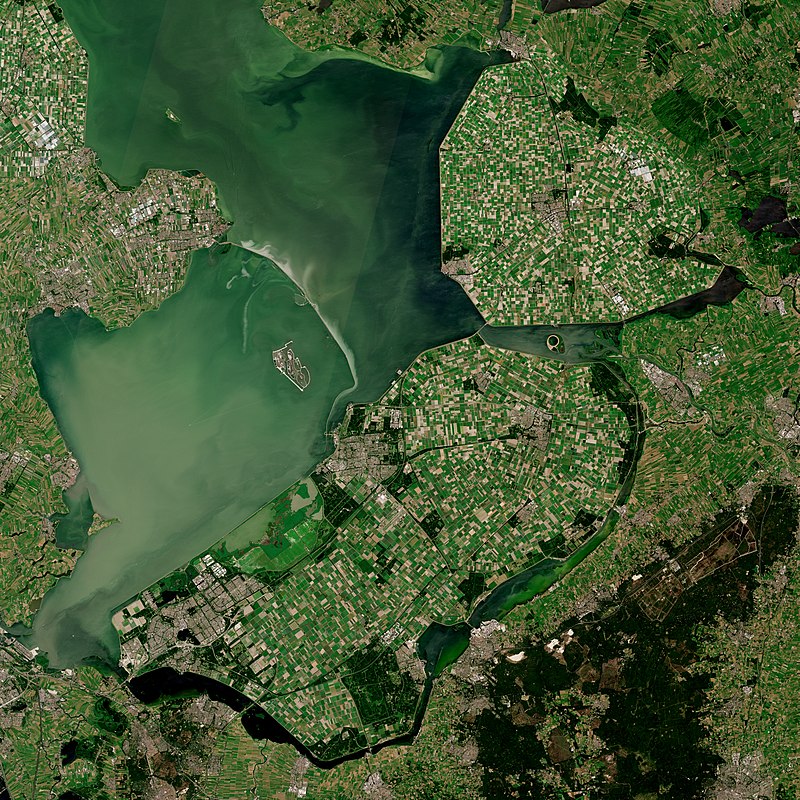
File:Flevoland_by_Sentinel-2,_2018-06-30.jpg · Wikimedia Commons · See Wikimedia Commons
artificial island
Sign in to saveAlso known as man-made island, human-made island, woman-made island
island-like structure constructed by people
Wikidata facts
- Image
- SL Kandy asv2020-01 img13 Arthurs Seat view.jpg
Show 4 more facts
- Commons category
- Artificial islands
- topic's main category
- Category:Artificial islands
- on focus list of Wikimedia project
- Wikipedia:Vital articles/Level/4
- exact match
- purl.obolibrary.org/obo/ENVO_00000099
Sources (2)
via Wikidata · CC0
~16 min read
Encyclopedic overview
The Flevopolder in the Netherlands is 970 km (375 sq mi) and is the largest island formed by reclaimed land in the world.
An artificial island or man-made island is an island that has been constructed by humans rather than formed through natural processes. Other definitions may suggest that artificial islands are lands with the characteristics of human intervention in their formation process, while others argue that artificial islands are created by expanding existing islets, constructing on existing reefs, or amalgamating several islets together. Although constructing artificial islands is not a modern phenomenon, there is no definite legal definition of it. Artificial islands may vary in size from small islets reclaimed solely to support a single pillar of a building or structure to those that support entire communities and cities. Archaeologists argue that such islands were created as far back as the Neolithic era. Early artificial islands included floating structures in still waters or wooden or megalithic structures erected in shallow waters (e.g. crannógs and Nan Madol discussed below).
Excerpted from Wikipedia’s “artificial island” article, available under the CC BY-SA 4.0 licence.